







































 Steering wheels made with the Lexan EXL copolymer
Sabic Innovative Plastics is putting a new spin on the traditional steering wheel with an injection-moulded design featuring its Lexan EXL copolymer resin.
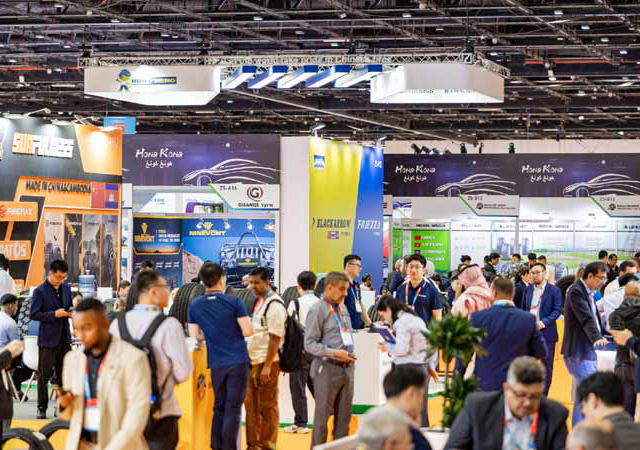
At Chinaplas 2010, the company showcased the benefits of weight-out, high performance, manufacturing ease, styling freedom and parts integration provided by this innovative new steering wheel concept.
Importantly, Lexan EXL resin avoids key environmental drawbacks of existing steering wheels, whose materials can be difficult to recycle and involve potentially hazardous waste products from casting and processing.
“It’s high time for a new direction in steering wheel design, and Sabic Innovative Plastics has made a 180-degree turn with our two-part moulded design,” said V Umamaheswaran (UV), director of products and marketing, Sabic Innovative Plastics.
Time for new solutions
Typical steering wheels are comprised of a die-cast magnesium or aluminum armature overmoulded with flexible urethane foam. This creates a solid rim section with no package space for integration of electronic components. Additionally, the soft polyurethane makes structural attachment of components impractical. This approach also restricts styling possibilities such as advanced shapes and innovative aesthetics.
In addition to meeting these challenges, an updated steering wheel design called for: improved energy management for head and torso impacts; net weight-out even with the addition of integrated components; durability and long service life; avoidance of secondary operations; overall system cost reductions.
Lexan EXL glass-filled polycarbonate-siloxane copolymer resin provided excellent stiffness and a high degree of impact over a very wide temperature range. Sabic Innovative Plastics has developed two designs; a two-part injection moulded design with a leather wrap as a high-end solution and a one-piece injection-molded armature with a polyurethane overmoulding. Both are attached to the steering column with a small metal hub. They have been shown to cut system costs by up to 20 per cent and reduce mass by up to 40 per cent compared to a magnesium or aluminum alloy steering wheel.