




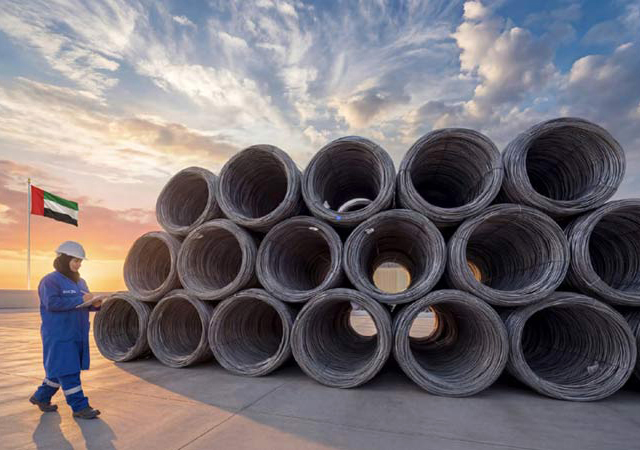
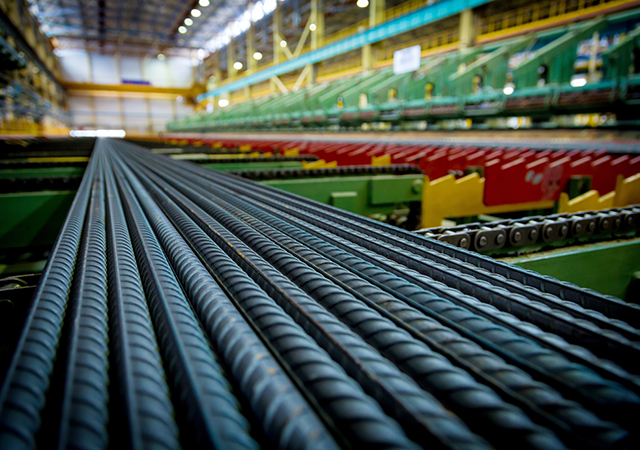
 Wire rod in production
The Middle East’s steel industry is undergoing a significant transformation. Long driven by construction booms and infrastructure spending, the sector is increasingly evolving into a diversified industrial ecosystem shaped by localisation policies, advanced manufacturing, sustainability requirements and export opportunities.
According to market research estimates by Ken Research, the Middle East steel market was valued at approximately $44 billion in 2025 and is projected to reach $60 billion by 2031, representing a compound annual growth rate (CAGR) of 5.6 per cent.
During the same period, regional steel consumption is projected to increase from 60.1 million tonnes to 77.4 million tonnes, reflecting sustained demand from transportation, energy, manufacturing and construction sectors.
For a sector traditionally measured in tonnes, the next decade may increasingly be defined by value creation rather than sheer output.
Infrastructure Remains the Growth Engine
Construction and infrastructure continue to dominate regional steel demand, accounting for approximately 61 per cent of finished-steel consumption.
Across the Gulf, governments are investing heavily in transportation networks, industrial zones, ports, airports, utilities, water infrastructure and housing developments. Saudi Arabia’s Vision 2030 programme, including headline projects such as Neom, remains one of the region’s largest steel demand drivers. Rail corridors, logistics hubs, tourism developments and industrial clusters are expected to require substantial volumes of rebar, structural sections, plate products and fabricated steel solutions.
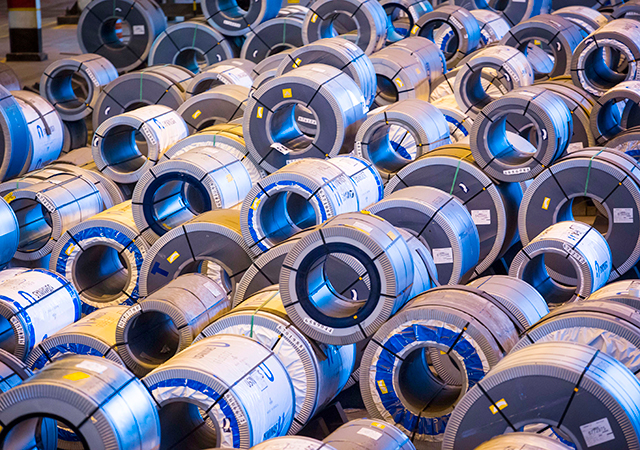
Packaged coils in storage
At the same time, industrial diversification programmes are creating new sources of demand beyond traditional construction markets. Saudi Arabia’s National Industrial Strategy has identified 814 industrial opportunities worth SAR979 billion in potential investments, while the UAE’s Operation 300Bn seeks to increase industry’s contribution to GDP from AED133 billion to AED300 billion by 2031.
These initiatives are accelerating the localisation of manufacturing activities and encouraging greater use of domestically produced steel across machinery, transportation, energy and industrial applications.
Demand Growth Becomes More Balanced
The market’s growth outlook is increasingly supported by both volume expansion and an improving product mix.
Regional apparent steel demand reached approximately 60.1 million tonnes in 2025, while the broader Middle East and Africa region accounted for roughly 104 million tonnes of finished-steel demand. By 2031, Middle Eastern demand alone is expected to reach 77.4 million tonnes, supported by a forecast volume CAGR of approximately 4.3 per cent.
Unlike the sharp commodity-price-driven cycle seen during 2021 and 2022, future growth is expected to be more balanced. Analysts forecast that a modest annual increase in steel selling prices, combined with a greater share of higher-value products, will supplement physical demand growth rather than replace it.
The average realised steel selling price in the region stood at an estimated $724 per tonne in 2025 and is forecast to approach $780 per tonne by 2031, reflecting a gradual shift towards higher-specification products.
Saudi Arabia Leads Growth While Iran Retains Scale
Country dynamics remain central to understanding the region’s steel outlook.
Iran continues to be the Middle East’s largest steel producer and consumer, with an estimated market size of $13.3 billion, steel consumption of 20.8 million tonnes and crude steel production of 31.8 million tonnes in 2025. Its substantial iron ore resources and integrated DRI-EAF production base support large-scale output, although energy shortages, trade restrictions and limited investment access remain persistent challenges.
Saudi Arabia, meanwhile, is expected to generate the region’s largest incremental steel demand. The Kingdom’s steel market was valued at approximately $11.8 billion in 2025 and is forecast to grow at a 7.1 per cent CAGR through 2031, outperforming most regional peers.
Crude steel production in Saudi Arabia reached 10.8 million tonnes in 2025, supported by domestic capacity expansion and growing demand from infrastructure, industrialization and energy projects.
The UAE retains an influential position as a regional steel and fabrication hub. Its established DRI-EAF infrastructure, advanced logistics network and increasing focus on lower-carbon steel production make it one of the region’s most strategically significant markets. The country’s steel market was valued at approximately $4.8 billion in 2025, with forecast growth of 5.9 per cent annually through 2031.
Elsewhere, Oman is emerging as a major player in green iron and HBI exports, while Egypt, Qatar and Bahrain continue to strengthen their positions through specialized production capabilities and industrial development.
The Industry’s Shift
While rebar will remain the region’s largest volume product category, future profitability is expected to migrate toward more specialized steel segments.
Industry analysts identify the strongest profit pools in: Heavy plate; Coated flat steel; Structural sections; Sour-service and high-grade pipe; Electrical steel; Downstream fabrication; and Certified low-carbon steel.
These segments command higher margins due to technical complexity, qualification requirements and greater barriers to entry.
The region’s leading producers are increasingly adopting integrated business models that combine direct-reduced iron production, steelmaking, rolling, coating, fabrication and engineering services. Such integration allows companies to capture greater value per tonne while strengthening customer relationships.
For investors and executives, future success will depend less on production capacity alone and more on specialisation, product quality and downstream value creation.
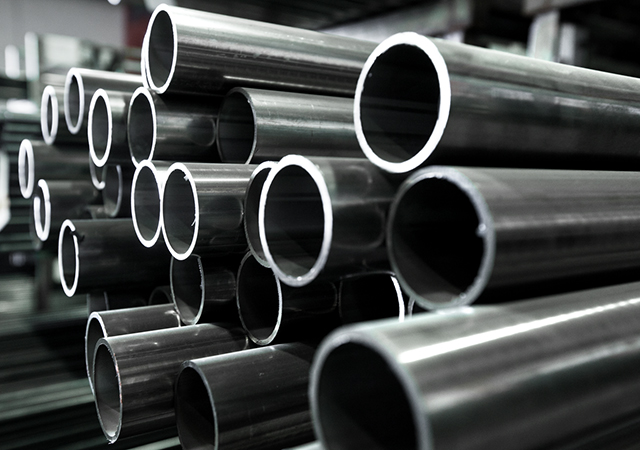
Cutting steel slab
Green Steel Emerges as a Strategic Opportunity
Perhaps the most important long-term shift reshaping the market is the transition to lower-carbon steelmaking.
The Middle East and North Africa (Mena) currently produce approximately 63 million tonnes of direct-reduced iron annually, representing about 44 per cent of global DRI output. This gives the region a unique competitive advantage as steelmakers worldwide seek pathways to decarbonisation.
Gas-based DRI and electric arc furnace technology already provide a lower emissions profile than traditional blast furnace operations. As renewable electricity and green hydrogen capacity expand across the Gulf, the region is increasingly positioned to become a global supplier of low-carbon metallics and steel products.
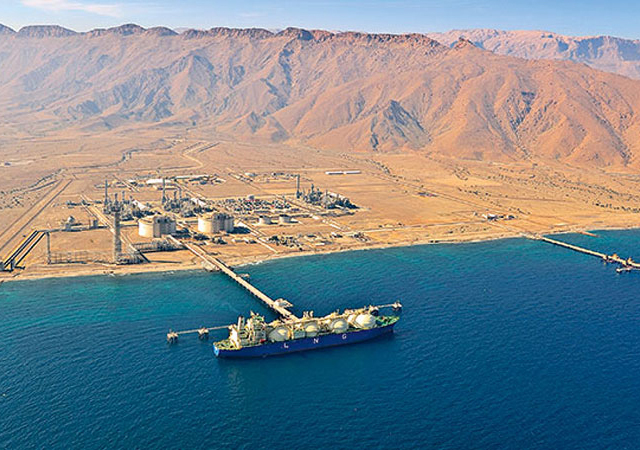
Oman has become the standout story in this transition. The country has announced approximately 12.5 million tonnes per annum of new DRI and HBI capacity, positioning itself as a future export platform for lower-carbon iron products destined for Europe and Asia.
Commercial opportunities are also emerging in certified low-carbon steel. Producers capable of verifying carbon intensity and demonstrating emissions reductions are expected to gain an advantage in both international and domestic procurement markets.
CBAM Raises the Stakes
The European Union’s Carbon Border Adjustment Mechanism (CBAM) is accelerating the steel industry’s push toward emissions transparency.
Since entering its definitive phase in January 2026, CBAM has introduced embedded-emissions reporting and certificate requirements for imported steel. For Middle Eastern producers targeting European customers, product-level carbon accounting and third-party verification have become increasingly important competitive factors.
Producers with gas-based DRI operations, renewable energy integration and documented emissions data are likely to secure stronger positioning in export markets as carbon-related procurement requirements become more widespread.
This trend could create a meaningful premium for certified low-carbon steel products over the coming decade.
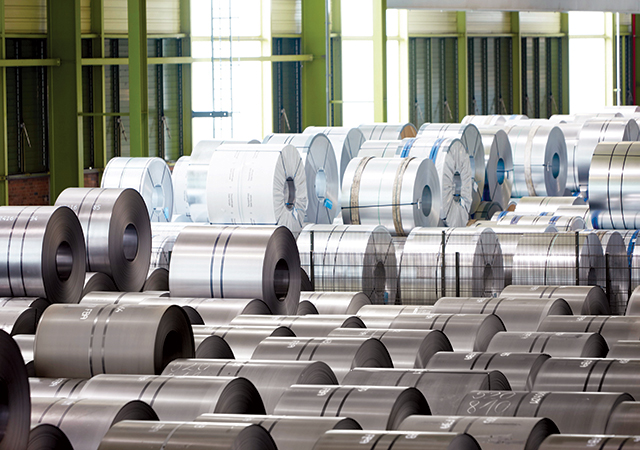
Hot-dip galvanised steel coils in storage
Renewable Energy
The energy transition is creating demand not only for greener steel but also for more steel.
Large-scale solar projects require mounting systems, support structures and transmission infrastructure, while wind farms depend heavily on steel-intensive towers and foundations.
As Gulf countries accelerate renewable energy deployment, these projects are expected to become an increasingly important market segment for steel producers.
The result is a virtuous cycle: steel enables renewable energy development, while renewable energy supports the production of lower-carbon steel.
Digitalisation
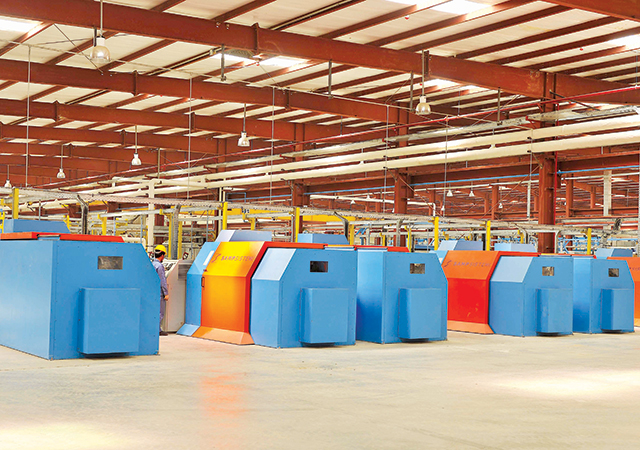
Technology is also reshaping how steel is produced. Leading manufacturers across the region are investing in IoT-enabled monitoring systems, AI-driven process optimization, predictive maintenance platforms and advanced quality-control technologies.
These systems help reduce downtime, improve yield, optimize energy consumption and enhance product consistency. In a market increasingly challenged by international competition and margin pressure, operational excellence has become a key differentiator.
Digital transformation is therefore moving from an optional efficiency initiative to a strategic requirement.
Logistics: Hidden Strength
A major competitive advantage for Middle Eastern steelmakers remains geography.
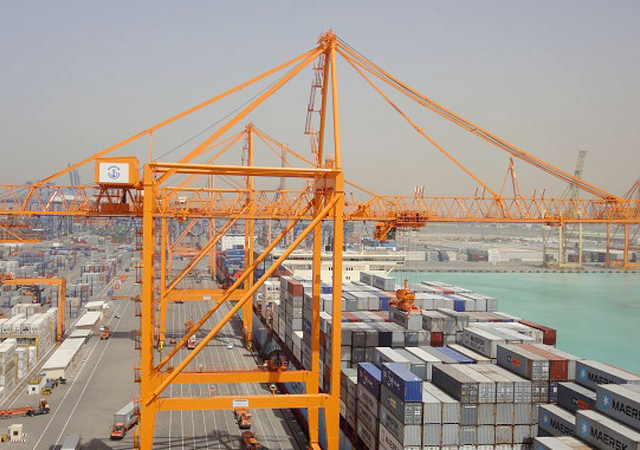
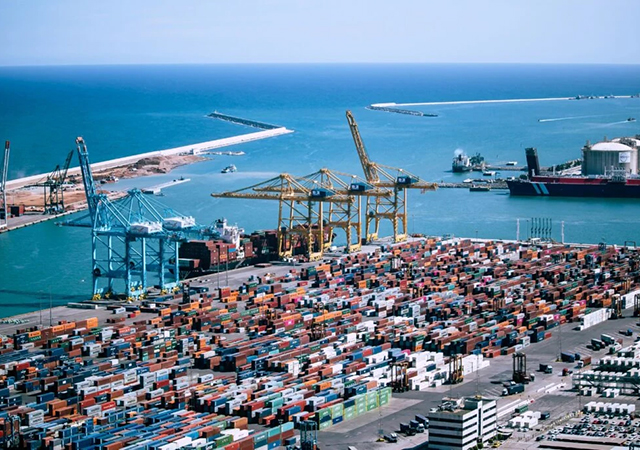
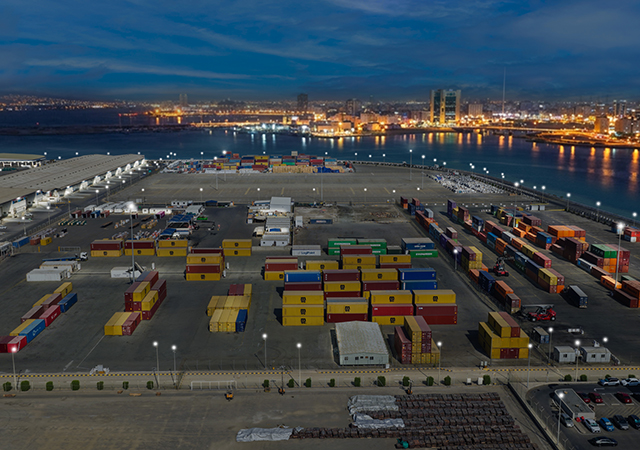
Ports such as Jebel Ali in the UAE and Dammam in Saudi Arabia provide efficient access to markets across Africa, Europe and South Asia. These logistics networks support both imports of raw materials and exports of finished steel products and low-carbon metallics.
As Oman, the UAE and Saudi Arabia expand their export ambitions, logistics infrastructure will remain critical to maintaining competitiveness and supporting downstream industrial growth.
The Margin Challenge
Despite positive demand fundamentals, profitability remains the industry’s biggest concern.
Global steel overcapacity continues to place downward pressure on prices, particularly in flat steel markets. Additional international capacity additions are expected to intensify competition and keep export offers aggressive.
Imported hot-rolled coil offers into the Middle East reportedly fell to approximately $520-525 per tonne CFR in late 2024, underlining the challenge faced by regional producers.
Steelmakers must also manage risks related to energy security, pellet availability, scrap quality, shipping costs and regulatory compliance. Rising demand may improve utilisation rates, but it does not automatically guarantee stronger margins.The most successful producers will be those that combine cost discipline, secure raw-material sourcing, product differentiation and verified sustainability credentials.
A New Era
The Middle East steel industry is transitioning from a construction-led commodity supplier into a diversified manufacturing and materials hub.
By 2031, the market is expected to exceed $60 billion, supported by infrastructure spending, industrial localisation, renewable energy investment and expanding manufacturing activity. Yet the industry’s future will be determined not simply by how much steel it produces, but by the value it creates.
From green iron exports in Oman and low-carbon steelmaking in the Gulf to advanced plate, pipe and coated products for industrial customers, the region’s most successful steelmakers are moving decisively up the value chain.
For Middle Eastern steel, the next growth story is no longer just about tonnes. It is about technology, sustainability and higher-value production.