














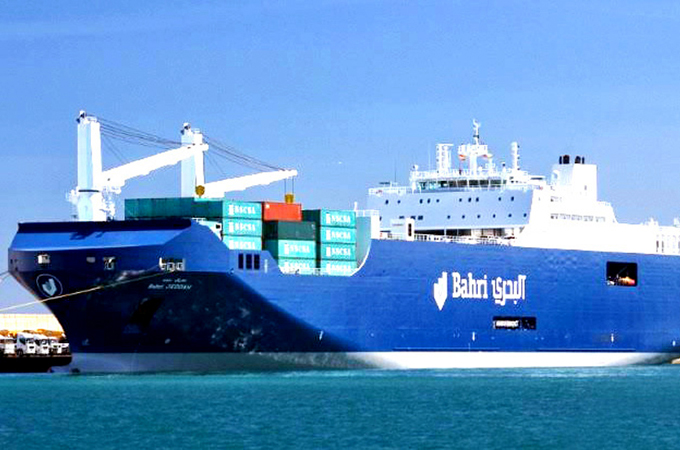
The National Shipping Company of Saudi Arabia (Bahri) has posted outstanding results with its third-quarter net profit zooming 891% to SR5.09 billion ($1.36 billion) and its nine-month (9M) net soaring 587% to SR9.98 billion.
Bahri recorded Q3 revenues of SR14.83 billion, up 504% year-on-year, while revenues for the first nine months of 2026 reached SR26.10 billion, a growth of 268%.
The strong performance was primarily driven by Bahri Oil, which benefited from significantly higher realised VLCC freight rates and increased charter-in activity amid continued regional shipping disruption and strong customer demand. Bahri Chemicals & Products, Integrated Logistics and Dry Bulk also delivered year-on-year revenue growth during the quarter.
Adapting to rapidly evolving trade flows
The results reflect Bahri’s continued ability to adapt to rapidly evolving trade flows and market conditions while maintaining commercial activity through an exceptionally challenging operating environment. During the third quarter, the company continued to deploy additional chartered capacity where required to meet customer demand, while its diversified businesses responded to changing cargo flows across the region.
Bahri also continued to advance its long-term growth and fleet diversification strategy. During Q3 2026, the company entered the LPG and ammonia shipping segment through the acquisition of three second-hand medium gas carriers. The first vessel was delivered in September, with the remaining two expected in Q4 2026 and Q1 2027, respectively.
The company’s owned fleet remained at 107 vessels at end-September 2026, following the addition of the fifth IMO2 MR tanker from its previously announced acquisition programme and the disposal of an older chemical tanker. Bahri also took delivery of two previously ordered offshore support vessels during the quarter.
Three new VLCCs
Following the end of Q3, Bahri signed a SR1.692 billion agreement with International Maritime Industries (IMI) for the construction of three new VLCCs for delivery between 2029 and 2030, further supporting the company’s fleet modernisation programme and contributing to the development of domestic shipbuilding capabilities in line with Saudi Vision 2030.
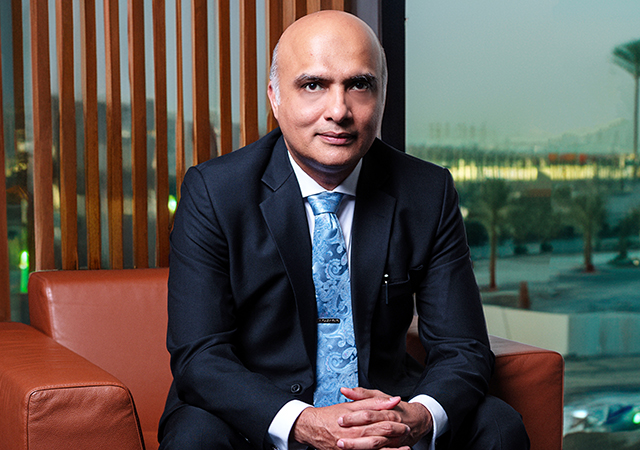
Eng Ahmed Ali Al Subaey, Chief Executive Officer of Bahri, said: “Bahri delivered another strong quarter, in an exceptionally complex operating environment, reflecting the resilience of our business model, the strength of our fleet and the discipline with which we continue to execute our strategy. As trade flows shifted and customer requirements evolved, we adapted quickly while maintaining the reliable movement of essential cargo across the kingdom and global markets. This ability to respond through the cycle is increasingly important in an industry where resilience, scale and flexibility are becoming as critical as capacity itself.
“Throughout this challenging period, the safety and well-being of our people remained our highest priority. During the quarter, several of our vessels were affected by security incidents, which tragically resulted in the loss of two crew members. We are deeply saddened by their loss and extend our heartfelt condolences to their families and loved ones. These events are a profound reminder of the conditions in which our seafarers operate and reinforce our responsibility to protect our people. I am extremely proud of the professionalism shown by our crews and onshore teams in responding to these incidents and supporting the safe restoration of affected vessels wherever possible.
Strengthening core shipping and logistics
“Looking ahead, we are entering the next phase of Bahri’s growth from a position of strength. We are continuing to modernise and diversify our fleet, strengthen our core shipping and logistics businesses and expand selectively into new segments, including gas and ammonia transportation. Our focus remains on disciplined growth that strengthens Bahri’s competitiveness, supports the kingdom’s expanding trade and maritime ambitions, and creates sustainable long-term value for our shareholders.”
Bahri’s strong performance during the first nine months of the year further strengthened its financial position. Net operating cash flow reached SR4.07 billion, up 83% year-on-year, while free cash flow reached SR2.99 billion, compared with an outflow of SR1.31 billion in the prior-year period.
Net debt declined to SR8.16 billion at end-September 2026, compared with SR9.85 billion a year earlier. Combined with stronger earnings, this resulted in the Company’s net debt-to-EBITDA ratio improving to 0.59x, from 2.11x at end-September 2025, providing continued financial flexibility to support Bahri’s long-term growth strategy.
Refinancing facility
During Q3, Bahri also completed a SR987 million refinancing facility with BNP Paribas and the National Bank of Greece, marking the Company’s first unsecured international bank financing facility and an important step in further diversification of its funding sources.
Operationally, Bahri continued shipping operations amid heightened disruption across the Arabian Gulf and Red Sea. During the first nine months of the year, four owned vessels were impacted by security-related incidents, resulting in the tragic loss of two crew members. Two of the affected vessels have since returned to commercial operations following repairs, while two remain under repair.
Bahri maintained its focus on safe and responsible maritime operations, recording no oil spills during Q3 2026. The 12-month rolling Lost Time Injury Frequency Rate for crews serving on Bahri-owned vessels stood at 0.18 injuries per million work hours, compared with 0.23 at end-September 2025.-TradeArabia News Service