


















The Middle East, North Africa and Pakistan are poised for a sharp economic recovery in 2027, with growth projected to reach 6.6 per cent after a war-induced contraction this year, although the International Monetary Fund (IMF) has warned that the rebound will be uneven and depend heavily on the restoration of energy production and trade.
The IMF expects the region's economy to shrink by 1.3 per cent in 2026, reversing the 3.3 per cent growth recorded in 2025, as the regional conflict disrupts oil production, shipping and trade flows.
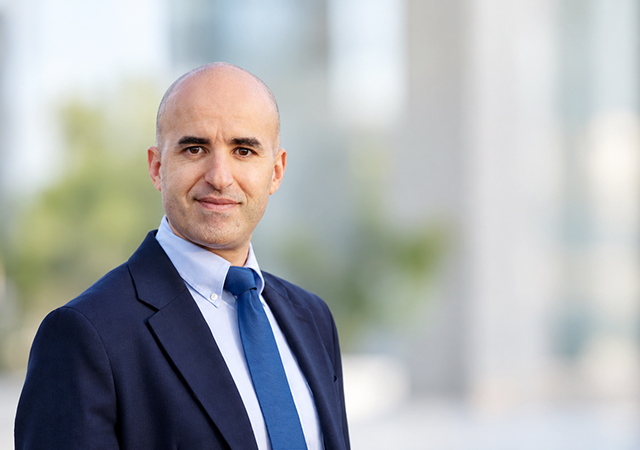
Jihad Azour, Director of the IMF's Middle East and Central Asia Department, said the projected recovery in 2027 would be driven largely by a gradual normalisation of energy production and trade, particularly among oil-exporting economies hit hardest by the conflict.
However, he cautioned that even with the anticipated rebound, economic output would remain below the medium-term trajectory projected before the war.
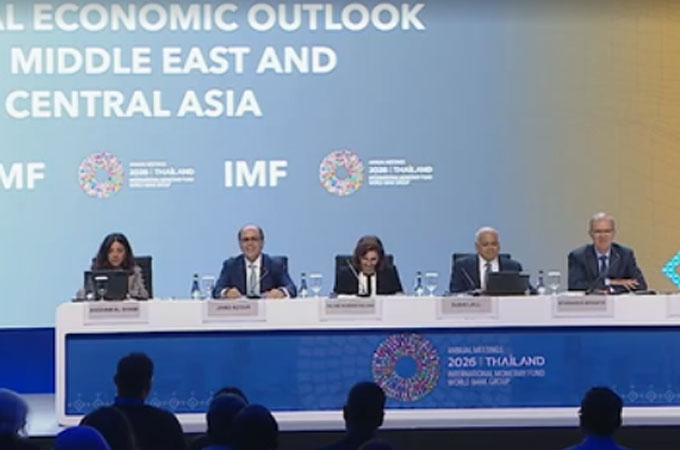
Speaking at an IMF press briefing in Bangkok, Thailand, on October 15, Azour said the conflict had created sharply divergent economic conditions across the region.
"The war in the Middle East is imposing a highly uneven shock to the economies of the region," he said, noting that countries directly affected by the fighting were facing severe pressures, while other regional economies and much of the Caucasus and Central Asia had demonstrated greater resilience.
Oil exporters face sharp contraction
According to the IMF, oil-exporting economies directly affected by disruptions to energy production and trade will experience a significant contraction in 2026, although elevated oil prices will provide some support to government finances and external balances.
Azour said production among almost all directly affected exporters had fallen sharply, while shipping disruptions had driven refined fuel prices substantially higher.
Nevertheless, the economic impact had been more contained than initially feared, supported by pre-war surpluses, production from non-Gulf exporters, alternative transport routes, adjustments in demand and substantial inventory drawdowns.
The expected restoration of energy production and trade will be a major driver of the region's projected 6.6 per cent growth in 2027.
In contrast, oil-importing economies across the Middle East, North Africa and Pakistan have demonstrated greater resilience during 2026, supported by workers' remittances, tourism revenues, favourable financial conditions and government intervention.
These factors have helped cushion the immediate economic shock, although Azour warned that governments' capacity to provide further support was narrowing.
Inflation in these economies is expected to rise moderately this year before gradually easing.
Recovery faces significant risks
Despite the strong growth forecast for 2027, the IMF warned that the regional outlook remained subject to exceptionally high uncertainty, with a prolonged conflict representing the most significant downside risk.
Azour said the pace of recovery would depend on how quickly energy production and trade returned to normal and whether governments could preserve macroeconomic stability.
He outlined three policy priorities to strengthen regional economies and protect them against further shocks.
The first is maintaining price stability while safeguarding fiscal sustainability, with monetary policy serving as the primary defence against emerging inflationary pressures.
Countries with limited fiscal space should complement tighter monetary conditions with prudent government spending, he said.
The second priority is rebuilding fiscal buffers through stronger domestic revenue mobilisation, more efficient expenditure and robust fiscal frameworks.
Azour cautioned against introducing broad-based subsidies, recommending instead targeted, temporary and budget-neutral cash transfers to protect households most affected by the crisis.
The third priority is strengthening economies' ability to withstand future shocks through institutional reforms, credible monetary frameworks and greater fiscal resilience.
He also highlighted trade diversification, deeper regional integration and the adoption of new technologies, including artificial intelligence, as important drivers of productivity and long-term economic growth.
Countries with strong institutions, independent central banks and greater fiscal space were generally better positioned to absorb economic shocks, he said.
The IMF is scheduled to release its full regional economic outlook in Dubai on October 22, providing a more detailed assessment of the conflict's impact, growth prospects and policy priorities across the Middle East and Central Asia.