
























 “Businesses are looking at logistics infrastructure much more holistically”: Farooq Shaikh
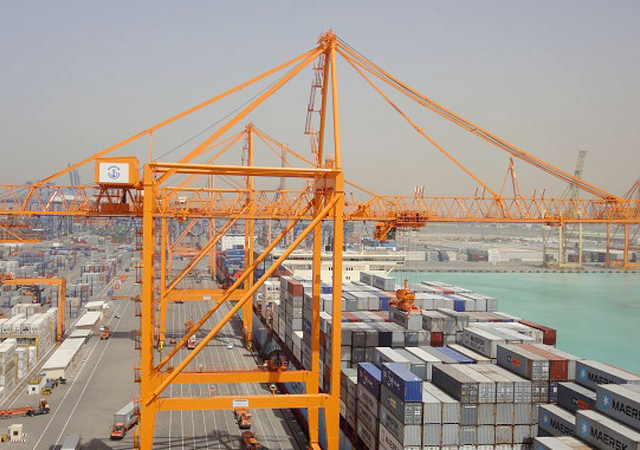
For more than two decades, LogiPoint’s Bonded and Re-Export Zone at Jeddah Islamic Port has provided businesses with a customs-controlled platform for managing imports, inventory and re-export activity.
The model allows eligible goods to remain under bond, enabling customs duty and VAT to be deferred until inventory is released into the Saudi market while supporting re-export to international destinations under applicable customs procedures.
Alongside bonded warehousing, LogiPoint provides cargo handling, customs coordination, value-added services and industrial logistics infrastructure designed to support domestic distribution, regional trade and manufacturing operations.
In an interview with Gulf Industry, CEO Farooq Shaikh discusses how customer requirements are changing, why inventory flexibility has become increasingly important and how logistics infrastructure is evolving alongside Saudi Arabia’s industrial growth.
Why does port-based bonded infrastructure remain strategically important?
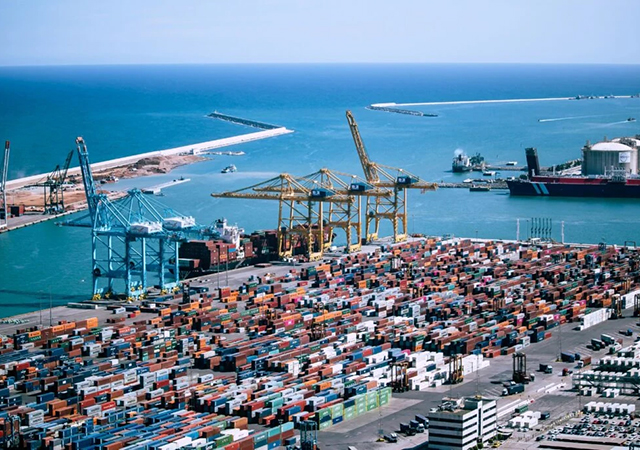
Port proximity affects the economics and execution of the entire cargo journey.
When cargo can move directly from vessel discharge into a customs-controlled logistics environment, businesses avoid unnecessary inland movements and additional operational handovers.
That creates greater control over when inventory clears customs, where it is ultimately deployed and whether it enters Saudi Arabia or moves onwards to another market.
The important point is not simply distance from the port. Every additional movement introduces cost, time and another execution dependency. Port-based infrastructure allows companies to keep those decisions open for longer while maintaining inventory close to a major trade gateway.
_1.jpg)
The combination of LogiPoint’s Re-Export Zone and industrial logistics ecosystem creates an integrated platform
What fundamentally differentiates a bonded zone from a conventional logistics park?
The most important distinction is the customs status of the inventory.
In a conventional warehouse, goods have generally already entered the domestic market. Within a bonded environment, eligible cargo can remain under customs control until there is a commercial reason to release it.
That changes how businesses can manage inventory.
Instead of treating customs clearance as an automatic consequence of cargo arrival, companies can align clearance with sales, customer orders or production requirements. Cargo intended for other markets can also be redirected through the relevant re-export procedures.
The value therefore extends beyond storage. It provides greater optionality over capital, inventory and final market allocation.
How does the bonded model change the economics of inventory management?
The greatest impact is often on working capital.
If a company imports a large shipment but only requires part of that inventory immediately, paying customs duty and VAT on the entire quantity can commit capital significantly ahead of the underlying commercial requirement.
Under bond, inventory can be released progressively.
An automotive importer can align vehicle releases with dealer demand. A manufacturer can release components in line with its production plan. A distributor can retain inventory while determining whether demand will come from Saudi Arabia or another market.
The underlying principle is that customs payments and inventory commitment can be brought closer to actual commercial activity rather than simply the date on which the shipment arrives.
_15---Photo.jpg)
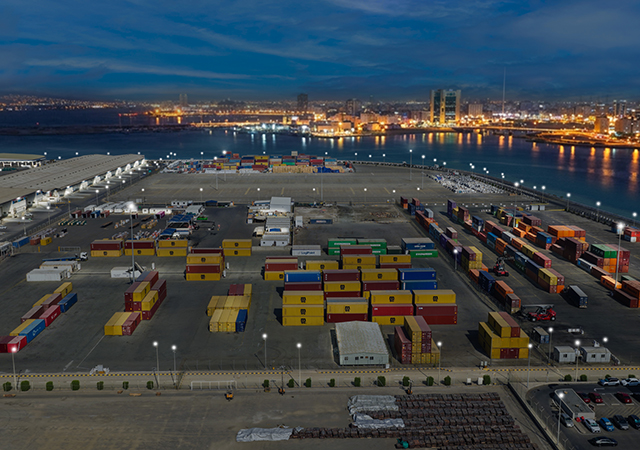
Located at Jeddah Islamic Port, LogiPoint is uniquely positioned to connect global trade flows with Saudi Arabia’s growing industrial base.
Which sectors tend to benefit most from this flexibility?
The strongest fit tends to be with businesses importing in larger batches, carrying relatively high-value inventory, serving several markets or operating against demand that is not completely predictable.
Automotive is a good example because vehicles may arrive in significant volumes but enter the market progressively.
Manufacturing has similar requirements when imported raw materials or components need to be aligned with production schedules.
Industrial materials, chemicals, food products, consumer goods, project cargo and temperature-sensitive commodities can also benefit depending on their inventory profile and distribution model.
The common factor is not the industry itself. It is whether the business gains value from keeping inventory flexible before its final destination, customs treatment or release timing is fixed.
Customers increasingly expect more than storage. What is changing?
Businesses are looking at logistics infrastructure much more holistically.
The discussion is no longer simply about whether a warehouse has enough square metres. Customers are considering how cargo enters the facility, how customs processes are managed, what handling requirements exist, how inventory will be configured for different markets and how quickly it can move onwards.
Services such as consolidation, deconsolidation, labelling, packaging and light assembly become important because they allow one inventory position to serve several customers, markets or distribution channels.
The infrastructure therefore has to support the operating model around the inventory, not just provide a place to hold it.
Why is Jeddah well positioned as a regional re-export gateway?
Jeddah sits on major Red Sea trade routes with access to Saudi Arabia, GCC markets, the wider Middle East, Africa and international destinations.
But location by itself is not enough.
For Jeddah to function effectively as a regional inventory hub, cargo must be able to arrive, remain under an appropriate customs framework, be consolidated or prepared as required and then move onwards efficiently.
That combination allows businesses to position stock close to several markets without committing it prematurely to one destination.
The strategic opportunity is therefore to create value around the cargo while it is in Jeddah, not simply use the port as a transit point.
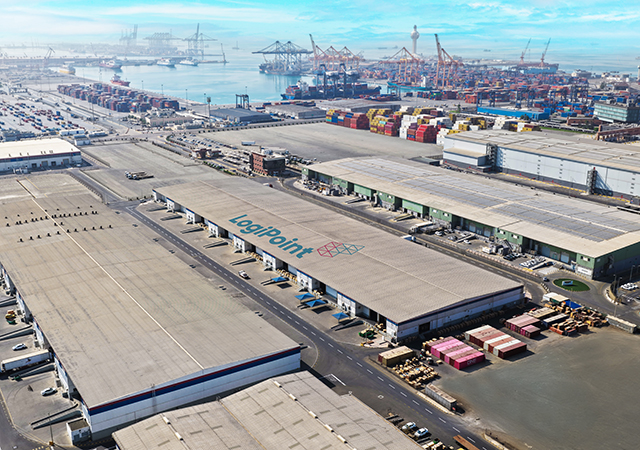
LogiPoint is building the infrastructure behind Saudi Arabia’s logistics ambitions
How important is regulatory coordination to the bonded model?
Bonded operations depend on maintaining strong customs control while still allowing businesses sufficient flexibility to manage inventory and cargo movements efficiently.
LogiPoint works with ZATCA, Mawani and other relevant stakeholders to align customs procedures, inspections and cargo movements with regulatory requirements.
From an operating perspective, the best way to balance compliance and flexibility is to address requirements before cargo arrives. When documentation, inventory controls and operating procedures are already established, customers have greater ability to adjust release schedules or destinations without compromising compliance.
How is Saudi Arabia’s manufacturing growth changing logistics requirements?
Manufacturing creates a different logistics requirement from straightforward import and distribution.
A manufacturer is concerned about the continuity of production, the timing of raw-material availability, inventory levels and the reliability of inbound and outbound movements.
Bonded infrastructure can support imported components and raw materials before they are required in production, while industrial logistics facilities can support finished goods, distribution and longer-term capacity closer to manufacturing activity.
This is why the connection between port-based infrastructure and inland industrial logistics is increasingly relevant.
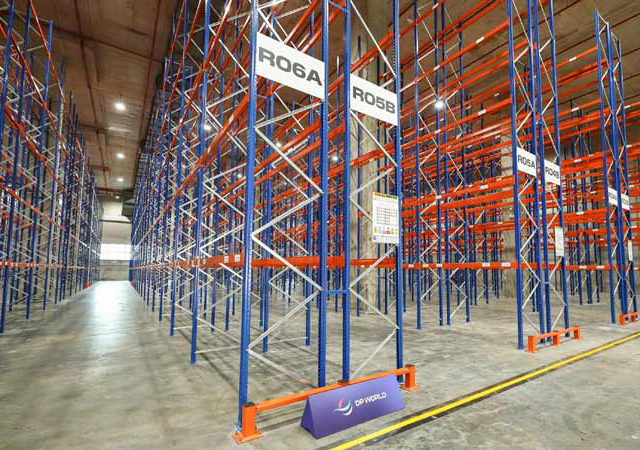
Our wider platform includes Grade-A warehousing, temperature-controlled facilities, Industrial Open Storage and Build-to-Suit developments because different operating models require different forms of infrastructure.
How do you expect demand for bonded and industrial logistics infrastructure to develop over the next five years?
We expect demand to become increasingly specialised.
Customers will continue to require physical capacity, but the decision will increasingly depend on what that capacity can actually support.
Cargo-specific handling, customs flexibility, inventory visibility, temperature control, value-added services and regional connectivity will become more important as Saudi Arabia expands its manufacturing and distribution base.
Working-capital efficiency will also remain important. Bonded warehousing is therefore likely to be considered less as additional storage capacity and more as part of a company’s inventory and market-entry strategy.
For developers and operators, that means future investment needs to be based on real operating requirements. The priority is not simply to add space. It is to build the right type of capacity in the right location and ensure that it can perform reliably from the first day of operation.