







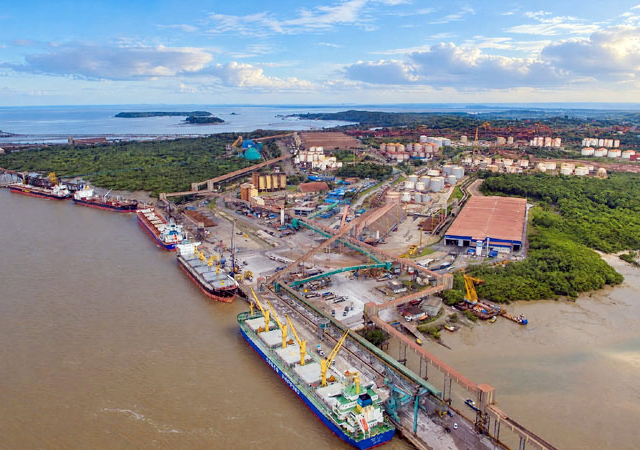













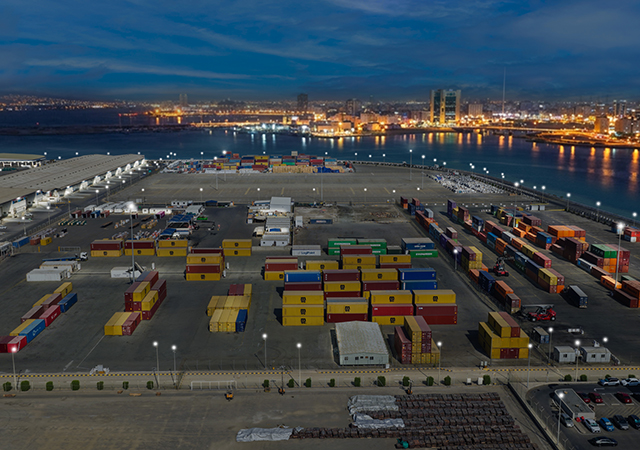
 LogiPoint’s South Jeddah Logistics & Industrial Park will provide approximately 1.5million sq m of leasable logistics space.
As Saudi Arabia advances its ambition to become a leading global logistics hub, the infrastructure supporting trade, manufacturing and distribution is becoming increasingly important.
LogiPoint has been operating Saudi Arabia’s first Bonded and Re-Export Zone at Jeddah Islamic Port since 1999 and is now expanding its platform through new industrial logistics developments, temperature-controlled infrastructure and Build-to-Suit facilities.
Inside LogiPoint’s SAR5 Bn Logistics Vision
LogiPoint’s development pipeline includes the South Jeddah Logistics & Industrial Park, a 1.9 million sq m master-planned development being developed in partnership with Al Rajhi Capital.
The SAR5 billion project will provide approximately 1.5 million sq m of leasable logistics and industrial space, combining warehousing, cold-chain facilities, light industrial units and Build-to-Suit developments.
Groundbreaking is planned for the first half of 2027
Alongside the larger development, LogiPoint is constructing JLH-02, a Grade-A temperature-controlled logistics facility on a 15,000 sq m plot at Jeddah’s First Industrial City, MODON.
The development will provide 12,000 sq m of built-up area across four interconnected, clear-span chambers of 3,000 sq m each. Designed to operate at 25-degC, the facility will offer a clear height of 13.5 metres and storage height of 12 metres, supporting flexible chamber configurations and higher-density storage.
Each chamber will include two loading bays with dock levelers and shelters, an access ramp, shaded parking and dedicated office and staff facilities.
The project is targeting LEED Silver certification and is scheduled for completion by the end of 2026, with availability from 1 January 2027.
The facility is designed to support sectors including food, pharmaceuticals, manufacturing and consumer goods.
Together, these projects reflect a broader shift in logistics infrastructure requirements as operators increasingly assess facilities around throughput, inventory movement and long-term operating capacity rather than storage area alone.

“The real value is optionality,” : Farooq Shaikh
A Strategic Gateway for Regional Trade
A central part of LogiPoint’s platform remains its one-million-sq-m Bonded and Re-Export Zone at Jeddah Islamic Port.
Its port-based location allows cargo to move from the maritime gateway into a customs-controlled logistics environment without requiring immediate entry into the domestic market or unnecessary inland transfers.
Within the zone, eligible goods can remain under customs control, allowing customs duty and VAT to be deferred until inventory is released into mainland Saudi Arabia. Cargo destined for international markets can also be prepared for re-export under the relevant customs procedures.
For importers and regional distributors, this creates greater flexibility over inventory deployment and customs timing while keeping stock positioned close to major trade routes.
From Storage Capacity to Inventory Strategy
The role of logistics infrastructure is also changing.
Customers increasingly require facilities that support cargo handling, customs processes, inventory management, transportation and market-specific preparation alongside physical storage.
For LogiPoint, this has meant expanding beyond conventional warehousing into an operating model that includes bonded storage, cargo handling, customs coordination, transportation support, re-export operations and temperature-controlled infrastructure.
The Commercial Value of Bonded Inventory
One of the most significant advantages of the bonded model is the ability to separate cargo arrival from the timing of customs clearance.
Rather than paying duty and VAT on an entire shipment immediately, businesses can release inventory progressively according to customer orders, production schedules or market demand.
That can reduce capital committed ahead of commercial activity and provide greater flexibility when demand or final destination is uncertain.
“The real value is optionality,” says CEO Farooq Shaikh. “A business can position inventory close to its market without committing the entire shipment to one customs destination or one release schedule before there is a commercial reason to do so.”
The model is particularly relevant for sectors importing in larger batches, carrying higher-value inventory or serving several markets.
Automotive operators, for example, can release vehicles according to dealer requirements. Manufacturers can align raw-material releases with production schedules, while regional distributors can allocate inventory between Saudi Arabia and export markets as demand develops.
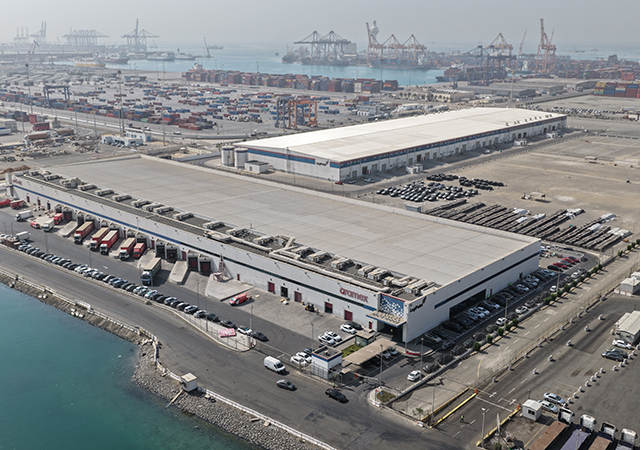
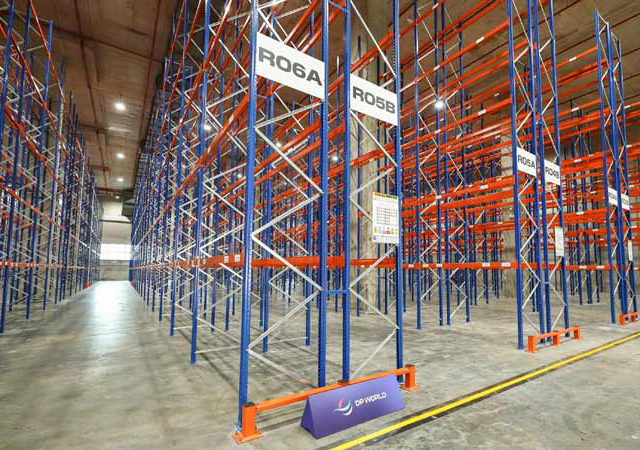
LogiPoint is expanding its industrial logistics portfolio through JLH-02
Creating Greater Value From Inventory
Cargo handling and value-added services further extend the role of the bonded platform.
LogiPoint provides loading and offloading, stripping and stuffing, cross-stuffing, consolidation, deconsolidation, transportation coordination and customs inspection support.
Labelling, packaging and light assembly can also allow inventory to be adapted for different customers or markets without first being moved to another facility.
This gives businesses the ability to convert a single inbound inventory position into several outbound orders, configurations or destinations while maintaining cargo within a controlled logistics process.
Infrastructure for Sensitive Cargo
Specialised logistics requirements are also increasing across food, pharmaceutical, consumer and high-value product categories.
LogiPoint’s temperature-controlled infrastructure supports operating conditions between 15-degC and 25-degC, with relative humidity controlled between 35 per cent and 65 per cent.
Monitoring systems, remote alerts, backup power and redundant HVAC infrastructure support environmental control, while restricted access, surveillance, pest-management procedures and documented custody processes provide additional safeguards for sensitive and high-value cargo.
Cargo acceptance and operating procedures are determined according to the requirements of the individual commodity rather than treating all sensitive products under a single operating model.
Supporting Saudi Manufacturing
LogiPoint is also expanding its focus beyond port-based logistics as Saudi Arabia’s industrial and manufacturing base develops.
Its wider portfolio includes Grade-A warehousing, temperature-controlled facilities, Industrial Open Storage and Build-to-Suit developments.
At Jeddah’s First Industrial City, MODON, LogiPoint is also offering a 30,000 sq m Build-to-Suit development opportunity within a total plot area of approximately 34,962 sq m.
The opportunity is designed for businesses that require a facility developed around specific operational, storage or industrial requirements rather than adapting their processes to a standard building. The site includes available power infrastructure and development permits, with lease terms of up to 15 years.
For manufacturers and industrial operators, this provides greater flexibility to align facility configuration with loading requirements, operating flows and longer-term capacity needs.
More broadly, the connection between bonded infrastructure and industrial logistics can support both inbound raw-material management and finished-goods distribution.
Imported components can remain under bond and be released according to production requirements, helping manufacturers align customs exposure and inventory movement more closely with their operating schedules.
Facilities positioned closer to industrial activity can then provide the storage and distribution capacity required further along the production cycle.
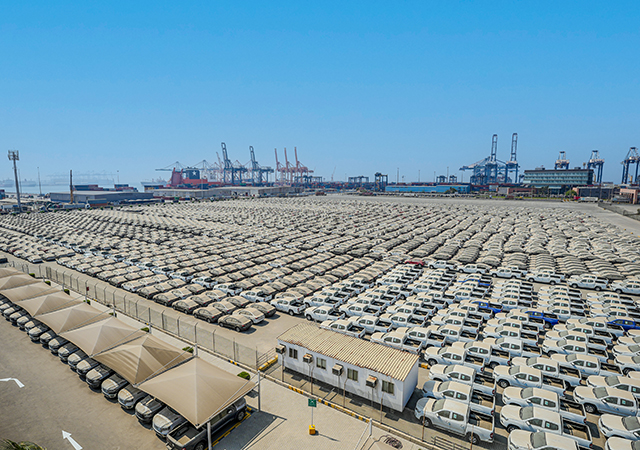
LogiPoint is also offering a 30,000 sq m Build-to-Suit development opportunity at Jeddah’s First Industrial City, MODON
From Trade Gateway to Logistics Platform
Saudi Arabia’s ambition to become a global logistics hub depends not only on the volume of cargo passing through its ports, but also on how much logistics and commercial activity can be created around those flows.
“A global logistics hub has to give cargo a reason to stop, be processed and move onwards rather than simply pass through a port,” Shaikh says.
Bonded storage, consolidation, value-added services and re-export capability can increase the activities performed around cargo before it reaches its final market.
At the same time, industrial logistics infrastructure provides businesses with the capacity required closer to manufacturing, consumption and distribution centres.
The Next Phase
For LogiPoint, port-based bonded infrastructure and industrial logistics developments are therefore complementary rather than separate businesses.
As Saudi Arabia continues to expand its logistics and industrial base, LogiPoint’s development strategy is focused on building infrastructure around the way customers need inventory, cargo and production flows to operate.
LOGIPOINT AT A GLANCE
• Established Saudi Arabia’s first Bonded & Re-Export Zone in 1999
• 1 million sq m logistics platform at Jeddah Islamic Port
• 12,000 sq m JLH-02 tempera ture-controlled facility under devel opment
• 15,000 sq m JLH-02 plot area
• Four interconnected 3,000 sq m temperature-controlled chambers
• Targeting LEED Silver certification
• JLH-02 will be available from 1 January 2027
• 30,000 sq m Build-to-Suit opportunity at Jeddah 1st Industrial City, MODON
• Approximately 34,962 sq m total BTS plot area
• Lease terms of up to 15 years
• SAR5 billion South Jeddah Logistics & Industrial Park
• 1.9 million sq m total development area
• Approximately 1.5 million sq m of leasable logistics and industrial space
• South Jeddah Logistics & Industrial Park groundbreaking planned for H1 2027