



















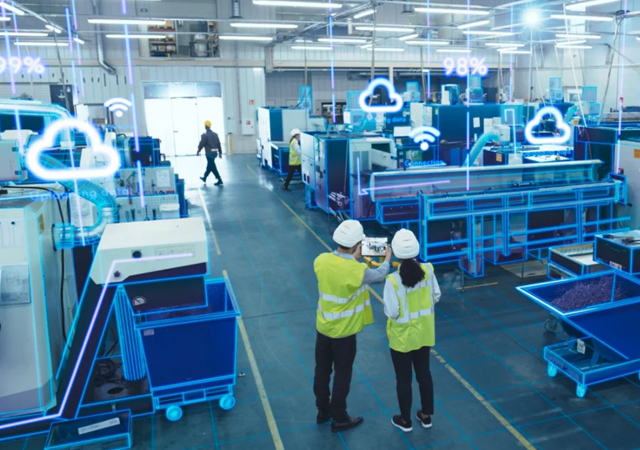
 Turning data into decisions: the control room’s new industrial mission.
Manufacturers and industrial operators across the Middle East are investing heavily in digital transformation, but the next competitive advantage will not come from collecting more data. It will come from creating the insight needed to turn vast streams of information into faster, better decisions across increasingly complex industrial environments.
Across the Middle East, manufacturers are pursuing digital transformation with a level of commitment that exceeds almost every other region in the world. According to Rockwell Automation’s latest State of Smart Manufacturing research, 98 per cent of manufacturers in the region view digital transformation as essential, while almost 30 per cent of operating budgets are now allocated to industrial technology. Artificial intelligence adoption has reached near-universal levels, with 98 per cent of manufacturers either using or planning to use AI and 100 per cent planning to use generative AI. These figures reflect a region that is moving rapidly beyond experimentation and towards large-scale operational deployment.

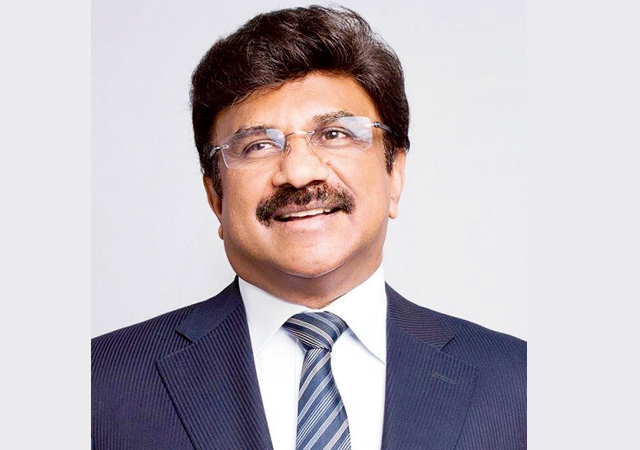
Deniz Dorak.
The ambition behind these investments is clear. Industrial companies across the region are seeking greater visibility across production facilities, utility networks, process plants, remote assets and increasingly complex supply chains. As operations expand and become more connected, leaders want a clearer understanding of what is happening across their businesses at any given moment. The challenge, however, is that visibility alone is no longer enough. Many operators are discovering that collecting information and understanding it are two very different things.
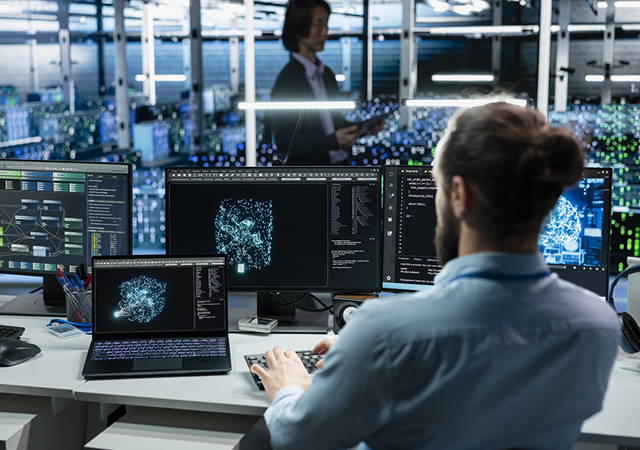
This shift is transforming the role of the control room. Historically, control rooms were designed to monitor and manage production processes within relatively well-defined operational boundaries. Today they are evolving into environments where operational, engineering and business decisions converge. The expectation is no longer simply to observe what is happening, but to understand why it is happening, predict what may happen next and identify the most effective response. As a result, the engineering challenge is changing. The issue is no longer how to display more information, but how to turn growing volumes of operational data into meaningful insight.
The visibility paradox
For years, industrial digitalisation programmes focused on collecting more data. Sensors became cheaper, connectivity improved and computing power increased. Every stage of the industrial process generated additional information that could be stored, analysed and visualised. The prevailing assumption was that greater visibility would naturally lead to better operational performance.

Data-driven intelligence will define competitive advantage.
The reality has proven more complicated. While manufacturers now have access to unprecedented amounts of information, much of it remains underutilised. The State of Smart Manufacturing research shows that manufacturers in the Middle East effectively use only around 41 per cent of the operational data they collect. Despite significant investment in digital technologies, a substantial proportion of potentially valuable information never contributes to operational decision-making.
This creates a paradox. Companies have more data than ever before, yet many still struggle to gain the level of operational understanding they require. The issue is not a lack of information but an inability to transform raw data into context. Operators may be able to see equipment status, production rates, maintenance records and quality metrics, but understanding the relationships between these elements often remains difficult. The challenge becomes even greater when information must be aggregated across multiple facilities, production lines or geographically dispersed assets.
As industrial environments become more connected, the volume of available information continues to increase. Additional sensors, intelligent devices, AI-enabled systems and digital twin technologies all contribute to the flow of data entering operational environments. Without a clear strategy for contextualisation, however, more information can simply create more noise. This is why the conversation is increasingly shifting away from visibility and towards intelligence.
When scale changes everything
The challenge becomes even more pronounced as industrial operations grow in scale. Many legacy architectures were developed when facilities operated largely as standalone environments. While those systems may have performed effectively within a single plant, they were not designed to support enterprise-wide visibility across hundreds of assets and millions of data points.
Today, many industrial operators want a consolidated view across entire production networks. A large manufacturer may wish to monitor multiple plants from a central location. An energy company may require visibility across remote wells, processing facilities, pipeline infrastructure and export terminals. What begins as a project involving thousands of tags can quickly evolve into an environment containing hundreds of thousands or even millions.
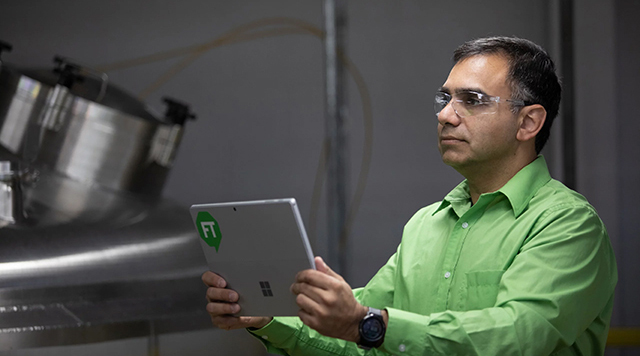
The challenge is no longer displaying more information, but turning operational data into insight.
At that scale, long-standing assumptions about data architecture begin to break down. Network bandwidth, historian performance, storage strategies and system responsiveness all become critical considerations. Engineering teams must decide which information requires real-time transmission, which can be processed locally at the edge and which only needs to be captured under specific operating conditions. Collecting everything at the highest possible frequency may appear attractive in theory, but it often generates unnecessary complexity while delivering limited additional value.
This is where the concept of the right data at the right cadence becomes increasingly important. Different operational decisions require different levels of precision and different update frequencies. A control loop managing a critical process variable may require sub-second updates, while maintenance planning decisions may only require periodic summaries and trend analysis. Treating all information equally places unnecessary strain on systems and creates additional complexity for operators.
The companies making the greatest progress are not necessarily those collecting the largest quantities of data. They are the ones developing architectures that align information flows with operational objectives. Rather than focusing solely on data acquisition, they are determining which information is required, who needs it and when it needs to be delivered. This shift may appear subtle, but it fundamentally changes how industrial data strategies are designed and implemented.
From integration to intelligence
The rise of AI is further accelerating this transition. According to the State of Smart Manufacturing research, 98 per cent of Middle Eastern manufacturers report that AI is augmenting operational technology environments, while 59 per cent have already invested in AI and machine learning technologies. The focus is increasingly on practical applications that improve quality, strengthen cybersecurity, optimise processes and support autonomous operations.
Yet the greatest obstacle to successful AI deployment is rarely the AI itself. The real challenge lies in the underlying data environment. Artificial intelligence can only generate meaningful insights when it has access to accurate, contextualised and connected information. Operational technology systems provide information about equipment performance and process conditions, while manufacturing execution systems, maintenance platforms, quality systems and enterprise applications each contribute additional context. Bringing these sources together in a coherent and usable way has become some of the most demanding engineering work within modern industrial enterprises.

In an era of AI-driven operations, visibility alone is no longer a differentiator.
This is why OT and IT integration is emerging as one of the most important technical disciplines in industrial transformation. Connecting systems is only the first step. Data must also be standardised, contextualised and governed so that information generated in one environment can be understood and applied elsewhere. Manufacturers are increasingly looking for ways to bring together data from control systems, historians, manufacturing execution systems and enterprise applications within a common operational framework.
Technologies such as FactoryTalk DataMosaix and FactoryTalk Optix are designed to help address this challenge, creating greater visibility across previously disconnected environments and helping transform raw operational data into information that can support decision-making. Without that foundation, even the most sophisticated analytics and AI tools struggle to deliver meaningful value.
The next stage of development will increasingly focus on how information is presented to decision-makers. Traditional control systems were built around alarms and alerts. Their purpose was to notify operators when something required attention. While that approach remains essential, it is no longer sufficient for highly connected industrial environments. Operators increasingly expect systems to provide context alongside notifications, helping them understand not only what has happened but also why it happened and what actions should be considered next.
This evolution is already beginning to reshape expectations around control room performance. Intelligent alarming, contextual recommendations and prescriptive guidance are becoming the next layer of capability. The objective is not to remove human expertise from operational decision-making, but to support it. By reducing cognitive overload and helping operators prioritise information more effectively, these capabilities can improve both responsiveness and consistency across industrial operations.
Building the decision environment
The future control room will be defined less by the amount of information it displays and more by the quality of the decisions it enables. Its success will depend on its ability to transform data into understanding, understanding into action and action into measurable operational outcomes.
Achieving this requires scalable data architectures, effective OT and IT integration, strong governance and a clear understanding of how information supports decision-making throughout the business. It also requires platforms capable of connecting control, visualisation, analytics and operational context into a unified environment. Solutions such as PlantPAx, FactoryTalk Optix and FactoryTalk DataMosaix reflect the industry’s broader move towards more connected and intelligent operations.
The Middle East is particularly well positioned to lead this transition. Manufacturers across the region are investing aggressively in industrial technology, adopting AI at scale and pursuing increasingly ambitious digital transformation strategies. Digital twin adoption is accelerating, investment remains strong and companies continue to prioritise technologies that deliver measurable returns. At the same time, the research suggests that substantial opportunities remain to improve how operational data is utilised and transformed into value.
The next phase of industrial transformation will not be defined by who collects the most information. It will be defined by who can create the clearest picture of their operations and act upon it most effectively. As industrial environments become more connected, more distributed and increasingly autonomous, the control room is evolving from a monitoring centre into a decision environment. For manufacturers seeking competitive advantage in an increasingly complex world, that distinction may prove to be one of the most important developments of all.
* About the author: Deniz Dorak is Country Director for the Gulf and North Africa Cluster at Rockwell Automation. He leads the company’s growth strategy and customer engagement efforts across the region, helping manufacturers advance their digital transformation and industrial automation initiatives. Since joining Rockwell Automation in 2014, he has held leadership roles in sales, channel management, and regional operations across the Middle East, Türkiye, and Africa. Dorak holds a degree in Control and Automation Engineering from Istanbul Technical University and an MBA from Bahçesehir University.