

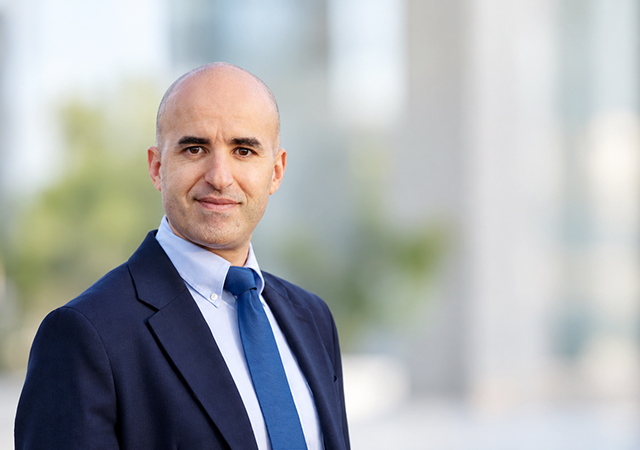


















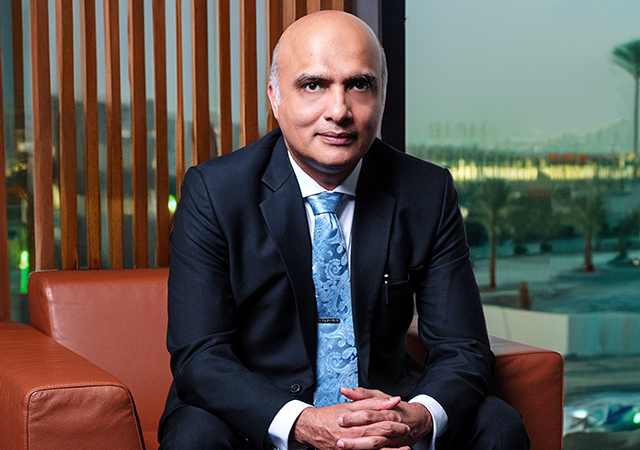




 Akhtar: the local industry is beset with several issues
Despite tremendous econo- mic challenges arising from the global recession, Dubai-based Globalpharma says it registered 20 per cent growth in 2009 in terms of sales over 2008.
The company is expecting similar growth this year as it plans to launch new products and enter new markets in Africa, the Far East and Eastern Europe. It also plans to expand its manufacturing and storage capacites to meet increasing demand in the current year and in the future.
“We have an ambitious plan for horizontal expansion by entering into new emerging markets and adding new products, while our vertical expansion is aimed at growth of existing products well above market growth,” says Jamil Akhtar, general manager of Globalpharma.
New drugs to be launched include the calcium channel blocker for treating hypertension, drugs for the treatment and prevention of osteoporosis, lyner, a weight loss agent, anti-diabetes therapies and cholesterol reducers.
Established in 2003, the company says its mission is to lead through innovation in order to become the premier healthcare company in the Middle East.
The factory has two separate manufacturing units for penicillin and non-penicillin products, while the engineering section and utilities lie in a separate block. Manufacturing takes place on the ground floor. Above that, a service floor houses a comprehensive HVAC system, among other things. Air coming into the factory passes through HEPA filters and, in the case of the penicillin unit, the air is again filtered on exiting the building as protection of the surrounding environment is of prime importance, stresses Akhtar.
Diverse range
Globalpharma manufactures a diverse range of over 60 products encompassing tablets, capsules, syrups and suspensions. Its annual production capacity includes 300 million tablets, 150 million capsules and over 7 million litres of dry suspension and liquids comprising antibiotics, drugs for the treatment of cardiovascular diseases, anti-ulcerants, analgesics, NSAIDs, food supplements, vitamins, medicines for the treatment of diabetes, respiratory products and anti-histamine formulations.
The company exports around 85 per cent of its production representing 75 per cent of total value-wise sales. Its overseas markets include the Middle East and Africa. As well as the UAE market, its biggest markets are Saudi Arabia and Iraq.
Globalpharma highlights that its manufacturing facility adheres to international standards of current Good Manufacturing Practices (cGMP) including those set by US-FDA and UK-MHRA.
“There is strict adherence to validated protocols. Our extensively equipped laboratories cover chemical, instrumental analysis and microbiological testing of raw materials, finished products and the factory environment. Instrumental analysis is carried out using HPLC, GC, UV, FTIR and atomic absorption,” Akhtar says.
 |
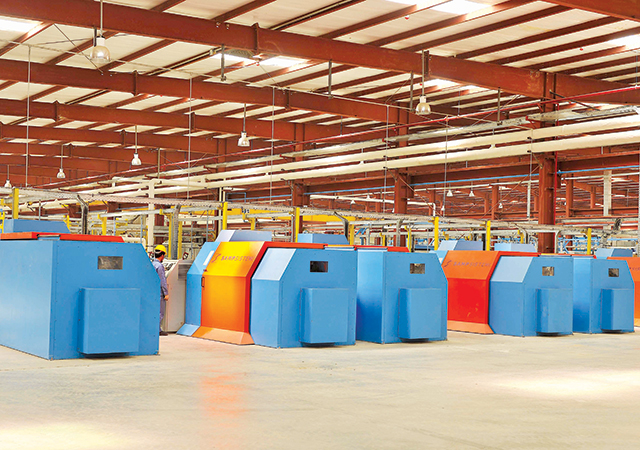
The Globalpharma plant: dynamic moves |
Commenting on the regional market, Akhtar says the UAE and the Gulf are highly competitive. Almost all multinational pharmaceutical firms have their marketing presence there while the number of local generic companies has also significantly increased. This has created tough competition between generic and multinational companies and among generic establishments.
Fast growth
“The pharmaceutical market in the UAE as well as in other Gulf countries is growing quite fast although, compared to 2008, growth came down in 2009 and this continued in the first quarter of 2010. However an encouraging trend is that there is faster growth in the local pharmaceutical industry compared to multinational companies. According to the latest IMS data of the UAE, the top 10 multinational companies registered 16 per cent cumulative growth during the last four years while the top 10 local generic companies registered 67 per cent growth.
“But despite this growth, the share of local companies is still very low. For example the total market share of five UAE-based manufacturing companies is less than 5 per cent of the total pharmaceutical market,” observes Akhtar.
On issues facing the Gulf pharmaceutical industry, he said there were several. One was the problem faced by local companies concerning limited opportunities to gain market share “due to pressure from imported products of similar molecules.” Other issues related to lower margins arising from low approved prices and negligible support in major hospital purchases for branded generics versus similar molecules from multinational companies. Despite local investments from the UAE-based companies, the returns remain low, Akhtar said. However, “multinational companies, who are engaged in almost 100 per cent imports, have much higher margins,” he added.