






































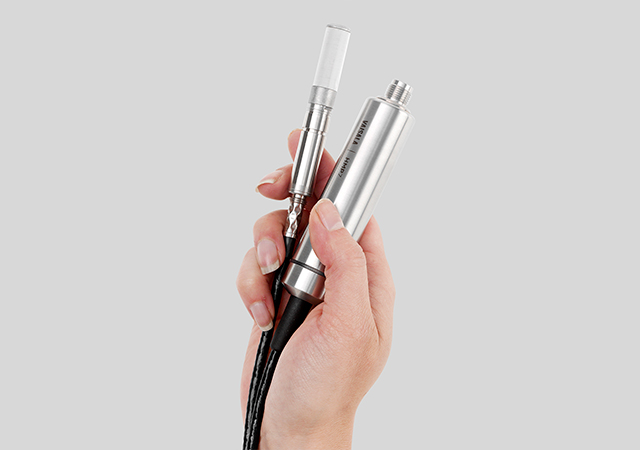
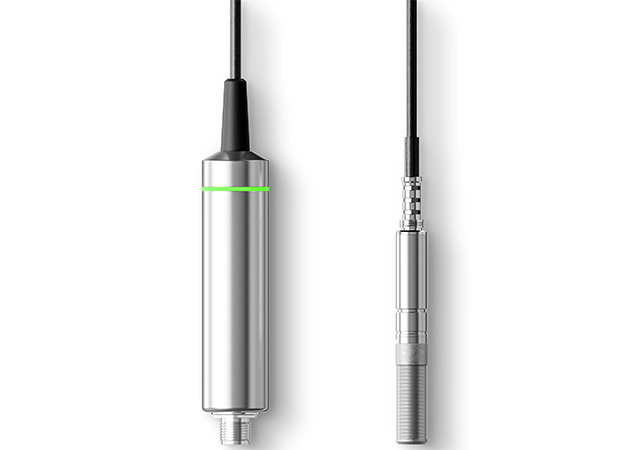
 Vaisala DMP dew point probes can be used inline or in a flow through adapter
As JTEC Energy prepares its hydrogen-based waste-heat-to-power technology for commercial deployment, precise moisture measurement has become a critical enabler of system performance and reliability. By standardising on Vaisala humidity and dew point measurement solutions, the company has gained the confidence needed to protect critical components, simplify process control and support field-scale deployment.
Turning Waste Heat into Sustainable Electricity
JTEC Energy has developed an innovative technology that converts low-grade waste heat into electrical power at higher efficiencies and lower temperatures than many conventional waste-heat recovery systems. At the heart of the process is hydrogen, which acts as a working fluid in a closed-loop system. The technology combines heat-driven hydrogen compression with proprietary electrochemical stacks that convert hydrogen pressure into electricity.
A key advantage of the system is that no hydrogen is consumed during operation. Instead, the same hydrogen circulates continuously within the process, while waste heat serves as the sole energy input.
However, maintaining the right moisture balance throughout the system is essential.
The electrochemical stacks require humidified hydrogen to ensure optimal membrane performance, while the metal hydride reactors used in the waste-heat conversion process must be protected from excess moisture that could impair hydrogen absorption and reduce efficiency.
To manage this challenge, JTEC developed a closed-loop gas management system capable of removing and recirculating more than 99.99 per cent of the moisture introduced into the process.
Moisture measurement is critical to the success of JTEC Energy’s technology
The Moisture Measurement Challenge
Accurate moisture monitoring is required across a wide operating range, from high humidity conditions at the electrochemical stack to extremely low dew point levels before hydrogen is returned to the metal hydride reactors.
According to Julian Bell, Vice President of Engineering at JTEC Energy, humidity control is fundamental to the successful integration of these two subsystems.
“At its core, humidity measurement is so important to JTEC because we have two parts of our system that work really well, but for them to work well together, we have to ensure that we can control humidity passing back and forth between them really tightly,” says Bell.
Before adopting Vaisala technology, JTEC relied on conventional humidity and dew point sensors for laboratory and R&D work. However, these devices often struggled with condensation and saturation events, leading to interrupted testing and unreliable measurements.
In one instance, a six-hour experiment stretched into three days after a moisture sensor saturated, forcing engineers to halt testing, clean equipment and restart the process.
The stakes are even higher in a commercial-scale installation. The reactor subsystem represents a significant proportion of total system cost, and excessive moisture exposure can degrade performance while creating costly maintenance requirements and unplanned downtime.
“The honest truth is that we had not found a good sensor option before we came to Vaisala,” Bell says.
Vaisala Relative Humidity & Temperature Probe HMP7
Selecting Vaisala for Critical Measurements
JTEC first evaluated a Vaisala dew point sensor during an internal R&D project in 2023. As development progressed towards the company’s first production and pilot-scale systems, Vaisala emerged as the preferred supplier thanks to its measurement accuracy, calibration stability, integration flexibility and technical support.
Today, Vaisala instruments support three critical moisture measurement points within JTEC’s production architecture.
High-Humidity Monitoring
After hydrogen exits the electrochemical stack, it enters the initial stage of the dehumidification system where a large portion of moisture is removed.
At this location, JTEC uses a Vaisala HMP7 humidity and temperature probe to verify moisture removal performance and help prevent condensation in the process line.
Low Dew Point Verification
Following the final stages of gas drying, hydrogen must meet stringent moisture specifications before it can safely return to the metal hydride reactors.
For this application, JTEC selected the intrinsically safe Vaisala DMP370 dew point sensor. In addition to providing stable and accurate low-dew-point measurements, the Ex-rated instrument helps prepare the company for future hazardous-area installations and customer requirements.
Maintenance and System Protection
A third measurement point is located in the system’s maintenance manifold, where gas pressures are managed during start-up, shutdown and maintenance procedures.
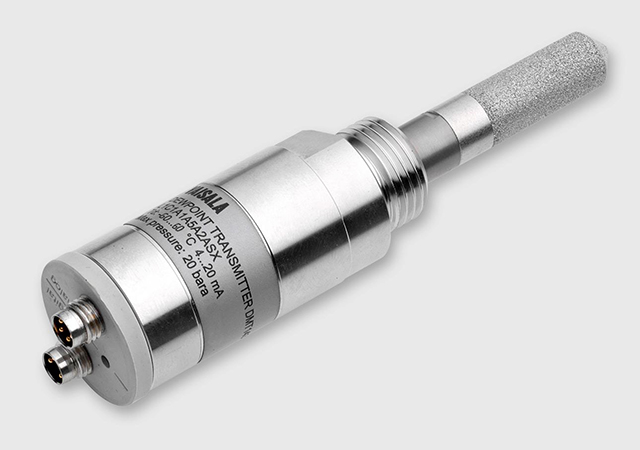
Here, a Vaisala DMT143 dew point transmitter confirms that moisture cannot migrate from humid sections of the process into critical dry hydrogen circuits.
.jpg)
The sensor is installed inline and the housing with the green light houses the electronics
Simplifying Integration and Strengthening Confidence
The sensors were integrated directly into JTEC’s control system as part of the wider production assembly.
Because the process involves dynamic operating conditions with varying pressures, temperatures and flow rates, measurement reliability was a key requirement.
“Vaisala’s auto-calibration is a key feature that improves confidence in the number coming back to us, which has been a huge benefit,” Bell says.
“At the same time, we have been able to integrate pressure compensation routines into our dew point measurements with support from Vaisala engineers, and that expertise really shines through.”
Beyond supplying instrumentation, Vaisala provided access to humidity measurement specialists and scientific expertise that helped JTEC address complex measurement challenges associated with hydrogen applications at varying pressures.
“Vaisala helped educate us about what is known, what we can confidently say and where confidence drops off,” Bell says.
“It is because Vaisala has experts like that and is willing to make them accessible to customers that we were able to make intelligent decisions about how to perform these measurements.”
Supporting Field Deployment
As JTEC prepares to deploy its first production system in a field pilot, confidence in moisture measurement remains central to protecting reactor assets and validating system performance.
The company must accurately verify that hydrogen re-entering the metal hydride reactors remains within tightly controlled moisture specifications. This makes measurement accuracy, repeatability and long-term stability critical to operational success.
“I would have to have the highest level of certainty in my moisture measurements in order to feel comfortable running a reactor system of this scale in a field pilot, and Vaisala provides this certainty,” Bell says.
“The investment in the reactor system is too great to justify running it if you are not 100 per cent confident that you know what kind of moisture content you are putting back into the reactors.”
Results and Benefits
By standardising on Vaisala measurement technology, JTEC has achieved several key advantages:
Reliable verification of moisture removal performance across the gas management system.
Protection of metal hydride reactors from damaging moisture exposure.
Accurate measurement of extremely low dew point levels.
Simplified process control through stable, dependable data.
Readiness for hazardous-area installations through Ex-rated instrumentation.
Consistent measurement technology across both R&D and production environments.
The company now uses Vaisala DMT143 transmitters as its standard dew point solution in R&D operations, while the DMT143, HMP7 and DMP370 have become integral components of its production system architecture.
The DMP370’s continuous, stable measurements also provide operators with greater confidence when managing dehumidification cycles and process transitions.
“When we are deciding when to switch from one dehumidification column to another, knowing there is never a time period where we do not have direct eyes on the moisture content of the exiting gas makes it even easier for us,” Bell says.
A Trusted Partnership for Future Growth
As JTEC scales its technology from laboratory development to commercial deployment, moisture measurement remains a core enabler of system reliability, reactor longevity and customer confidence.
According to Bell, the importance of moisture monitoring has elevated Vaisala from a sensor supplier to a strategic technology partner.
“Vaisala provides one of the three most important sensors in our entire system, with the moisture sensor being the most important sensor for the longevity of our system,” Bell says.
“This is the one place where we could not be happier and are not looking for new sensors.”
By providing accurate and dependable humidity and dew point measurements, Vaisala has helped establish the measurement foundation that JTEC needs to bring its next-generation waste-heat-to-power technology from the laboratory into real-world operation.
Vaisala is a global leader in measurement instruments and intelligence for climate action. The company helps customers improve resource efficiency, accelerate the energy transition and enhance safety through advanced measurement technologies.