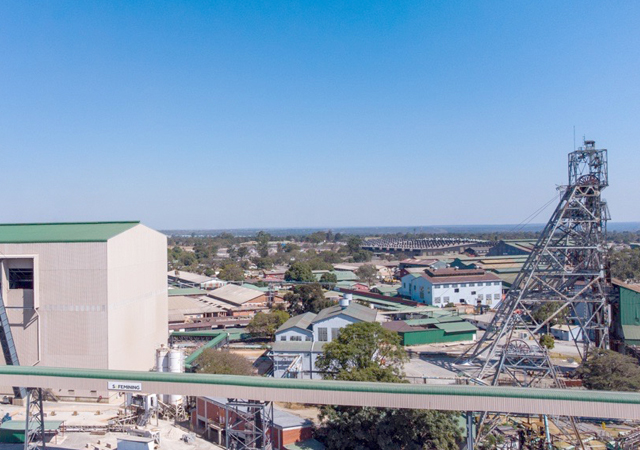
 Mopani’s turnaround gains momentum as Zambia bets on copper-led growth
Zambia’s ambitions to raise copper output to three million tonnes annually are increasingly tied to the success of Mopani Copper Mines, where a major operational turnaround is gathering pace under the joint stewardship of International Resources Holding (IRH) and ZCCM Investments Holdings (ZCCM-IH).
The two shareholders have reaffirmed their long-term partnership and commitment to expanding Mopani’s production capacity, following discussions on the mine’s next phase of development. The renewed alignment comes as copper producers worldwide race to secure supply amid growing demand from electrification, renewable energy and industrial infrastructure projects.
At the center of the strategy is a $1.1 billion investment commitment from Abu Dhabi-based IRH, which acquired a controlling stake in Mopani in 2024. The funding is intended to support operational improvements, mine development and production growth, with the company targeting 300,000 tonnes of finished copper annually by 2029.
For Zambia, one of Africa’s largest copper-producing nations, the expansion represents more than a single mining project. It is a critical component of the country’s broader objective to significantly increase national copper production and strengthen its position.
Since IRH became the majority shareholder, Mopani has reported a strong recovery in production performance. Contained copper output increased by 63 per cent between 2023 and 2025, reflecting ongoing efforts to modernise operations and improve efficiency across the Copperbelt asset.
The company’s growth trajectory highlights the increasing importance of brownfield expansion projects in meeting future copper demand. While new greenfield mines remain difficult and capital intensive to develop, established operations such as Mopani offer a faster route to increasing output from existing mineral resources.
Beyond production targets, the partnership places considerable emphasis on workforce development and community impact. More than 99 per cent of Mopani’s employees are Zambian, making the operation a major employer and economic anchor in mining communities such as Kitwe and Mufulira.
Both shareholders have indicated that maintaining employment, improving safety standards and investing in workforce training remain central to the mine’s long-term strategy. As the operation expands, skills development is expected to play a key role in supporting increasingly sophisticated mining activities.
The mine’s economic footprint also extends well beyond the pithead. Mopani has spent more than $685 million with over 1,300 Zambian suppliers, underlining the role that large-scale copper operations can play in strengthening local industrial ecosystems and supporting the growth of domestic service and manufacturing sectors.
For the industrial metals sector, the Mopani story reflects a broader trend across Africa’s mining industry: a growing focus on long-term investment, operational modernisation and value creation through stronger local supply chains.
Governments and investors alike are increasingly looking beyond production volumes to assess how mining projects can contribute to wider economic development.
Looking ahead, the partnership between IRH and ZCCM-IH could extend beyond Mopani itself. The companies are exploring opportunities in mineral exploration and additional mining ventures, signaling confidence in Zambia’s resource potential and its future role in supplying metals to global markets.
As demand for copper continues to rise, driven by electrification and energy-transition technologies, Mopani’s planned expansion may prove pivotal not only for Zambia’s production ambitions but also for the country’s aspiration to secure a larger share of value from one of the world’s most strategically important industrial metals.