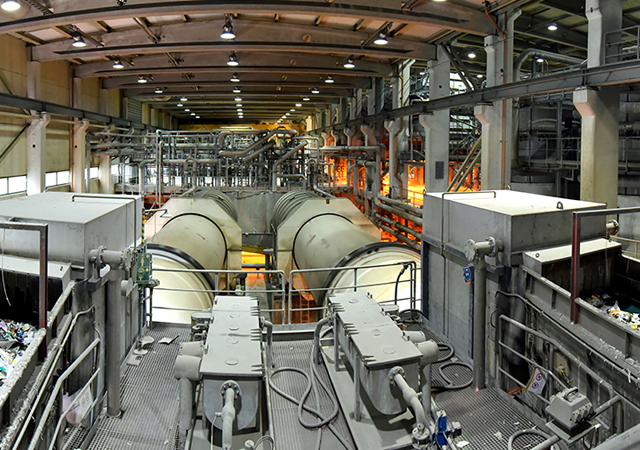
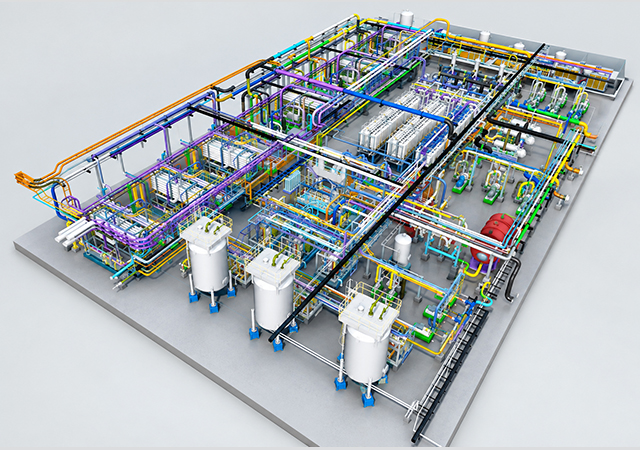
 CANNON Artes has been awarded a new contract for the engineering and supply of an advanced water treatment plant for the Shuqaiq Power Plant in Saudi Arabia.
Fresh from securing a contract to deliver an advanced water treatment system for Saudi Arabia’s 3GW Shuqaiq Power Plant alongside Orascom Construction and Técnicas Reunidas, Cannon Artes is helping address one of the GCC’s most pressing industrial challenges: how to sustain growth in a region where water remains one of the scarcest resources.
The project highlights the increasingly strategic role of specialised water treatment technologies in supporting major energy infrastructure developments across the Gulf while advancing sustainability and resource-efficiency goals.
For industries such as power generation, oil and gas, petrochemicals and fertilizers, balancing rising water demand with environmental responsibility is becoming increasingly complex. The GCC combines large-scale industrial activity with some of the world’s most severe water constraints, creating what Mauro Monti, Area Manager at Cannon Artes S.P.A., describes as a “structural paradox”: highly water-intensive industries operating in one of the most water-scarce regions on the planet.
The challenge is magnified by the region’s reliance on desalination, which supplies between 20 per cent and 60 per cent of freshwater needs and accounts for around 40 per cent of global desalination capacity. While desalination underpins industrial and economic development across the Gulf, it also brings significant energy, cost and environmental considerations.
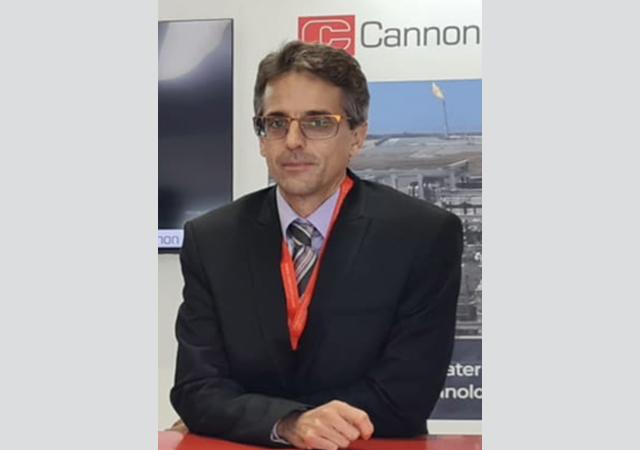
Mauro Monti
“The key challenges are rising utility costs, treating increasingly complex industrial effluents, and minimising the environmental impact of brine discharge into the shallow Gulf,” says Monti in an exclusive interview with the Gulf Industry.
Yet these challenges are also driving innovation. As industries pursue greater efficiency, resilience and decarbonisation, advanced water treatment, reuse and circularity strategies are becoming central to the design of next-generation industrial facilities.
From Water Management to Water Security
Industrial customers are also rethinking their relationship with water. Historically, water treatment initiatives were often driven by cost reduction or regulatory compliance. Today, the conversation has expanded to include water security and operational resilience.
“Minimising water consumption and wastewater discharge is no longer only about lowering costs,” Monti says. “It’s about ensuring plants remain resilient to external factors that could affect production.”
This shift is particularly relevant in the GCC, where climate pressures, population growth, industrial diversification programmes, and expanding energy infrastructure are placing unprecedented demands on water resources. As a result, industrial operators are increasingly seeking technologies that can maximise recovery rates, enable water reuse, and minimise dependence on fresh water supplies.
Engineering for Complexity
As industrial processes become more sophisticated, so do their wastewater streams. Treatment systems must now handle fluctuating flow rates, varying chemical compositions, thermal variations, batch discharges, and diverse water sources ranging from seawater and groundwater to recycled process water.
In this environment, standardized treatment packages often struggle to deliver optimal performance.
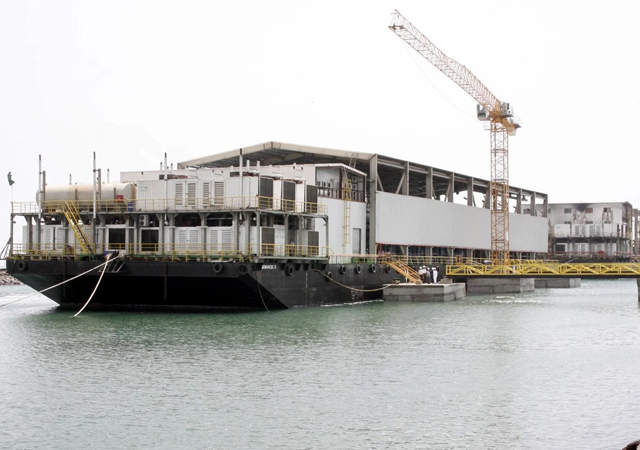
The technologies are transforming industrial water management in the Gulf
Monti believes the industry’s future lies in highly customised engineering solutions.
“Industrial water treatment is a complex exercise because every facility presents unique operating conditions,” he says. “Plant-specific solutions are essential when dealing with high salinity, variable wastewater characteristics, and stringent reuse requirements.”
This engineering-led approach is becoming increasingly important as industries pursue more aggressive water recovery targets and circular economy objectives.
The Rise of Circular Water Systems
One of the most significant transformations underway is the transition from linear water use models toward closed-loop water management systems.
Advanced membrane technologies are playing a central role in this shift. Modern membrane systems are capable of recovering high-quality water from previously unusable industrial effluents, enabling water to be reused multiple times within industrial processes.
At the same time, digitalisation is enhancing the reliability and economic viability of these systems.
According to Monti, real-time monitoring, predictive maintenance platforms, automated cleaning cycles, and advanced control systems are helping operators improve asset performance, reduce energy consumption, and extend membrane lifespans.
“Advanced membranes are the building blocks of the water reuse revolution,” he notes. “Digital tools ensure these systems remain technically effective and economically sustainable throughout their lifecycle.”
Together, these technologies are moving industrial facilities closer to a circular water model where wastewater becomes a valuable resource rather than a disposal challenge.
Shuqaiq: A Showcase Project
This evolution is reflected in Cannon Artes’ latest projects in the region, including a recently awarded contract for the 3GW Shuqaiq Power Plant in Saudi Arabia.
The project represents one of the company’s most significant power-sector water treatment assignments in the Gulf and highlights the increasingly sophisticated requirements of modern power generation facilities.
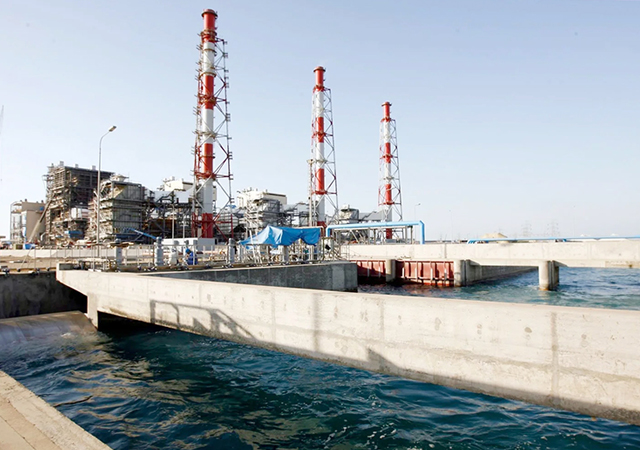
Shuqaiq Water Desalination Plant
The water treatment system will process approximately 26,000 cubic metres of high-salinity seawater per day, producing demineralised water for steam generation, potable water for plant operations, and service water for utility applications.
What makes the project particularly challenging is the extreme variability of seawater conditions. While the system is designed for average salinity levels between 38,000 mg/l and 40,000 mg/l, it must also accommodate seasonal peaks that can reach 45,000 mg/l during the Gulf’s hottest summer months.
Ensuring consistent water quality under such conditions requires robust treatment architecture capable of maintaining performance despite significant fluctuations in feedwater characteristics.
Building on Regional Experience
The Shuqaiq award also reflects the growing importance of long-term partnerships within the region’s infrastructure sector.
The project follows Cannon Artes’ successful delivery of the Hajar power plant desalination system, which was executed for the same consortium comprising Orascom Construction and Técnicas Reunidas.
According to Monti, client confidence built through the Hajar project played a significant role in securing the new contract.
In an increasingly competitive market, operational performance and proven execution capability are becoming major differentiators, particularly for critical infrastructure projects where reliability is paramount.
Efficiency Gains Beyond Water Savings
Beyond water production, energy efficiency has become an increasingly important design criterion for industrial treatment systems.
The Shuqaiq facility incorporates energy recovery technology that captures energy from reject streams and redirects it to boost incoming seawater flows.
The system is expected to recover approximately 400 kW per treatment line, resulting in total energy savings of around 1.2 MW.
Such measures align with broader regional sustainability agendas that seek to reduce the environmental footprint of both water production and industrial operations while controlling operating costs.
Water’s Expanding Role in the Energy Transition
While water scarcity remains a pressing concern, the significance of industrial water treatment extends beyond conservation.
Water is increasingly becoming a strategic enabler of the energy transition itself.
Green hydrogen and green ammonia production rely on highly purified water for electrolysis, while carbon capture projects require specialised water treatment systems as part of the capture and processing chain.
As governments and industries pursue decarbonisation targets, demand for advanced water infrastructure is expected to rise alongside investments in clean energy technologies.
Monti notes that Cannon Artes is already supplying customised treatment systems for carbon capture projects across multiple continents, serving industries ranging from cement and waste-to-energy to upstream oil and gas and fertilizer production.
Climate Change Driving Regulatory Change
Climate change is expected to further accelerate the evolution of industrial water management practices across the GCC.
In response to growing environmental pressures, major energy and industrial companies are increasingly introducing water-footprint reduction targets as part of their sustainability strategies.
Monti expects many of today’s voluntary commitments to become future regulatory requirements.
As governments strengthen climate policies and resource management frameworks, industrial water reuse, recovery, and discharge performance are likely to face increasing scrutiny.
For water technology providers, this creates both opportunity and responsibility. Solutions will need to demonstrate not only technical effectiveness but also measurable environmental benefits and long-term economic viability.
The Next Five Years
Looking ahead, several trends are expected to shape the Middle East’s industrial water sector.
The first is a substantial increase in treatment capacity driven by growing electricity demand. The rapid expansion of digital infrastructure, artificial intelligence applications, and data centres is expected to place additional pressure on power generation systems, which in turn require reliable water treatment infrastructure.
At the same time, ageing hydrocarbon reservoirs are producing increasing volumes of water alongside oil and gas, creating new requirements for treatment, reuse, and disposal solutions.
The second major trend is the acceleration of water circularity initiatives.
“Every drop counts” is increasingly becoming the defining philosophy of industrial water management in the region, with operators seeking to recover and reuse as much water as possible before considering discharge.
Monti also anticipates stronger integration between civil and industrial water networks, creating opportunities for more balanced, flexible, and resource-efficient water management frameworks that combine centralised and distributed treatment facilities.
Water as the Enabler of the Gulf’s Industrial Ambitions
As the GCC simultaneously pursues economic diversification, industrial expansion, and net-zero ambitions, water will become one of the most critical elements linking these objectives together.
Whether supporting power generation, enabling hydrogen production, facilitating carbon capture, or improving industrial resilience, advanced water treatment technologies are increasingly positioned at the centre of the region’s industrial ecosystem.
“In an increasingly energy-intensive world, the Middle East will continue to strengthen its position as a global energy powerhouse,” says Monti. “Water circularity will be fundamental to achieving that future.”
The message is clear: in the Gulf’s next phase of industrial growth, water management will no longer be viewed as a utility function. It will be a strategic asset that underpins competitiveness, sustainability, and long-term energy security.