









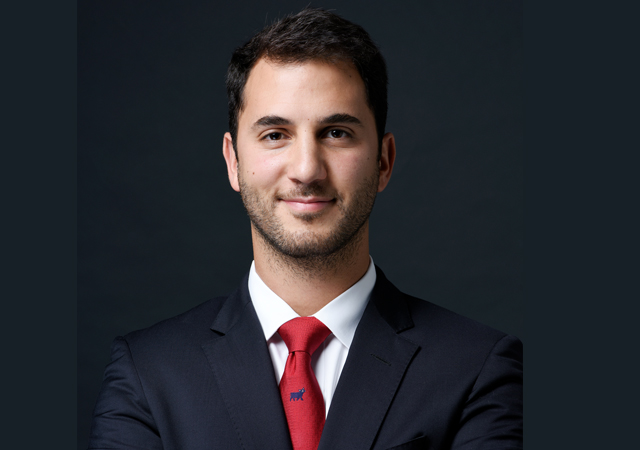

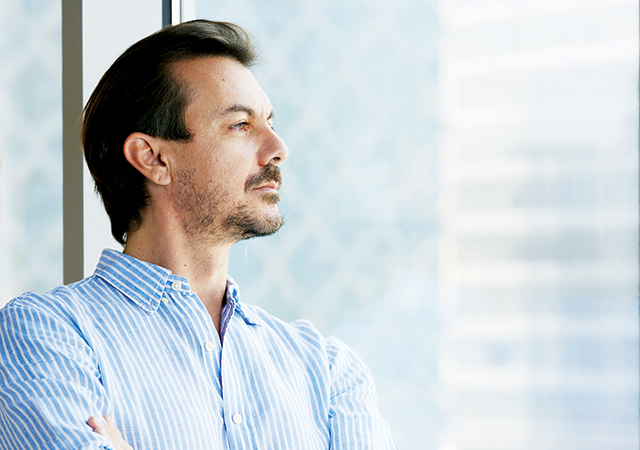
 “Know the condition of what your AI is standing on”: Francesco Ciardulli
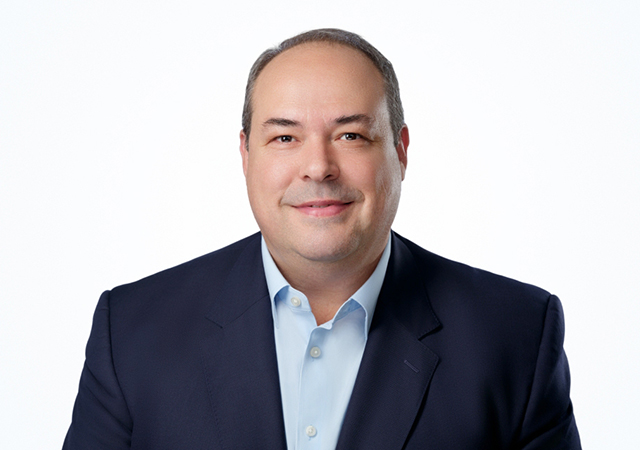
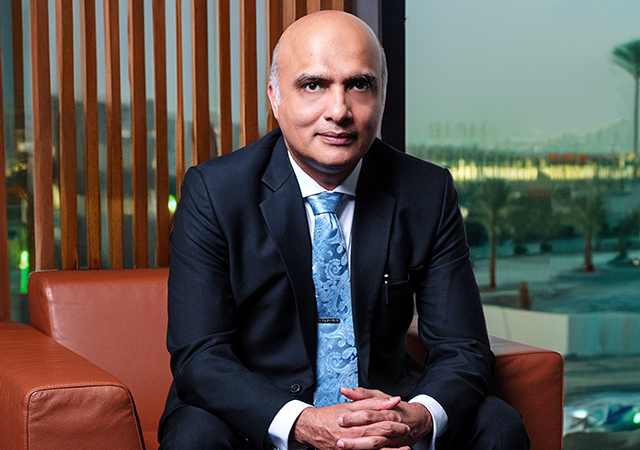
Across the Gulf, accelerating investment in smart ports, logistics corridors and maritime megaprojects has put AI, automation and digitalisation at the centre of industry discussions. Yet, according to Francesco Ciardulli, CEO of CWP Engineering, the industry’s greatest opportunities may lie beneath the surface.
“The future of Gulf ports will be determined as much by what happens beneath the waterline as by the AI systems operating above it,” he says, arguing that marine infrastructure must evolve alongside the technologies it supports.
In an exclusive interview with Gulf Industry, Ciardulli, a coastal engineer by background with extensive experience across ports and marine infrastructure, explores how AI is transforming the design, monitoring and management of ports, breakwaters and quay walls. From predictive maintenance and digital twins to climate resilience, he explains how technology can help owners make better decisions, while emphasising that “the engineer keeps the judging” and warning that “automation is unforgiving of movement.”
His message is clear: the smartest ports will be those that combine digital innovation with robust engineering foundations; and his advice to port owners is straightforward: “Know the condition of what your AI is standing on.”
As Gulf ports prepare for larger vessels, climate challenges and increasingly automated operations, that principle may prove more important than any new technology itself.
Excerpts from the interview:
Gulf ports are investing heavily in AI and automation. What should that mean for the marine infrastructure being designed today, and how different might a port built in 2030 look from one designed a decade ago?
From the air, a 2030 port will look much like one designed in 2015. The real difference is below the surface, and that is where I would focus the conversation.
Automation is unforgiving of movement. A crane driver compensates for a quay that has settled a few centimeters; an automated stacking crane or a driverless vehicle does not. The tolerances we design to, for settlement of quay walls, alignment of crane rails and deflection of pavements, are tightening, and that pushes more of the engineering effort into the ground and the foundations, the part nobody sees.
Second, the structure itself becomes a source of data. Space for sensors, cable routes, power and access for monitoring should be designed into a quay wall or breakwater from day one. Retrofitting them into a 50-year asset is expensive and rarely complete.
Third, adaptability. A port designed today will still be working in 2075, handling vessels and cargo we cannot fully specify yet. The smart choice is often to buy flexibility early, for example foundations able to take a future raise of the quay or a deeper berth, at a fraction of what it would cost to rebuild later. A decade ago, most ports were designed for one fixed future. The 2030 port should be designed for several.
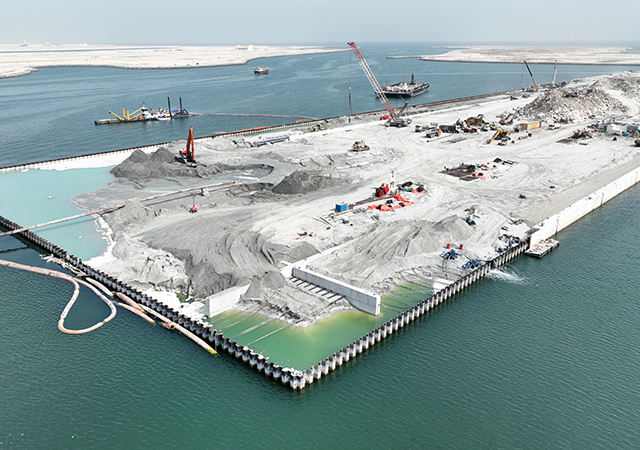
Quay wall construction and land reclamation. “The real difference is below the waterline.”
Much of the AI conversation in ports has centered on terminal operations and logistics. Where do you see the biggest untapped opportunities for AI in marine and coastal engineering itself?
Most of the attention sits above the quay line: berth allocation, crane sequencing, gate traffic. The larger untapped opportunity, in my view, is below it. A port is a physical system sitting in a moving sea, and waves, currents and sediment are working on its breakwaters, quay walls and channels every day. Three areas stand out:
• Reading the site. Coastal engineering depends on years of wave, current, water-level and seabed data. AI is very good at sifting large, uneven datasets to find patterns and gaps, which gives engineers a clearer picture of a site much earlier in a project.
• Inspection. Drone, underwater-vehicle and sonar surveys produce far more imagery than people can review consistently. Trained properly, AI can flag cracking, displaced armor, scour or corrosion, so engineers spend their time assessing what has been flagged rather than searching for it.
• Sediment and dredging. Anticipating where a channel or basin will silt up lets a port plan its dredging instead of reacting once navigation is already affected.
The common thread is that AI takes over the searching, and the engineer keeps the judging.
How can AI improve the modelling and design of ports, breakwaters, quay walls and other marine assets during the planning phase?
The honest answer is breadth. In planning, the biggest risk is rarely a wrong calculation; it is the option nobody tested. AI lets us screen many more layouts, orientations and crest levels, against many more combinations of waves, tides and surge, than traditional workflows allowed.
I see it working in two stages. Fast machine-learning models, trained on the results of detailed numerical and physical model studies, give early answers and help us discard weak options quickly. The options that survive then go through the full engineering chain: calibrated numerical models and, for critical structures, physical model testing in a hydraulic laboratory. On an offshore island project in Saudi Arabia, for instance, we built a 3D physical model specifically to verify the marine works design before construction. The computer tells you what is probable; the physical model shows you what the water actually does.
Speed also changes the conversation with the client. Instead of presenting one design, we can show the owner why the alternatives were set aside, and that makes for better decisions and greater trust.
To what extent can digital twins and AI-driven simulations help port owners make better investment decisions before construction begins?
They can help a great deal, provided owners treat them as decision tools and not as proof.
Their real value is in changing what gets compared. Many port investment decisions are still made largely on construction cost. A good digital twin lets an owner compare options on what they will cost over their whole life: maintenance, dredging, the days a berth is closed because waves are too high and the cost of adapting later. A cheaper breakwater that closes a berth for several extra weeks a year is not really cheaper.
They also let owners rehearse the future, with larger vessels, different berth use or a higher sea level, and see where a design starts to struggle before a single block is placed.
But a digital twin is only as truthful as the site data beneath it. It cannot make up for a thin geotechnical investigation or an uncalibrated wave model; it will simply make a wrong assumption look very convincing. My advice to owners is to ask two questions of any twin they are shown: what has it been calibrated against, and who checked it?
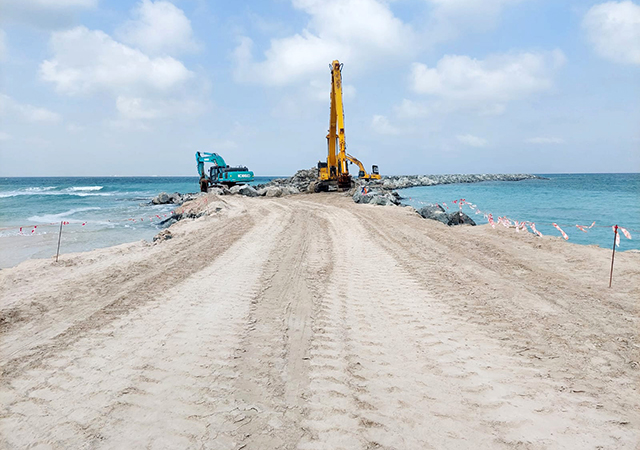
Rock armour being placed as a new breakwater advances from the shore.
Asset monitoring is becoming increasingly data driven. How can AI help port operators move from reactive maintenance to predictive maintenance for critical marine infrastructure?
The shift is from maintaining by the calendar to maintaining by condition.
Many marine structures are still inspected on a fixed cycle and repaired when damage becomes visible. By then a displaced armor unit or a scour hole at the toe of a quay wall may already be well developed. When settlement, movement, strain, corrosion and cathodic-protection readings are tracked over time, AI can pick up the slow trends and small anomalies that come before a problem and help an operator rank assets by how quickly they are deteriorating and what a failure would cost.
Two conditions have to be met. The first is a baseline: you cannot recognize change if you never measured the starting point, so a thorough as-built survey at handover is some of the most valuable data a port will ever hold. The second is continuity, because an algorithm learns from years of consistent records, not from a single campaign.
And the output should be a question for an engineer, not an automatic work order. The model can say that a breakwater section is behaving differently from last year. It takes an engineer to say why, and whether it matters.
What types of data are most valuable when assessing the health and performance of coastal and marine assets, and are port operators collecting enough of it today?
The most valuable data is the most consistent.
For marine assets that means repeated bathymetric and topographic surveys; wave, current and water-level records; structural movement and settlement; corrosion and cathodic-protection readings; and properly archived inspection reports. Ten years of comparable surveys will tell you more about how a breakwater is behaving than one exceptional survey, because what matters is the trend.
Are operators collecting enough? Many collect a good deal, but it is scattered across different contractors, formats and reference levels, often sitting in the archive of whoever built the asset. Some of it is gathered only after something has gone wrong, which is exactly when it is least useful.
There is a quieter problem too. Often, the most complete record of how an asset behaves lives in the memory of the people who have looked after it for years. When they move on, that knowledge leaves with them. So before investing in advanced analytics, I would invest in consistency: common survey standards, one reference level and one place where the record lives.
The Gulf presents unique environmental conditions, including high temperatures, salinity and sediment movement. How can AI help engineers better understand and manage these challenges?
The Gulf is a demanding environment for marine structures. High water temperatures, high salinity, fine mobile sediments and shallow, semi-enclosed waters create conditions that design data drawn from other seas does not always capture well.
This is where AI and local science work best together. On durability, combining temperature, chloride exposure and inspection records across many structures can give engineers a much better picture of how concrete and steel actually age here, rather than relying on assumptions borrowed from other climates. On coastal change, comparing successive surveys and satellite imagery helps detect where sediment is building up, where shorelines are moving and where scour is developing around structures.
The precondition is local numbers. A model trained on another sea will give you another sea’s answers. That is why CWP developed its own regional hydrodynamic model of the Arabian Gulf, which provides the boundary conditions for our local studies. In this region, I believe the advantage will belong to whoever holds the best long-term local record, more than to whoever has the cleverest algorithm.
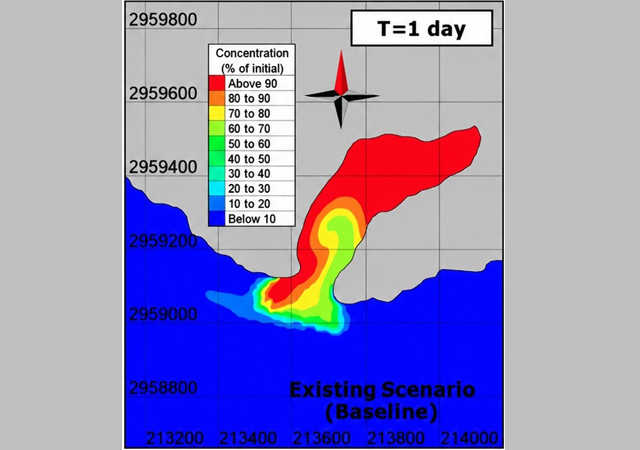
Numerical modelling of water exchange in a coastal inlet, showing tracer concentration after one day.
Is there a risk that the industry’s enthusiasm for AI leads to overreliance on algorithms, particularly when dealing with complex coastal environments and extreme weather events?
Yes, and I would put it simply: AI returns the most statistically probable answer. It is not truly intelligent, and you always need an engineer who can question it. Probable is useful, but it is not the same as correct, and in coastal engineering the gap matters most exactly where the stakes are highest.
A design storm is, by definition, the kind of event our records contain least. An algorithm trained on history performs best in the middle of its data and worst at the extremes, which is precisely where structures fail. It will also produce a confident, well-presented answer when it is working well outside anything it has learned. The danger is not only that the model is wrong; it is that nobody questions it because it looks right.
So, the discipline has to be deliberate. AI outputs should be checked against physics, against established engineering models and, for critical structures, against physical model tests. The burden of proof should stay where it has always been: the engineer demonstrates that a design is safe, rather than waiting for someone to prove the model wrong. And a named engineer must remain accountable for the final decision.
Where do you believe experienced engineering judgement will remain irreplaceable, regardless of how advanced AI becomes?
In at least three places:
• Deciding what risk is acceptable. Choosing a return period, a safety margin or an overtopping limit is a decision with consequences for people, assets and public money. Someone has to own it, and an algorithm cannot sign a drawing.
• Knowing what can actually be built. A design has to survive a particular seabed, the rock that is actually available, the weather windows and the reality of working offshore. That knowledge is earned on site.
• Noticing when something does not look right. Much of engineering judgment is a trained instinct for the anomaly: the wave height that seems too low for that bay, the settlement that is too uniform. I learned a version of this as a sailor. You cannot fight the wind; you read it, and the instruments are only one of the ways you read it.
This is also why I think carefully about how the next generation is trained. If young engineers learn to run models before they learn to read the sea, we risk a profession that is very good at producing answers and less good at doubting them. Part of our job as firms is to keep putting young engineers on site and in the laboratory.
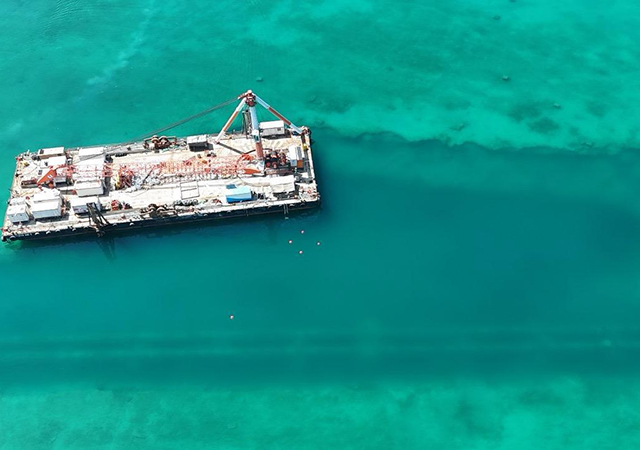
Crane barge supporting offshore marine works. At sea, the weather window decides the programme, and better forecasting helps contractors make the most of it.
How can AI support climate resilience planning for ports, particularly as operators prepare for rising sea levels, more extreme weather and evolving trade patterns?
Its biggest contribution is helping us stop designing for a single future.
Sea level, storm intensity and trade patterns are all uncertain over a 50-year design life. AI-assisted modeling makes it practical to run many combinations of sea level, surge, waves and vessel size, and to see where a design starts to struggle, instead of betting everything on one projection.
That changes the design question from “how high should we build?” to “what should we build now, and what should we be ready to add later?” In practice, that can mean a breakwater or quay whose foundations are sized for a future raise, together with clear triggers, such as measured sea-level or overtopping thresholds, that tell the owner when the upgrade is due. You pay a little today for the right to decide later, when you know more.
One point I would stress: global projections are averages for the planet, and no port experiences the average. What matters for a specific quay is the local picture of sea level, surge and wave climate. Building that local evidence, and keeping it up to date, is as important as any model. The structures we design today will still be working long after the people who designed them have moved on, and that is a responsibility engineers carry.
Are there examples of AI applications in marine engineering that are already delivering measurable benefits, either in cost savings, asset longevity or operational reliability?
I want to be careful here, because this is an area where claims can run ahead of the evidence. Where the benefits are real and measurable today:
• Inspection. Drones, underwater vehicles and image analysis make inspections faster, more repeatable and less dependent on divers, with less disruption to port operations. The gains show up in time on site, safety and consistency from one inspection to the next.
• Forecasting. Better short-term prediction of waves, wind and water levels helps ports and contractors choose the right weather windows for marine works and berth operations. On a marine construction site, a well-used weather window translates directly into cost and program.
• Condition monitoring. Where good historical data exists, early warning of deterioration allows repairs to be planned before a failure rather than after it.
While short-term pilots often show very promising savings, the true test for marine assets is scaling those benefits over decades. A result measured over eighteen months is an encouraging indicator, but validating long-term value requires patience. My advice is to define how success will be measured before a pilot starts, and to judge it over a period long enough to mean something.
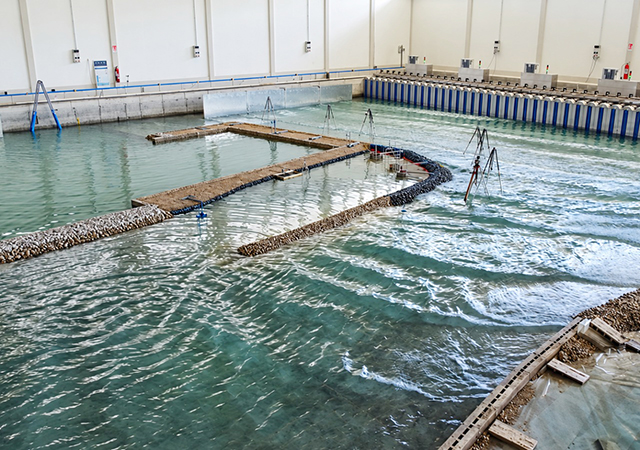
“The computer tells you what is probable; the physical model shows you what the water actually does.”
Looking ahead five to ten years, what capabilities do you expect port owners and infrastructure developers to demand from engineering partners as AI becomes more deeply embedded across the sector?
I expect three things.
First, engineering that connects. Designs, models and as-built records delivered in a form that feeds directly into the owner’s asset management systems and digital twin, rather than a stack of documents someone has to re-enter.
Second, engineers who stay involved after handover. Owners will increasingly want the designer to compare how the asset actually performs against what was designed, and to adjust the maintenance strategy accordingly.
Third, transparency about AI. Owners will rightly ask where AI was used in a design, how its outputs were checked and who signed for them. At CWP we are developing our own AI tools on one simple rule: the software can organize and accelerate the work, but no design figure reaches a client unless an engineer has produced or verified it and puts their name to it. I expect clients to begin writing requirements like that into their tenders.
If you were advising a Gulf port CEO investing heavily in AI today, what is the one infrastructure-related capability or priority you believe they should focus on that is currently being overlooked?
Know the condition of what your AI is standing on.
A great deal of investment is going into AI for port operations: the berths, the cranes, the gates. Far less goes into understanding the marine structures that all of this depends on. Breakwaters, quay walls, revetments and channels are the foundation of everything a port does, yet their underwater nature means they often lack the dense, continuous data streams of topside assets.
So, my recommendation would be a proper baseline: a full condition survey of the marine infrastructure and the surrounding seabed, followed by consistent, continuous monitoring, held in one place and owned by the port rather than scattered across past contractors. It is the quiet work that turns an operational AI system from one that assumes the infrastructure is fine into one that knows.
While topside smart technologies frequently capture the headlines, unlocking the full value of AI means extending that visibility below the waterline. The ports that close that gap first will get the most out of everything else they invest in.