

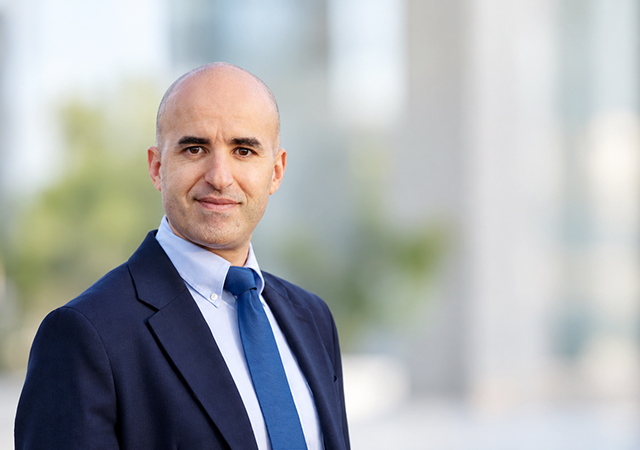




















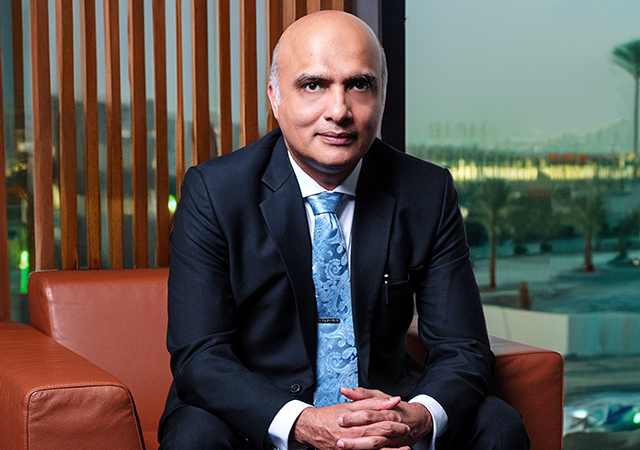




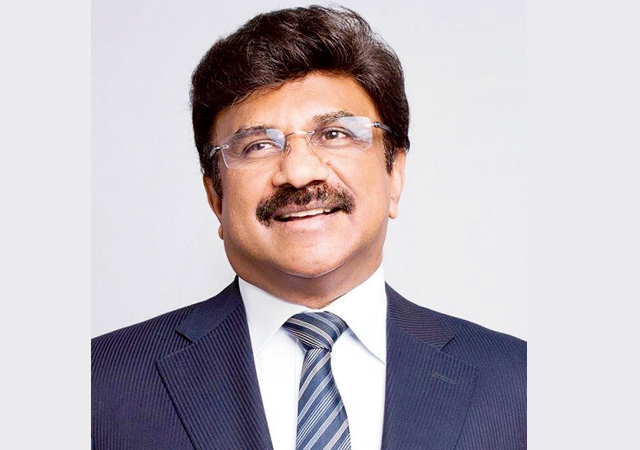



 Khan: more talk of products and services expected
Ciena featured in several major projects in the Gulf including ones with Mobily, the Southeast Asia-Middle East-Europe consortium and Etisalat as a leader in boosting transmission and core network speeds and as provider of power otptimisation services.
Saad Khan, regional managing director for the Middle East, discussed with Gulf Industry the schemes Ciena handled in the GCC region and the prospects and challenges it saw there.
What was Ciena’s involvement in major projects completed in 2011 in the Gulf region?
• Ciena and Mobily announced the Middle East’s First 100 G Network in Riyadh. The demand for bandwidth coming from Saudi businesses is growing steadily due to the rise in applications like video, teleconferencing and cloud computing.
Ciena’s 100 G coherent technology allows for a total throughput of 8.8 terabits of data per second on Mobily’s network, carried over 88 optical channels on a single strand of optical fibre – meaning that Mobily is able to meet this rising demand for capacity, while future-proofing its network.
• The SEA-ME-WE 4 cable system has recently been upgraded with 40 G/100 G technologies, significantly increasing its overall capacity, supporting the delivery of high-speed internet and broadband services along the approximately 20,000 km route connecting Europe to the Middle East and South East Asia.
• Etisalat Group (Etisalat) has deployed Ciena’s 4200 Advanced Services Platform for a major upgrade of its transport network in the United Arab Emirates. The new network provides Etisalat with a 40 G national backbone, carrying packet/IP core traffic across more than 40 locations in the UAE.
What major projects is the firm currently executing in the region and what products is it delivering?
Ciena is at the leading edge in boosting transmission and core network speeds to 100 G/400 G. We also provide power optimisation services with a multivendor focus for our customers. Throughout this year you will hear us talking more about our product and services portfolio in this context.
How does the company view business prospects in the next few years in the region?
The market is developing at an impressive speed, creating interesting business opportunities. People here are focused on being at the forefront of technology trends and striving for the region to become a true centre of high technology.
The demand in the market is also a strong driver, both from enterprises and consumers through the increase in use of connected devices such as iPads and smartphones, which has contributed to the increase of data usage.
What is the growth strategy for the Gulf for the next two to three years? What will the company’s main focus be in that period?
As a focused specialist in the metro/regional/long-haul optical/Carrier Ethernet domain, we will maximise our customer satisfaction and help execute our customer’s vision in the transformation and modernisation of their networks.
What are the significant aspects of doing business in the Gulf?
The networking industry is facing a wide spectrum of issues – many of them unique to individual markets across the region. One relates to keeping up with the constantly growing capacity demands of consumers and enterprises – fuelled by the growth of new services such as video-on-demand or cloud computing-based applications. In a number of recent examples we have been seeing that operators are leading the global industry by deploying high-capacity, next-generation networks. For example Mobily recently announced the first 100 G Network deployment in Saudi Arabia.
Another challenge is that the portfolio of services offered by a number of operators remains limited. On the corporate side, enterprises and SMEs need to work with operators and help drive the change needed to satisfy their growing demands, rather than accepting the status quo. It is that active co-operation that will help the market evolve and truly satisfy the needs of its participants. On the consumer side, price can also be a barrier to market, especially for new services.
