



































Sungrow has launched its new PowerMatrix photovoltaic (PV) and energy storage system (ESS) for the Middle East and Africa (MEA) market, targeting the region’s growing demand for reliable, cost-effective renewable energy solutions.
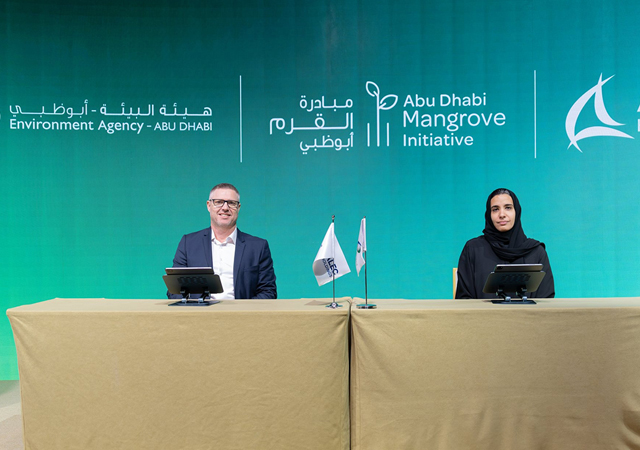
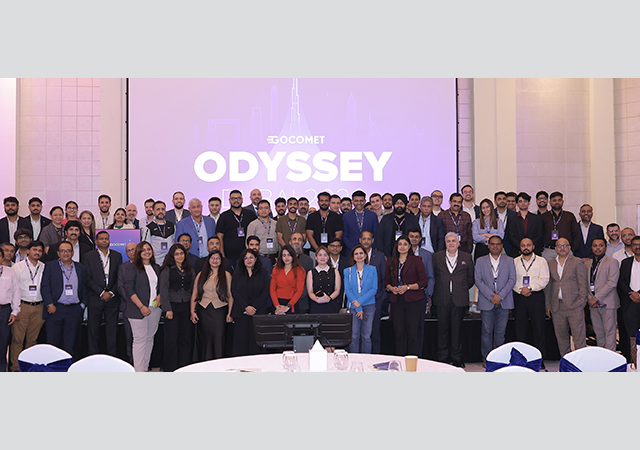
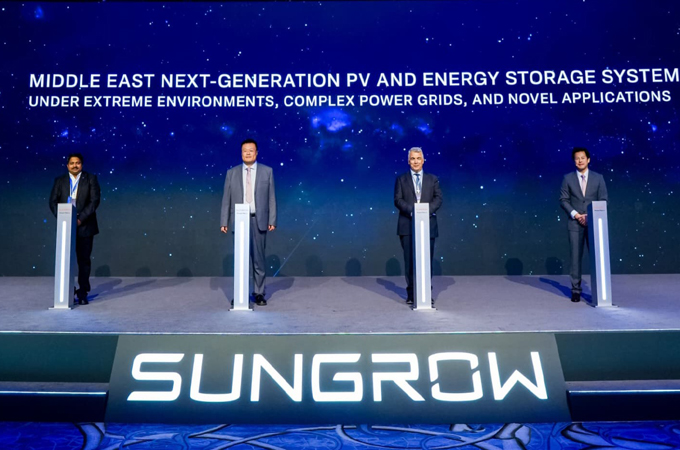
The launch took place at the Sungrow PowerMatrix Launch Summit in Abu Dhabi, which brought together more than 200 industry partners from across the region. The company also unveiled its Middle East Next-Generation PV and Energy Storage System Architecture White Paper, highlighting the growing importance of system-level integration, power conversion and control in large-scale renewable energy projects.
The PowerMatrix system combines a 415 kW MPPT Booster, 9.6 MW of PowerMatrix inverters and 7.14 MWh of PowerTitan 3.0 energy storage. It has been designed to address key regional challenges, including declining solar power purchase agreement (PPA) prices, stricter grid-forming requirements and demanding operating conditions characterised by extreme temperatures and frequent sandstorms.
Sungrow said the system can deliver full-power performance at temperatures of up to 52°C at system level, with individual inverters capable of operating at up to 55°C. Its thermal design incorporates automotive-grade silicon nitride substrates in inverter IGBT modules, offering 196% higher thermal conductivity than conventional alumina substrates.
The cooling architecture is designed to improve heat dissipation while preventing hot air from circulating back into the inverter or affecting neighbouring equipment, regardless of wind direction.
High-temperature performance has been validated through full-load testing at 55°C under 1,120 W/m² solar irradiance, with more than 300 key performance points monitored in real time. The equipment has also undergone testing on a 15 MW-class monsoon simulation platform, using nine-direction wind testing to assess performance under challenging regional conditions.
Dust protection is another key feature. Both the PowerMatrix inverters and MPPT Booster carry IP66-rated protection, while AI-based technology automatically reverses fan rotation to remove accumulated dust from air inlets. According to Sungrow, the system has passed more than 70 days of continuous operational validation in heavy sand and dust environments.
The system incorporates five core innovations: multi-port topology, native PV-ESS integration, distributed control, reconfigurable energy paths and source-level grid-forming technology. Together, these features are intended to improve power stability, operational flexibility and renewable energy utilisation.
PowerMatrix supports a PV DC/AC ratio of up to 260% and energy storage capacity of up to 200%, enabling more than 3,700 annual full-load hours. This is designed to support continuous electricity requirements from emerging energy-intensive applications, including AI data centres.
The architecture also smooths fluctuations in solar generation to provide more stable power output. With more than 40 operating modes, it can optimise energy flows and automatically isolate local faults to help maintain supply continuity.
Its grid-forming capabilities operate at source level, with each sub-array functioning as both a generation and grid-forming unit. Sungrow said the system delivers voltage stabilisation within 10 milliseconds and an inertia response within five milliseconds at system level, supporting grid stability as renewable energy penetration increases.
Energy efficiency is another focus. The company said PowerMatrix can improve end-to-end system energy yield by more than 5%. This is achieved through up to 30 maximum power point trackers (MPPTs) per megawatt to reduce mismatch losses, cell-to-plant state-of-charge balancing to increase energy storage discharge, and the removal of two transformer conversion stages to improve energy transfer efficiency.
Cost reduction is a major consideration as lower solar PPA prices increase pressure on utility-scale project economics across the Middle East. Sungrow said PowerMatrix can reduce capital expenditure through fewer components, shorter power transmission paths and flexible system expansion.
In a reference project designed around 1 GW of grid connection capacity, 8 GWh of installed energy storage and 3,700 annual full-load hours, the system could reduce total capital expenditure by approximately $120 million compared with a conventional AC-coupled architecture. Savings would come from reduced investment in substations, transmission cables, energy storage and PV equipment.
For standalone solar projects, PowerMatrix inverters can also reduce balance-of-system (BOS) costs by $0.49 per watt through lower investment in combiner boxes and cabling.
The technology is also designed to accelerate project construction and commissioning. Its inverters can provide 24-hour off-grid power during these stages, allowing work to continue beyond daylight hours without relying on diesel generators. Sungrow estimates this could bring forward grid connection by up to 30 days on a 1 GW project.
Digital and hardware-in-the-loop simulation platforms, alongside grid-code certifications in Saudi Arabia, the UAE, Egypt and other markets, are intended to support compliance and improve the likelihood of successful first-time grid connection at gigawatt scale.
Safety is addressed through PowerMatrix’s Ten-Fold DC Protection system, which safeguards DC-side components and connections. One of its key features is the DCSnap pyro fuse, which can actively interrupt electrical faults within two milliseconds.
Sungrow said the technology was demonstrated at an 800 MW solar plant in China, where it successfully isolated a fault in a third-party combiner box that presented a potential fire risk. The system also incorporates Intelligent I-V Diagnosis 2.0, which scans strings across the entire plant rather than inspecting one sub-array at a time, as is typical of traditional central inverters.
"From utility-scale PV plants to AI data centers and mining microgrids, PowerMatrix is designed to serve a wide range of energy needs," said Lee Zhang, Sungrow Vice President and President of the Utility PV Inverter Business Unit.
"We aim to support the Middle East’s energy transition with more cost-effective, stable and efficient renewable power."
The accompanying white paper identifies system architecture as an increasingly important factor in renewable energy project competitiveness. As battery cells become more commoditised, system integration, power conversion, control, protection and operations and maintenance are playing a greater role in determining overall project performance.
According to the paper, PowerMatrix uses a unified grid interface and coordinated internal operations to simplify plant-level energy management, improve fault isolation and recovery, strengthen grid stability and provide more flexible energy routing.
Its system-level performance has been verified by TÜV under three extreme Middle Eastern operating conditions, demonstrating its ability to maintain reliable power delivery and operational flexibility.
Beyond utility-scale solar and storage, the architecture is designed for applications including AI data centres, green hydrogen production, desalination, mining and industrial facilities.
The launch reflects the growing shift towards integrated renewable energy systems as Middle Eastern countries expand clean energy capacity while addressing rising electricity demand, grid stability requirements and pressure to lower project costs.-OGN/TradeArabia News Service