




















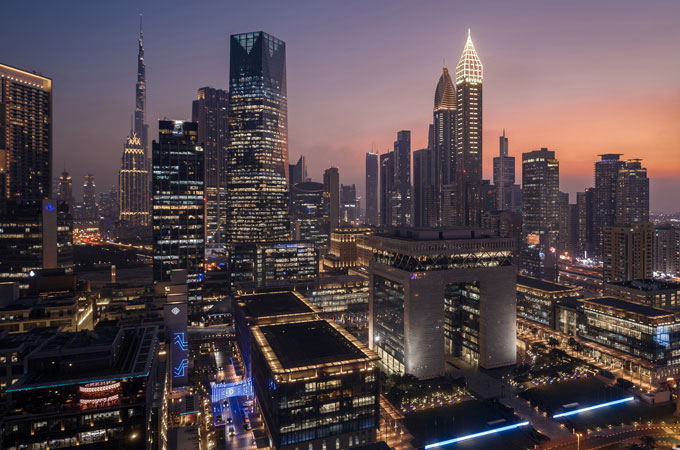
 DIFC generic image
Dubai has set a global benchmark integrating into the emirate five mutually reinforcing pillars.
They are ease of business, physical and digital infrastructure, financial depth, human capital, and reputation and governance.
This is according to the Dubai International Financial Centre (DIFC) which has launched the fourth and final report in its 2026 Future of Finance series, positioning Dubai as a model of multi-pillar competitiveness.
Geography of global business being redrawn
The report, titled Beyond finance: The strategic business hubs of tomorrow, examines how the geography of global business is being redrawn as companies and investors reassess where they base people, capital and long-term operations.
Drawing on a high-level roundtable and interviews with more than 20 global business leaders, the report establishes a modern framework of urban competitiveness governed by five mutually reinforcing pillars.
This model is underpinned by the objectives of the Dubai Economic Agenda (D33), which aims to double the emirate’s economy and place Dubai among the top four global financial centres. The city offers multinational companies fewer trade-offs and greater strategic upside when choosing a headquarters location.
To illustrate the framework, the report profiles five global cities. Austin in the United States illustrates ease of business, Busan in South Korea integrates physical and digital infrastructure, Shenzhen in China emphasises financial depth, Bengaluru in India is a centre known for human capital, while Luxembourg demonstrates how governance builds reputation.
The report stresses that the five pillars operate as an integrated framework, and enduring competitiveness requires coordinated investment.
Dubai: Talent, trust and technology at scale
The report highlights three shifts strengthening Dubai’s appeal to multinational companies: an expanding pool of highly skilled talent, institutional credibility and a growing concentration of technology-enabled businesses.
The UAE is rapidly closing the gap with the UK in global rankings for highly skilled and AI talent. Dubai issued more than 1 million new residence permits in the first half of 2026 alone, with long-term visa frameworks helping establish the emirate as a permanent home for global corporate leadership.
Institutional credibility reinforces this appeal. The UAE ranks 36th out of 143 countries globally and first in the region in the World Justice Project Rule of Law Index. For multinational boards, predictable, transparent governance is complemented by access to independent common law adjudication through DIFC.
Enterprise AI adoption rose from 33% in 2024 to more than 50% in 2026, supported by robust regional cloud infrastructure and high-capacity digital corridors. Together, these shifts bring talent, institutional certainty and technological capability into sharper focus for companies evaluating Dubai as a long-term headquarters location.
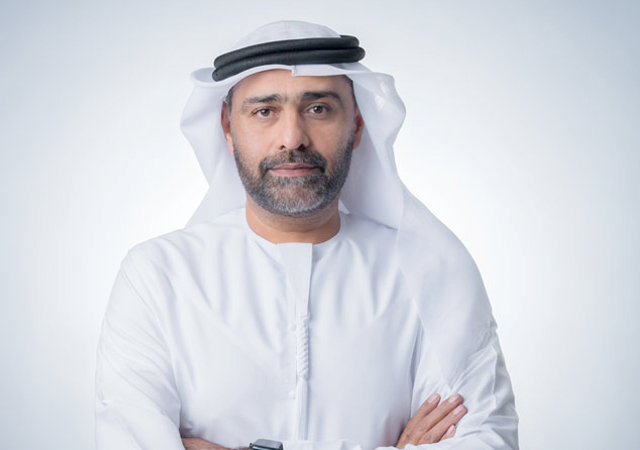
Arif Amiri, Chief Executive Officer at DIFC Authority, said: “Companies choosing a base for their operations are increasingly deciding on fundamentals: a trusted legal and regulatory framework, quality infrastructure, and access to capital and talent. That is what the Future of Finance report findings indicate, and it is consistent with what we hear from firms entering the market as well as the companies within our world-class ecosystem. Our focus is on giving those businesses the clarity, ecosystem depth and market access they need to establish and scale across the region from Dubai.”
A new competitive frontier
The report argues that financial incentives are no longer the sole consideration in location decisions, as businesses place greater emphasis on progressive and forward-looking regulation, efficient processes and clear, consistent policymaking.
Underscoring the quality of digital infrastructure, the report observes that competitiveness also depends on secure, high speed networks, resilient data centres and cloud capacity that support rapid AI adoption and data intensive industries. The report notes that some emerging hubs, particularly those investing in new infrastructure, can integrate digital, climate-resilient and smart-city systems from the outset.
According to the report, cities with transparent institutions, credible government decision-making and consistent adherence to regulation project long-term reliability. This institutional predictability attracts businesses and investors seeking certainty, underpinning an international reputation that endures through market cycles.
Economic engines
Reinforcing the role of financial centres as economic engines, the report states that cities with a strong financial sector link international capital to infrastructure, technology and productive industries. When financial depth is broad, liquid and well regulated, it becomes a multiplier: lowering the cost of capital and speeding investment cycles, as well as enabling commerce, creating jobs and generating tax revenue.
As a leading financial centre, DIFC’s role includes advancing Dubai's position as a global wealth centre and the leading market for banking and trade across MEASA, with growth opportunities identified across insurance, private markets, FinTech and digital assets. DIFC’s active registered corporate base surpassed 10,000 firms in 2026, up 30 per cent year-on-year.
Embedding artificial intelligence across its regulatory systems, business operations and infrastructure, including supervisory systems, digital-first licensing and automated compliance processes, DIFC is creating the AI-native financial centre of the future.—TradeArabia News Service