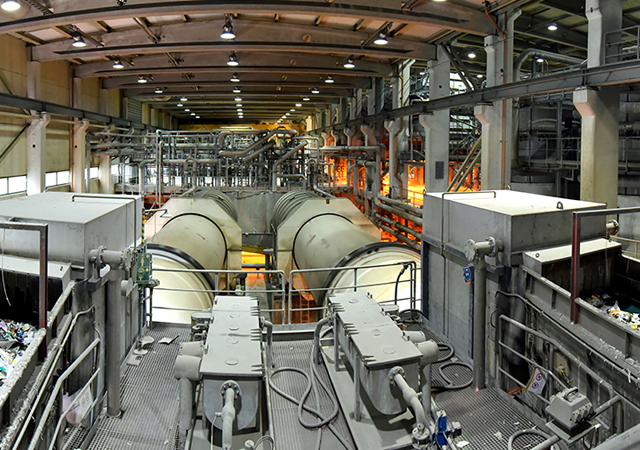
 UPM Nordland Papier scales water-saving technology across a German paper mill
European manufacturers are facing growing pressure to reduce water consumption as climate variability, regulatory scrutiny and sustainability commitments converge. For the paper industry, where water remains a critical production input, attention is increasingly turning not only to core processes but also to auxiliary systems that can quietly consume large volumes of freshwater.
At UPM Nordland Papier’s Dörpen mill in Germany, that approach has led to the wider deployment of a water-saving technology designed to reduce consumption associated with pump sealing systems. The expansion follows pilot installations that reportedly reduced seal water use to near-zero levels while maintaining operational reliability.
Water Scarcity Becomes an Industrial Concern
The move comes against a backdrop of mounting concern over water availability across Europe. Approximately 30 per cent of EU land experiences seasonal water scarcity each year, according to European Commission data, with pressure often intensifying during the warmer months when river flows decline and demand rises. In response, the EU’s Water Resilience Strategy has set a target to improve water efficiency by at least 10 per cent by 2030.
For water-intensive industries such as pulp and paper manufacturing, these targets are likely to increase focus on opportunities to conserve water beyond production lines themselves. While process optimisation and recycling initiatives have long been priorities, smaller supporting systems are now attracting greater attention for their cumulative savings potential.
Looking Beyond the Production Process
UPM Nordland Papier, a producer of fine and graphic papers, already operates at around four cubic metres of freshwater per tonne of paper, a level considered competitive against industry benchmarks. Seeking additional improvements, the company examined one often-overlooked area of consumption: the freshwater used as barrier water in pumps equipped with double mechanical seals.
Barrier water plays an important role in protecting equipment
Barrier water plays an important role in maintaining seal performance and protecting equipment. However, conventional systems can consume substantial volumes over time, particularly in large industrial facilities operating hundreds of pumps.
To address this, the company adopted the Smartflow IG system from John Crane, which regulates barrier water supply based on cooling requirements rather than maintaining a constant flow. According to the company, the technology can reduce freshwater consumption by as much as 180 litres per hour on an individual pump, depending on operating conditions.
Engineering a Passive Approach to Water Savings
A notable aspect of the system is its simplicity. Rather than relying on sensors, external power or complex automation, Smartflow IG uses a heat-activated shape-memory alloy that automatically adjusts water flow in response to temperature changes within the seal environment.
This passive operating principle offers potential advantages for industrial sites seeking incremental sustainability gains without investing in large-scale infrastructure upgrades. Systems can be retrofitted into existing installations with limited modification, enabling facilities to expand deployment gradually.
At the Dörpen mill, the initial installations achieved a significant reduction in seal water demand while maintaining reliable pump operation. Reduced freshwater consumption can also generate secondary benefits by lowering the volume of water that requires treatment, handling and discharge.
Small Savings, Large-Scale Impact
The broader significance of the project lies in its scalability. While savings on a single asset may appear modest in the context of a large paper mill, multiplying those reductions across dozens or hundreds of pumps can deliver substantial results.
“Reducing freshwater consumption is an important part of our approach to operating the Dörpen mill responsibly,” said Peter Reisige, Director Technical Services at UPM Nordland Papier. “Smartflow IG has enabled us to reduce seal water consumption on the pumps fitted so far to almost zero, without compromising reliable operation. The results have given us the confidence to purchase additional units and begin introducing the technology more widely across the plant.”
Following the trial, the mill purchased additional units for phased deployment across the site, expanding the scope for future savings.
A Growing Focus
Water stewardship is becoming an increasingly important part of industrial decarbonisation and sustainability strategies. While energy efficiency and emissions reduction have dominated boardroom agendas in recent years, water-related risks are rising up the list of operational priorities, particularly in regions facing recurring drought conditions.
Projects such as the one at Dörpen illustrate how manufacturers can pursue incremental improvements through targeted engineering interventions. Rather than relying solely on major capital projects, companies are increasingly examining existing equipment and utilities for opportunities to reduce resource consumption without compromising productivity.
For the paper sector, where water management remains central to both environmental performance and operational resilience, such measures could play an important role in meeting future sustainability targets while helping facilities adapt to a more resource-constrained operating environment.