
































 LME Week 2026 highlighted a metals market increasingly shaped by geopolitics
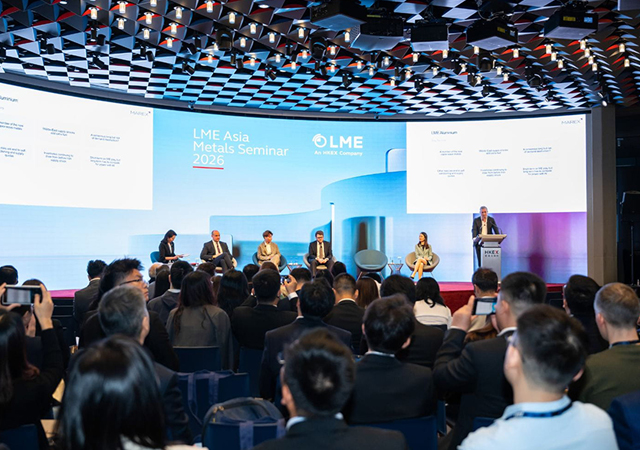
LME Week 2026 underscored a fundamental shift in global metals markets: price formation is no longer being driven solely by supply and demand fundamentals, but increasingly by geopolitics, trade policy, and regional market fragmentation. Nowhere was this more evident than in copper, which dominated discussions throughout the week and emerged as the clearest example of a market simultaneously exhibiting signs of both scarcity and surplus.
Copper: A Market Defying Traditional Logic
According to data and market discussions reported by Fastmarkets, copper was the undisputed focal point of LME Week, with three-month LME prices hovering near record levels above $14,000 per tonne after reaching an intraday peak of $14,875 per tonne in September. Yet behind the bullish headline prices lies a market grappling with deep contradictions.
The most striking feature of the copper market is the widening disconnect between financial market enthusiasm and physical demand. European smelter Aurubis reported that consumers began scaling back purchases as prices surged, suggesting that high prices themselves are destroying demand. As one market participant noted, there is a growing “detachment between real underlying demand and purchasing behaviour.”

Uncertainty in the alumina market was highlighted at the event
This disconnect is occurring against a backdrop of unprecedented stress in the copper concentrate market. Treatment charges (TCs), the fees paid to smelters for processing copper concentrates, plunged to record negative levels of around $245 per tonne, forcing many smelters to effectively pay for access to raw materials. For integrated smelting operations, margins have deteriorated sharply, prompting discussions around potential production cuts and intensifying negotiations over 2027 benchmark TC/RC contracts.
Despite these signs of raw material scarcity, the broader copper market is not universally tight. The International Copper Study Group continues to forecast a global surplus in both 2026 and 2027, while exchange inventories remain elevated. The market’s apparent contradiction stems from regional fragmentation.
The Rise of “Quantum Copper”
One of the most widely discussed concepts during the week was what Reuters columnist Andy Home termed “quantum copper” – a market that appears oversupplied and undersupplied at the same time.
The uncertainty surrounding potential US Section 232 tariffs has led traders to divert large volumes of copper into the United States, where consumers and merchants are positioning ahead of possible import duties. As a result, inventories have accumulated in the US while availability has tightened significantly elsewhere.
China presents the strongest example of this divergence. Despite expectations of a global surplus, Chinese inventories remain exceptionally low and import premiums have surged, creating what some analysts described as one of the tightest physical copper markets in years.
This fragmentation raises a broader question for the industry: whether the traditional benchmark pricing system can continue to serve a market where regional supply-demand balances and policy risks increasingly dominate pricing dynamics.
Geopolitics Moves from Risk Factor to Market Driver
A key takeaway from LME Week was that government policy is no longer an external factor influencing metals markets. It has become a primary determinant of market structure.
The prospect of further US tariffs on copper and aluminium continues to reshape global trade flows, inventory distribution and regional price premiums. Market participants repeatedly highlighted how policy uncertainty rather than supply fundamentals has become the main force behind physical market tightness in several regions.
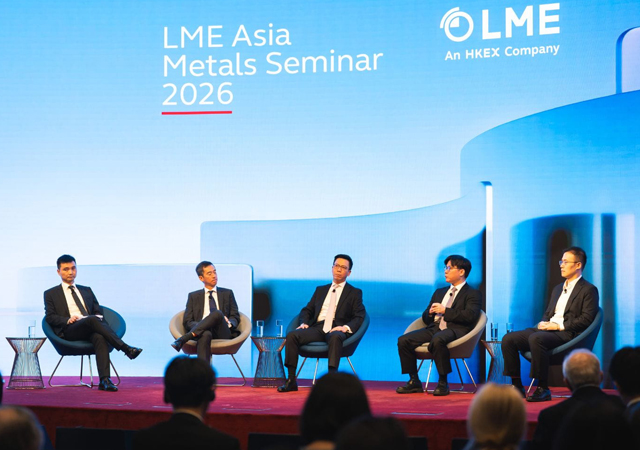
The metals industry is entering a `new phase’
This trend extends beyond copper. Nickel remains heavily dependent on Indonesian resource policy. Cobalt pricing is increasingly driven by export restrictions from the Democratic Republic of Congo. Aluminium premiums are being influenced by North American trade tensions.
The result is a global metals landscape that is becoming less integrated and more regionalised. Traditional fundamentals remain important, but increasingly they are filtered through the lens of government intervention, strategic resource security and industrial policy.
Aluminium: Tight Today, Bearish Tomorrow
The aluminium market entered LME Week with a relatively supportive near-term outlook, particularly in Europe.
Trade tensions between Canada and the US have temporarily restricted normal flows of metal into North America, helping support European premiums. Tight availability in the spot market has reinforced bullish sentiment over the short term.
However, the consensus outlook for 2027 was notably more bearish.
Market participants expect significant volumes of aluminium from the Middle East and Asia to be redirected toward Europe, potentially creating oversupply conditions and placing downward pressure on premiums. Traders acknowledged that current tightness may prove temporary once delayed shipments arrive and trade routes adapt to geopolitical disruptions.
In the upstream alumina market, prices have remained unexpectedly resilient despite widespread scepticism about underlying fundamentals. Weather-related disruptions in Indonesia, rising demand from new smelting capacity, and limited spot liquidity have supported prices, though many participants questioned whether current price levels can be sustained.
Zinc: A Market Dividing Into Two Tiers
The zinc sector highlighted another emerging trend: increasing differentiation within concentrate markets.
While forecasts point to a recovery in global mine supply, many traders remain unconvinced that additional production will alleviate acute shortages in specific regions. Much of the new concentrate supply from Africa is already committed to Chinese smelters, limiting its impact on Western markets.
Smelter economics have become increasingly dependent on by-product revenues, particularly sulfuric acid and precious metals. As a result, concentrates containing valuable by-products command significantly different treatment terms than “clean” zinc concentrates.
This growing divergence suggests that benchmark pricing mechanisms may become less representative of actual market conditions as concentrate quality and by-product values play a larger role in contract negotiations.
Nickel: Indonesia Remains the Wild Card
In contrast to copper, aluminium and zinc, nickel entered LME Week with generally bearish fundamentals.
Forecasts continue to point toward a refined metal surplus, and market participants broadly expect prices to remain range-bound. However, the market remains highly sensitive to developments in Indonesia, which has become the dominant force in global nickel production.
Questions surrounding Indonesian mining quotas, sulfur availability and export policies mean that the balance between surplus and deficit could shift rapidly. Participants noted that nickel’s outlook now depends less on announced production capacity and more on policy decisions in Jakarta.
Tin: Strong Fundamentals Despite AI Hype
Tin was one of the strongest-performing LME metals in 2026 and emerged as a favoured bullish trade for many participants.
While the metal continues to benefit from enthusiasm surrounding artificial intelligence and semiconductor growth, industry participants stressed that supply constraints remain the more important driver of market strength.
Production challenges in Myanmar, continuing restrictions in China and tight Indonesian exports have constrained availability. At the same time, disruptions to global shipping routes have increased freight costs and extended delivery times.
Unlike copper, where prices and fundamentals are increasingly diverging, the bullish case for tin remains grounded in genuine physical tightness.
Key Takeaways for the Metals Industry
LME Week 2026 revealed three overarching themes likely to shape metals markets over the next several years:
1. Copper’s Structural Bull Story Remains Intact
Despite signs of demand destruction and forecasts of short-term surpluses, the broader long-term outlook for copper remains supported by limited mine growth, declining ore grades and expanding demand from electrification, renewable energy and digital infrastructure.
2. Regional Fragmentation Is Reshaping Markets
The era of a single global market price is increasingly under pressure. Tariffs, sanctions, export controls and strategic industrial policies are creating divergent regional markets, particularly in copper and aluminium.
3. Policy Is Becoming as Important as Fundamentals
For investors, traders and industrial consumers, understanding government policy is now as critical as tracking inventories, production and consumption data. From copper tariffs to Indonesian nickel quotas, policy decisions are increasingly determining market direction.
Conclusion
LME Week 2026 will likely be remembered as the event that confirmed a new era for metals markets. Copper’s “quantum” state, simultaneously tight and oversupplied depending on geography, encapsulates the industry’s central challenge: navigating a world where geopolitics, trade policy and regional fragmentation increasingly shape outcomes.
For producers, traders and consumers alike, the message from London was clear. The metals markets of 2027 and beyond will not be defined simply by tonnes produced and consumed, but by where those tonnes are located, how governments regulate them, and which supply chains remain open. In that environment, understanding policy may become just as important as understanding geology.