 Critical minerals emerge as the bright spot in a challenging metals market
The industrial metals sector is ending 2026 as a tale of two markets.
On one side are traditional industrial commodities such as aluminium, nickel and iron ore, struggling under the weight of slowing global growth, elevated interest rates and uncertain manufacturing demand. On the other are critical minerals including tin, lithium and rare earths, which continue to benefit from powerful long-term demand drivers linked to artificial intelligence, electrification and the energy transition.
While higher interest rates and geopolitical uncertainty are weighing on much of the industrial metals complex, a growing divide is emerging between traditional commodities and critical minerals. From AI-driven demand for tin and rare earths to mounting concerns over resource security, the market is increasingly being shaped by structural shifts that extend far beyond the economic cycle.
According to BMI, a unit of Fitch Solutions, industrial metals were down 3.3 per cent month-on-month as of October 7, reflecting renewed concerns over higher-for-longer interest rates and softer industrial demand expectations (BMI, Outlook for Metal Prices, October 2026).
Macro Headwinds Cloud the Outlook
BMI argues that industrial metals are facing mounting pressure from a more hawkish US monetary stance and the prospect of prolonged geopolitical tensions. The research house notes that a delayed resolution to the US-Iran conflict could keep inflation elevated into 2027, reinforcing expectations of a higher-for-longer interest-rate environment and limiting upside across the metals complex.
For metals markets, the implications are significant. Higher borrowing costs typically weigh on construction, manufacturing investment and broader industrial activity, complicating the outlook for demand-sensitive commodities.
Yet beneath the macroeconomic uncertainty, performance across individual metals has diverged sharply.
AI and Electrification Fuel Critical Minerals
A key finding in BMI’s latest metals outlook is the growing resilience of commodities linked to AI infrastructure and the energy transition.
Tin has emerged as the strongest-performing major industrial metal this year, rising 33.5 per cent year-to-date to more than $54,000 per tonne as of October 7, supported by growing investment in AI infrastructure and anticipated expansion of global data-centre capacity.
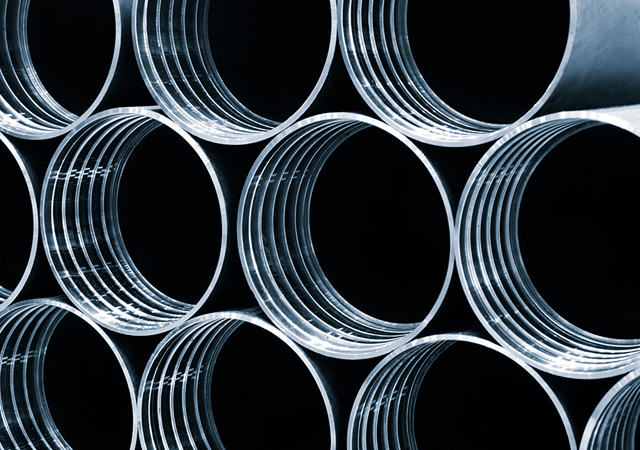
Steel prices are expected to remain broadly range-bound through year-end, as per BMI
BMI attributes tin’s strength to its critical role in electronic solder used in servers and other data-centre equipment, making it a direct beneficiary of increasing AI-related capital expenditure.
Rare earths and lithium have delivered similar gains. Rare earth prices rose 27 per cent year-to-date while lithium advanced 15 per cent, supported by concerns over Chinese export restrictions, supply availability and continued demand from clean-energy technologies.
These trends support a broader argument advanced by geopolitical analyst Bob Savic, who wrote earlier this year that critical minerals are increasingly being driven by structural demand linked to electrification, energy storage, digitalisation and resource security rather than traditional economic cycles (Savic, The Global Race for Industrial Metals and New Energy Minerals, March 2026).
Savic argues that minerals such as lithium, cobalt, nickel and rare earth elements have evolved from industrial inputs into strategic assets that are increasingly influencing trade policy, foreign investment decisions and international relations.
Copper Reflects a New Commodity Reality
Copper remains one of the clearest examples of how market fundamentals and geopolitical developments are becoming increasingly intertwined.
BMI notes that copper prices remain near record levels, supported by tight inventories outside the US and ongoing concerns over mine supply. Copper traded around $14,400 per tonne in early October after reaching a record $14,875 per tonne in September.
However, BMI argues that current copper prices are not entirely supported by underlying physical demand, with much of the recent rally driven by tariff-related inventory movements and trade dislocations rather than a significant improvement in underlying consumption.
The observations echo a wider trend identified by Savic, who argues that commodity markets increasingly incorporate geopolitical risk premiums as governments seek to secure access to strategic raw materials and reduce supply-chain vulnerabilities.
Aluminium and Nickel Face Growing Pressure
Not all metals have shared copper’s resilience. Aluminium prices fell 6.1 per cent month-on-month to $3,111 per tonne, leaving the market near the lower end of BMI’s projected trading range of $3,100-$3,400 per tonne.
BMI attributes the weakness to easing concerns over Middle Eastern supply disruptions, rising Chinese exports and expectations of additional capacity coming online in Indonesia and India from 2027 onwards.

The strategic metals era has arrived
Nickel has faced similar challenges. Prices declined 5.5 per cent month-on-month to around $15,800 per tonne as concerns over Indonesian supply eased amid signs of a more accommodative policy approach toward the country’s nickel industry (BMI, October 2026).
Nevertheless, nickel remains strategically important. As Savic notes, the metal sits at the centre of electric-vehicle batteries, energy storage systems and broader industrial decarbonisation efforts, ensuring its long-term significance despite near-term market weakness.
Iron Ore Highlights China’s Challenges
Among the weakest performers this year has been iron ore. According to BMI, benchmark 62 per cent iron ore fines at Qingdao fell 14 per cent year-to-date and 6.1 per cent month-on-month to around $90 per tonne as persistent concerns over China’s property sector continued to weigh on steel demand.
At the same time, expectations of growing seaborne supply, including additional volumes from major producers and the ramp-up of Guinea’s Simandou project, have reinforced expectations of a better-supplied market.
BMI expects steel prices to remain broadly range-bound through year-end, with downside risks stemming from macroeconomic uncertainty, geopolitical tensions and subdued Chinese construction activity.
Resource Security Moves Up the Agenda
Beyond short-term price movements, one of the most important developments reshaping metals markets is the growing emphasis on resource security.
Governments worldwide are increasingly treating critical minerals as strategic assets rather than ordinary commodities. Stockpiling programmes, export controls, domestic mining incentives and restrictions on foreign acquisitions have become more common as countries seek to strengthen supply security (Savic, March 2026).
A notable example emerged in September when Finnish stainless steel producer Outokumpu announced a sulphur-based technology capable of producing high-purity chrome with near-zero emissions and potentially reducing dependence on conventional supply chains (Financial Times, September 24, 2026).
Speaking to the Financial Times, Chief Technology Officer Stefan Erdmann said: “You cannot depend on material that you produce in Europe for the defence industry, for example, on Chinese raw material. You should have local supplies.”
Outokumpu has invested $45 million in developing the technology with the Massachusetts Institute of Technology, with a pilot plant expected to begin operating in 2027 and a commercial-scale facility targeted by 2030.
The company believes the process could be extended beyond chrome to strategic metals such as nickel, potentially supporting the development of more resilient Western supply chains.
China Remains Central
Despite growing efforts in North America and Europe to diversify sources of supply, China continues to exert enormous influence over global metals markets.
According to Savic, China remains the dominant consumer and processor of numerous critical minerals, while investments in electric vehicles, energy storage, power grids and AI-enabled infrastructure continue to support demand growth across the sector.
Beijing has also expanded investment in battery storage and charging infrastructure, reinforcing demand for battery materials such as lithium, nickel and cobalt.
At the same time, China’s control over significant portions of global processing and refining capacity continues to shape the strategic calculations of governments and manufacturers worldwide.
A Structural Shift Underway
Taken together, the findings from BMI, developments highlighted by the Financial Times, and the broader geopolitical trends identified by Savic point to a market undergoing profound change.
While cyclical pressures continue to affect metals such as aluminium, nickel and iron ore, critical minerals are increasingly benefiting from structural demand linked to artificial intelligence, decarbonisation and energy security.
For industry participants, the message is clear: future metals markets will be influenced as much by technology strategies, geopolitical competition and supply-chain resilience as by traditional measures of production and consumption.