








 Jotun products popular in Malaysia
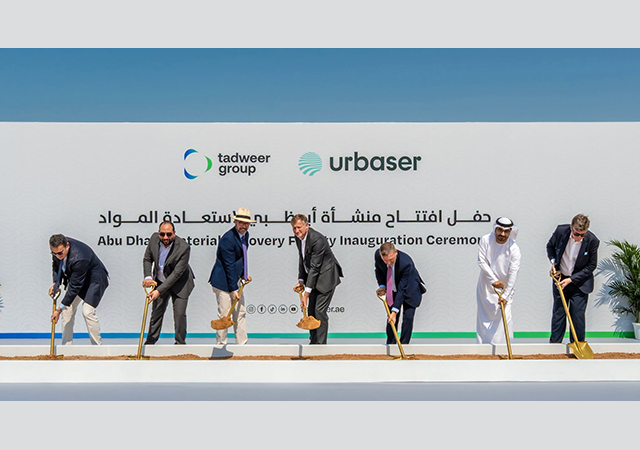
Paint manufacturer Jotun's has opened a $11 million plant, located in Kawasan Industri Cikarang Barat, Bekasi.
The opening strengthens Jotun as the leader in marine paints and industrial coatings in Indonesia.
"The increasing demand and the strong growth in the Indonesian market for paints and coatings have led us to invest in the new Bekasi Plant," explained, Terje Lunde. "Jotun is committed to further growth within Indonesia, and future expansion is certainly possible if demand for our high quality, premium line of paint products continues to grow."
"Two of Jotun's innovative and new products in the Indonesian market are 'Jotashield Flex' which is an exterior elastic paint that does not crack even if the concrete cracks, and 'Majestic Optima', an anti-bacterial paint used by hospitals and other facilities that require a sterile environment," said Lunde.
To answer the growing needs of high quality paint in the tropical countries in Asia, Jotun has developed a line of products specifically for tropical climates, contributing to their success in Asia Pacific markets such as Indonesia and Malaysia.
All these high-quality paints are now manufactured in Indonesia to be distributed to the Asia Pacific market.
Jotun, which was founded in Norway 80 years ago, has operated in Asia Pacific for more than four decades, observing strict standards for health, safety and environment, with eight ISO certified factories in the region.
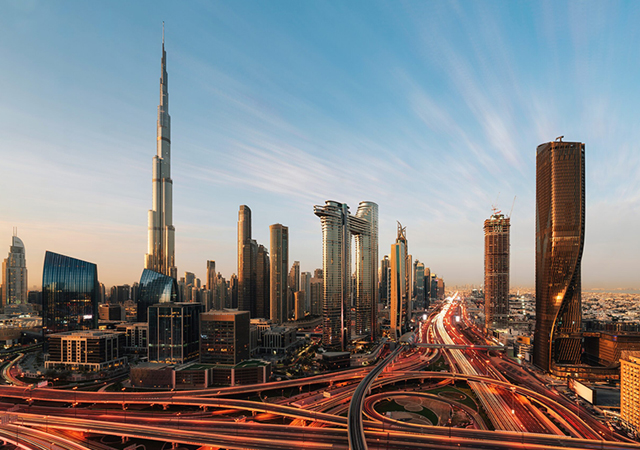
Jotun products has been known and used by many landmarks all over the world such as the Burj-Al-Arab hotel in Dubai, the Eiffel Tower, the Petronas Twin Tower in Kuala Lumpur, and the world's largest passenger vessel "Queen Mary 2".
Indonesia is among those countries that enjoy Jotun's high-quality products; in Jakarta some examples are Senayan Stadium, Sea World Indonesia, Taman Kemayoran Apartment, Siloam Gleneagles Medical Center, and in other areas in Indonesia some examples are Juanda Airport Surabaya, Humpuss tankers and Pertamina oil refinery.
Protection
Protection of petrochemical plants, refineries and other chemical industry structures present the coatings manufacturer with some of the most challenging demands in advanced technology for protection against corrosion.
The structures are exposed to aggressive attack from climatic, chemical and mechanical influences. It is essential that a corrosion protection system is selected with care to ensure it meets three specific demands:
*Resistance to the penetration of corrosive substances
*Extremely good adhesion
*Resistance to chemical, mechanical and thermal stress.
The design and construction vary from plant to plant depending on size, production type, what is manufactured, location of site, etc. In the petrochemical industry, for example, plant often has to withstand high temperatures and operate under high pressure.
Pipes, together with their supports and valves often represent problem areas where corrosion can develop. Large storage tanks are visible and dominating, therefore the best exterior corrosion protection together with a long lasting topcoat is vital for the plants appearance.
Access (staging) is costly and consequently maintenance intervals should be as long as possible. Topcoat colour should be white or near white as this will prevent heat absorption. Good looking tanks represent good publicity for the owner.
The environment is always tough. Installations are often situated in coastal areas and the mixture of marine and industrial atmosphere produces a highly corrosive condition.
After the plant is built and production has started, maintenance may often be difficult. In many areas blast cleaning is forbidden without production shut down, which will lead to loss of income and increased cost.
Life Cycle Cost
The protective system should never be chosen on the basis of cost alone. Any savings in the initial cost will, in virtually every case, be more than offset by the cost of expensive maintenance, shut down, or worse, should the structure present a safety hazard.
Choosing a protective coating system should be based on minimising the cost of maintenance over the design lifetime of the structure. The direct costs of material and labour for preparation and application at initial installation and at each maintenance period, combined with downtime or other indirect costs, should be evaluated.
Known as Life Cycle Cost, and long advocated by Jotun, this analysis enables different protective systems to be evaluated and the most effective and economical solution specified.
Life Cycle Cost analysis can be applied to both new and existing installations.
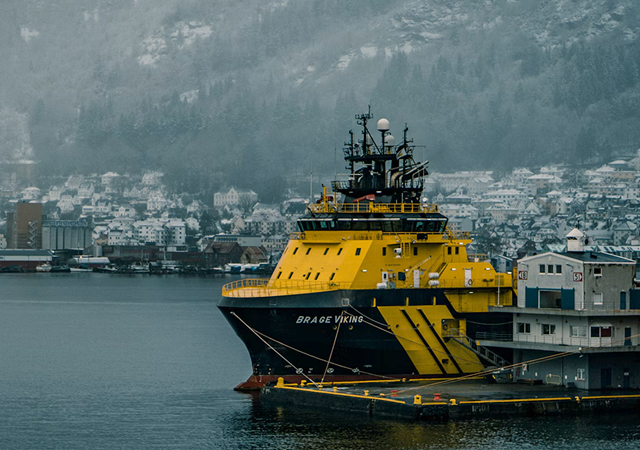
Jotun is also one of the world's leading manufacturers of protective coatings for the offshore industry.
For more than a quarter century, Jotun has built a reputation not merely for providing state-of-the-art coatings, but as a partner working with operators to solve their corrosion problems.
It provides complete protection whether for offshore or subsea structures, support vessels or FPSOs. Jotun assists and advises customers on the most effective solutions to the prevention of corrosion.
Great emphasis is placed on technical service and support combine with lasting, high performance, quality products all designed with the aim of providing long term protection.
For offshore structures, FPSOs, supply vessels, and deep-sea installations in particular, maintenance and repair are very costly - and in certain cases impossible.
Design lifetime can be more than 30 years, 70 years in one particular case.
The requirements for reliable materials and protection against corrosion are therefore most stringent.
Jotun's advanced technology offers resistance to corrosion and fouling, chemical attack and severe abrasion.
Tough, non-skid coatings with extremely high film thicknesses meet the need for durable surfaces on helicopter decks, gangways and escapeways.