


 Al Qadeeri: Bahrain’s steel industry moving into the big time
With a new corporate identity in place, Gulf United Steel Holding Company (Foulath) has declared its ambition to become one of the world’s foremost steel manufacturers, as it presses ahead with a massive expansion worth billions of dollars across the Middle East.
This includes building the world’s first fully-integrated steel plant, from pelletising to finished products, at the same site in Bahrain, new pelletising plants in Egypt and Oman, and even a possible mining venture under its “mines to metal” vision.
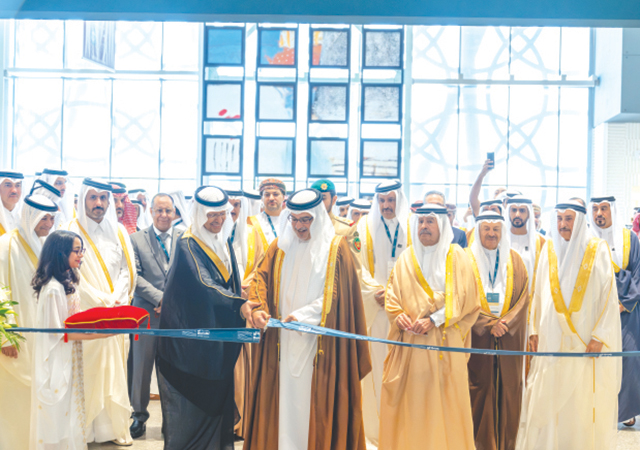
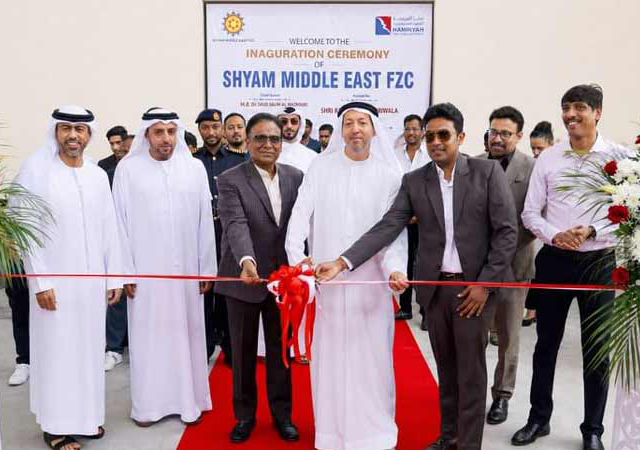
In April, Bahrain’s Crown Prince HRH Salman bin Hamad Al Khalifa formally inaugurated Foulath and its $3.5 billion integrated steel complex, which includes Gulf Industrial Investment Company (GIIC), United Stainless Steel Company (USCO) and United Steel Company (SULB).
The plants are all located within a complex covering an area of 1.3 million sq m at Salman Industrial City in Hidd.
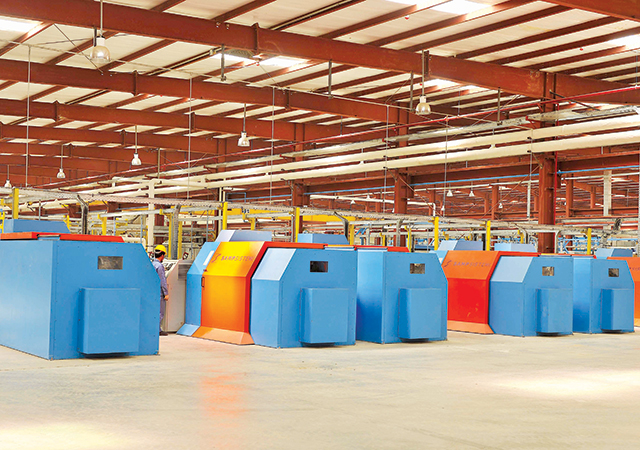
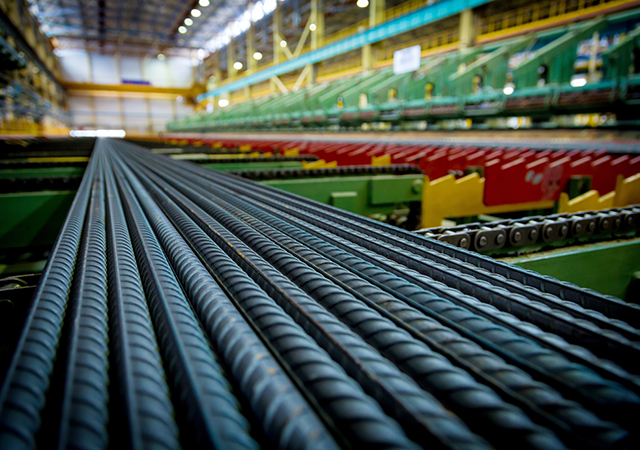
GIIC is a world-class pelletising company while USCO is the Gulf’s first manufacturer of stainless steel flat products and SULB, once completed, will become the region’s only producer of medium and heavy beam and structural steel sections.
The ceremony marked the formal launches of GIIC’s second pelletising plant, USCO’s stainless steel plant, which can produce 100,000 tonnes of cold-rolled stainless steel a year, and the $1.2-billion SULB project.
Largest of its kind
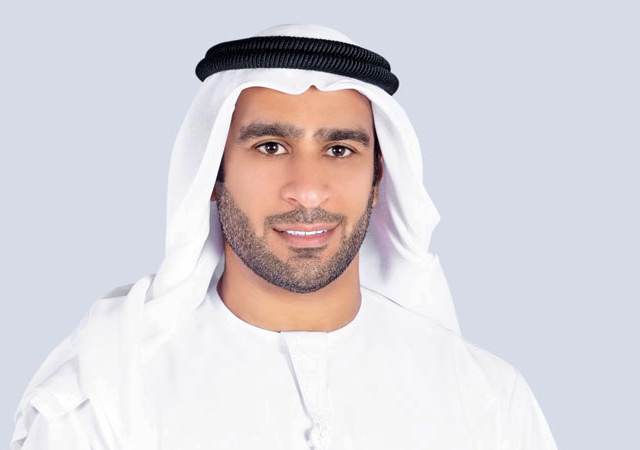
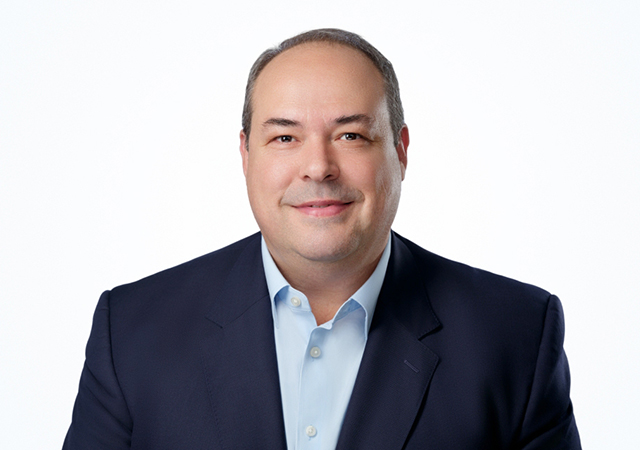
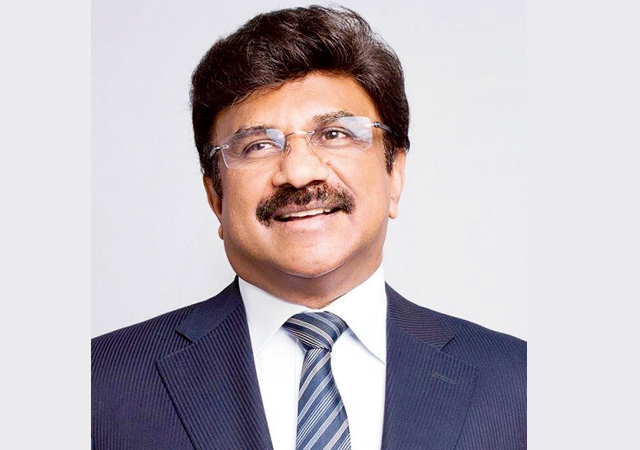
The GIIC second pelletising plant has a design capacity of 6 million tonnes per annum (which is capable to produce 7 million tonnes per annum), making it the largest of its kind in the world based on rotary kiln technology, and is built adjacent to GIIC’s first plant which has been operating in Bahrain since 1984, says Foulath vice chairman and managing director Khalid Al Qadeeri.
Foulath is 50 per cent owned by the Kuwait-based Gulf Investment Corporation (GIC), which is equally owned by the six GCC governments. Its other stakeholders include the Qatar Steel Company and three other Kuwaiti companies, M A Al Kharafi & Sons, the National Industrial Holdings Group and the Kuwait Foundry Company.
The company was established in June 2008 to act as an investment vehicle for the GCC’s metal industry and help diversify the region’s economy in partnership with the private sector, says Al Qadeeri, adding that Foulath’s stakeholders are all premier industrial institutions while GIIC has been in business “for more than 26 years”.
GIIC’s second plant, which commenced commercial operations on January 15, is now running at full throttle, and Al Qadeeri is keen to highlight the cutting-edge technology that went into its construction.
“We teamed up with Kobe Steel of Japan, the best contractor in the world, to build the plant, and because of our experience in the industry we have been able to quickly ramp up production smoothly,” he points out.
With a total annual production capacity of 12 million tonnes, including 5 million tonnes at its first plant, Al Qadeeri says that GIIC will now be the dominant merchant pellet producer in the world. “There are only three other major merchant producers in the world - two in Brazil, one in Sweden – and we are the largest.”
GIIC sources its raw materials from Brazilian firms CSN and Anglo Ferrous, and Al Qadeeri says that projections show that regional and international demand for the plant’s pellets will outstrip supply by 1.6 million tonnes in 2010, rising to 4.4 million tonnes in 2014.
USCO unique
Meanwhile, USCO is unique because it’s the only plant of its kind in the Middle East, says Al Qadeeri. “We took the initiative and gave the region its first stainless steel rolling plant.”
 |
|
Foulath’s GIIC plant where the latest |
Foulath is now poised to start construction of SULB, which is being built under a joint venture with Yamato Kogyo of Japan. Engineering, procurement and construction (EPC) contracts for the massive plant have been awarded in March to two consortiums – one comprising Kobe Steel, Japan, and Midrex of the US and the other having SMS Meer and SMS Concast of Germany and Samsung Engineering, South Korea, on board.
Kobe Steel and Midrex will undertake construction of the direct reduction iron (DRI) plant while SMS Meer, SMS Concast and Samsung will construct the melt shop and heavy and medium section rolling mill. The plant will begin commercial operations by the second half of 2012.
Once again, Al Qadeeri reiterates the importance of the tie-up with Yamato Kogyo and the use of world-leading EPC contractors.
Best technology
“Yamato Kogyo is world’s leading manufacturer of steel beams and sections while the EPC contractors are among the best in the business. We have enough liquidity and are committed to bringing the best technology in the world to the region,” says Al Qadeeri, who is also the chairman and managing director of SULB.
With a capacity of 1.5 million tonnes per year from its DRI plant, 1.2 million tonnes per year at its steel melt shop, and 1 million tonnes per year at its heavy and medium section rolling mill, SULB’s products are expected to replace about 14 per cent of the current imports of medium and heavy sections into the region.
Outside of Bahrain, Foulath has established the Egypt Pelletising Company in partnership with the Al Kharafi Group and other strategic investors, and the Oman Pelletising Company in partnership with JFE Steel of Japan in the Salalah Free Zone.
The Egyptian company will operate two plants, each with a capacity of 7 million tonnes a year. The EPC contract for the first plant in Alexandria is expected to be awarded later this year with commercial operations scheduled for end 2012, while the EPC contract for the second plant, located in Ain El Sokna, is to be awarded by the second half of 2011 with commercial start-up scheduled for 2014.
The Oman pelletising plant will also have a capacity of 7 million tonnes a year, with the EPC expected to be awarded by the first quarter of next year and commercial launch by mid-2013.
Distinct advantages
By Foulath undertaking both these ventures, Bahrain can take pride in having become an exporter of technology, says Al Qadeeri, adding that the company was selected by tender for both the Egypt pelletising projects mainly because it was the “best technology provider”.
So why did Foulath choose Bahrain as its base? Al Qadeeri sums it up succinctly: “Bahrain is small in size but very big in policy and vision.”
“The kingdom offers three distinct advantages with its open-door policy, strong support services and talented local workforce,” he says, adding that investors have direct access to the highest authorities in the Kingdom of Bahrain and this work ethic is “reflected positively” among Bahrain’s ministers and across the government.
“The message is, ‘Our doors are open, and if you have a problem, come and see us,’ and this is Bahrain’s most important advantage,” Al Qadeeri says.
A look at Foulath’s workforce also shows that Bahrainis are its preferred choice: 65 per cent of GIIC’s 440 staff is Bahraini, while the percentage is even higher at 85 per cent among USCO’s 250 workers. Meanwhile, 70 per cent of SULB’s planned 1,000 workforce will also be Bahraini.
When USCO was being commissioned, Al Qadeeri says he was advised by the top management of USCO and the plant’s technology experts to hire Swedish and British workers for the first three years because of the project’s complexity. However, Al Qadeeri decided to do it his way and train local workers instead, which proved to be the right decision.
Al Qadeeri points out that Foulath is also a green thinker, having spent more than $14 million on a 3-km-long protective wall around the site’s perimeter and another $6 million to cover all its conveyors. “We care about the environment and we’ve built our plants to the highest environmental standards.”
Looking ahead, Al Qadeeri is confident that SULB will be a market winner as Foulath’s integrated facilities “from A to Z in one site” will make its prices unbeatable.
“A Japanese bank undertook a financial appraisal of our project and compared us against Chinese competitors who currently offer the cheapest prices,” he says.
The bank found that SULB’s use of gas for fuel compared to coal in China translated into savings of $95 a tonne, its captive jetty further reduced costs by $40-50 a tonne, while the elimination of freight costs from the Far East to the Gulf saved another $50.
And by factoring the time and money saved through faster deliveries to customers in the region, the bank concluded that SULB’s total production cost per tonne would be “$250 cheaper than its closest competitor”.
“No-one will be able to compete with us and this gives us the assurance of profitability and continuity,” Al Qadeeri concludes.