




 Several Sabic projects have signed deals for loans
Gulf and international financial institutions are providing strong support for high-profile industrial and infrastructure projects currently ongoing in the region.
Projects for which finance was arranged included Qatar Aluminium’s (Qatalum) smelter, Marafiq’s Jubail independent water and power project (IWPP), the Fujairah utility project, the Barka 2 IWPP, Dubai Logistics City and Sabic petrochemical plants.
Islamic finance could soon wrest control of the $50 billion GCC project finance market from conventional financing thanks to government inducements and investors looking for alternatives to conventional funding, banking, and finance circles feel.
Banks such as HSBC and Deutsche Bank are expanding their Islamic finance operations and GCC investors are setting up new Islamic banks to cope with the expected surge in demand for Islamic project finance.
“There is some political pressure from governments and companies want to demonstrate they are acting in an Islamically acceptable way,” Dominic Harvey, head of Middle East banking and projects at law firm Norton Rose, said at a recent conference
“Because it’s a relatively new concept there is still a huge mismatch between demand and supply.”
The size of the regional project finance market, already the largest in the world, could top $1 trillion in the next 10 years, driven by spending on infrastructure largely in Saudi Arabia and Abu Dhabi, the largest member of the UAE federation, Harvey said.
Funding that complies with Islamic principles, which can come from conventional banks such as HSBC, accounts for about 10 per cent of the project finance market.
Funding from Islamic institutions likely accounts for less than 5 per cent of the market, Harvey said.
Recent deals demonstrate how active the project finance market is in the region.
Qatalum, a joint stock company owned by Qatar Petroleum and Hydro Aluminium, has closed a $2.6 billion project deal.
The $2.6 billion limited recourse financing comprises a $2.25 billion commercial bank term loan facility and a $350 million export credit agency facility with the Norwegian Guarantee Institute for Export Credits (GIEK).
The loan will be used for constructing the company’s new aluminium plant in Mesaieed Industrial City, south of Doha. Annual capacity is 585,000 tonnes.
The facility has the participation of 30 banks and Export Development Canada.
“Qatalum is another step in our long-term strategy to diversify our energy resources. The new aluminium smelter will be a cornerstone for developing Qatar’s basic industry, and have the upside potential to develop a myriad of new downstream industries with high value-added contribution to the growth of the country’s economy,” said Abdullah Salatt, chairman of Qatalum’s board of directors.
QP and Hydro each hold a 50 per cent stake in the project.
For the Marafiq IWPP, project lenders are providing $3.5 billion limited recourse financing. They include BNP Paribas, Gulf International Bank, Samba and the Korean Export Insurance Corporation.The project, said to be the world’s largest privately funded IWPP under construction, will produce 2,750 MW of electricity and 800,000 cu m of desalinated water per day by the end of 2010 in Jubail, Saudi Arabia. Working on the project are General Electric, Hyundai and Sidem. The project sponsors are Suez Energy, the Arabian Company for Water and Power Projects and Gulf Investment Corporation.
Calyon, Citibank and Sumitomo Mitsui are arranging a 20-year, $2.24 billion debt issue to finance the Fujairah 2 water and power project in the UAE.
The arrangers for the debt, which is 80 per cent of the project cost, are Calyon, Citibank and Sumitomo Mitsui Banking Corporation (SMBC). Japan Bank for International Cooperation (JBIC) was also expected to support the project.
The Fujairah 2 power plant will produce 2,000 MW of power and around 130 million gallons per day of water and is expected to start up in 2010. Abu Dhabi’s Mubadala Development Company has completed financing of two water and power projects in Oman.
The financing was completed alongside consortium leader Suez Energy and the National Trading Company (Oman).
The deals done were the limited-recourse financing of the greenfield Barka 2 IWPP, owned by SMN Barka Power Company SAOC and the acquisition of the existing Al-Rusail Power Company SAOC in Oman.
A syndicate of international and regional banks is providing the $80 million debt package. The syndicate is led by HSBC and Sumitomo Mitsui Banking Corporation and comprises KBC, Calyon, Natixis, BNP Paribas, Mashreq Bank, Arab Bank, GIB, Bank Muscat, National Bank of Abu Dhabi, KFW-Ipex, Bayern LB, West LB, Standard Chartered Bank and Mizuho.
Financial closure for the Barka 2 project was accomplished in a record time of 70 days, which Mubadala’s CEO and managing director Khaldoon Khalifa Al Mubarak said was a testimony to Mubadala’s commitment to project execution.
The seawater desalination plant of Barka 2 is based on reverse osmosis technology to be supplied by Degrémont, which specialises in water treatment plants within Suez Environment. A special purpose company has been created to undertake the two projects with Suez and Mubadala each holding a 47.5 per cent interest and National Trading Company holding 5 per cent participation.
Ibn Zahr, an affiliate of Sabic, has signed a Murabaha financing agreement worth $855 million with a group of local, Gulf and international banking institutions to finance part of the cost of an expansion at its complex in Jubail industrial city.
Sabic owns 80 per cent of Ibn Zahr and the remaining percentage is equally owned by Ecofuel of Italy and the Arab Petroleum Investment Corporation (Apicorp). Ibn Zahr is one of the world’s largest producers of MTBE and polypropylene.
Another Sabic affiliate, Yanbu National Petrochemical Company (Yansab), is implementing its project with financial support from the Public Investment Fund (PIF), and a group of local, regional and global banks. The package of loan contracts and facilities agreements signed last year is valued at SR13.12 billion ($3.5 billion).
Yansab, where Sabic owns 55 per cent of the stake, will make use of Islamic loans to finance up to SR2.62 billion, equal to 29 per cent of the commercial financing. The coverage of commercial loans has exceeded the required amount by 65 per cent. The contribution of the PIF is SR4 billion.
As regards its Kayan Petrochemical subsidiary, Sabic, contradicting a press report, insisted recently it was on track to borrow $6 billion this year for an industrial complex despite credit market turmoil that forced it to cut a planned bond in half recently.
Sabic aims to raise mainly Islamic loans for the $10 billion complex it is building with its Kayan affiliate.
Banks have already underwritten the loans and will start syndication in the next few months. “Raising $6 billion was the plan from day one. We haven’t changed anything,” Sabic’s chief financial officer Mutlaq Al Morished said.
Sabic cut a bond sale by almost half to $1.5 billion on concerns that global credit market fears sparked by the US subprime mortgage problems had blunted investor appetites.
The bond sale was part of plans to raise about $8 billion to fund Sabic’s purchase of the plastics unit of General Electric. Sabic raised the rest of the cash in bank loans.
“Even in this market we managed to finance an acquisition of $8.2 billion when everybody else failed. If we can do that why can’t we finance Saudi Kayan which is only $6 billion?” Morished said.
HSBC, BNP Paribas, ABN Amro, Bahrain’s Arab Banking Corporation and Saudi’ Arabia’s Samba Financial Group are arranging the Kayan debt.
Another Sabic affiliate, National Industrial Gases Company, has signed an SR1.5 billion riyal ($400 million) Islamic loan to fund an expansion project.
Banque Saudi Fransi led a consortium of eight Saudi and Arab banks, including Samba Financial Group, for the murabaha facility. The loan will help finance expansion projects to increase the production capacity of oxygen to 19,000 tonnes per day and nitrogen to 9,750 tonnes per day. National Industrial Gases Company had earlier signed a SR1.2 billion Islamic loan agreement with Banque Saudi Fransi, also to fund expansion.
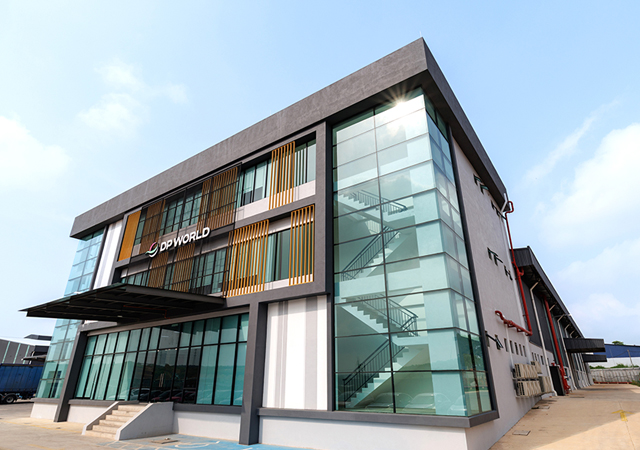
A financing deal has been signed for the Dubai Logistics City (DLC) headquarters and Office Park project.
Dubai Islamic Bank and Kuwait-based Kharafi Group, a privately-owned group with interests across 33 countries, have signed the banking credit facility agreement for Dh750 million ($204.2 million) to finance the Dh1.465 billion contract for construction of Dubai Logistics City Headquarters and Office Park, a key component of Dubai World Central (DWC).
DWC, the $33 billion aviation and logistics project being developed in Jebel Ali, covers 140 sq km and is being developed by the Government of Dubai’s Department of Civil Aviation.