

























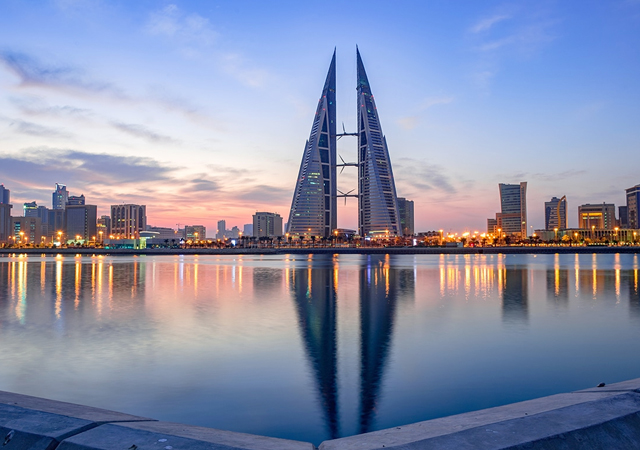
 The non-oil sector accounted for 90.1 per cent of Bahrain’s real GDP in Q1.
Bahrain’s non-oil economy continued to expand in the first quarter of 2026 despite the sharp disruption to oil exports caused by restrictions on maritime traffic through the Strait of Hormuz.
Non-oil activities grew 2.2 per cent year-on-year at constant prices in the first quarter, even as overall real GDP contracted 3.8 per cent, according to the Bahrain Economic Quarterly Report for Q1 2026 released by the Ministry of Finance and National Economy.
The headline contraction was driven primarily by the oil sector, which shrank 37.2 per cent during the quarter. The ministry said restrictions on maritime traffic through the Strait of Hormuz affected Bahrain’s export capacity, while scheduled maintenance also contributed to the decline in oil activity.
The quarterly data also show that the impact of the disruption was concentrated toward the end of the quarter.
Bahrain’s economy recorded strong performance in January and February before being affected in March by the conflict involving Iran, the ministry said.
At current prices, GDP declined 2.7 per cent year-on-year, with oil activities falling 31.1 per cent, while non-oil activities increased 1.9 per cent.
The non-oil sector accounted for 90.1 per cent of Bahrain’s real GDP in the first quarter, with nine of the 13 non-oil economic activities recording positive growth.
Financial and insurance activities, the largest contributor to GDP, grew 8.6 per cent year-on-year and accounted for 19.7 per cent of total GDP. Manufacturing represented 14.6 per cent, while public administration and construction accounted for 9 per cent and 7 per cent, respectively.
Meanwhile, the remaining non-oil activities each contributed between 2 per cent and 5 per cent of total real GDP, reflecting the Kingdom’s diversified economic structure.