







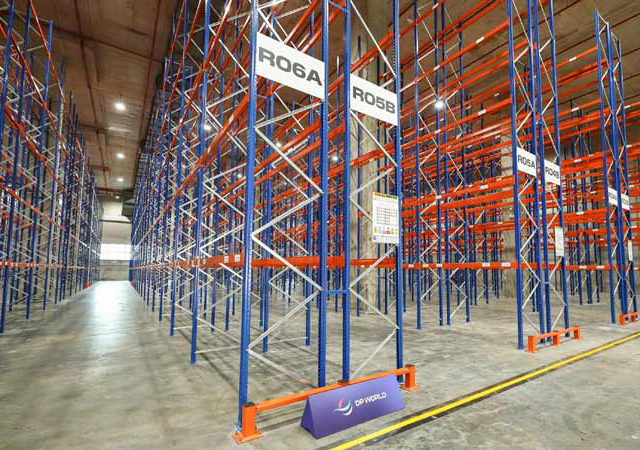








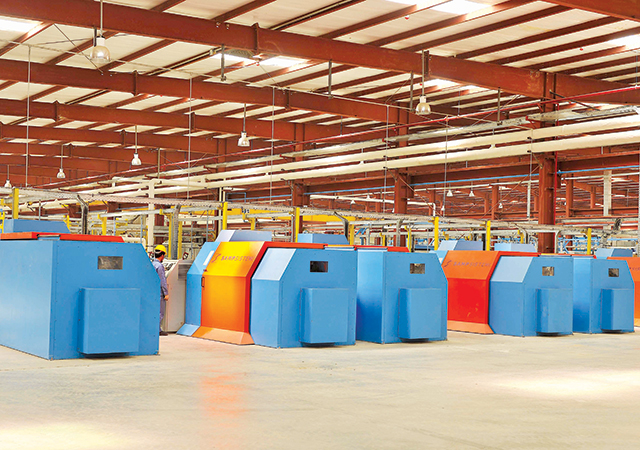





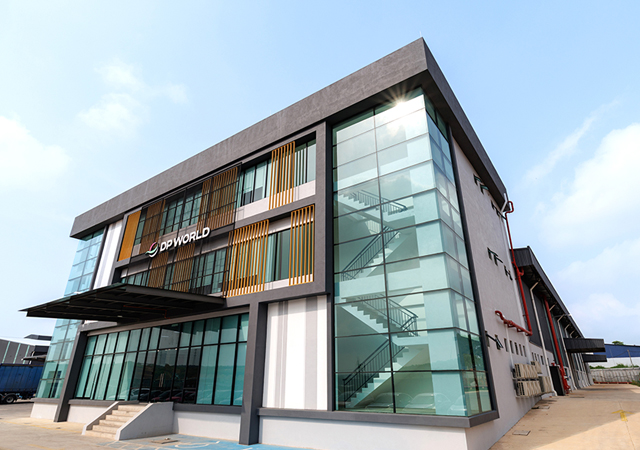
 DP World’s warehouse facility in Johor, Malaysia.
From strengthening inland cargo connectivity in the GCC to expanding warehousing capacity across Southeast Asia and posting strong financial growth, DP World is demonstrating how an integrated logistics strategy can help global trade withstand disruption while creating opportunities for customers.
As global supply chains continue to face geopolitical uncertainty and shifting trade routes, DP World is reinforcing its position as a leading end-to-end logistics provider through a combination of infrastructure investment, network expansion and operational resilience. Recent milestones across the Middle East and Asia Pacific, coupled with robust financial performance in the first half of 2026, highlight the company’s commitment to creating more flexible and reliable supply chains for international trade.
Strengthening Connectivity
A key indicator of DP World’s growing logistics capabilities is the movement of 500,000 twenty-foot equivalent units (TEUs) across its GCC road and rail network since March 2026. The achievement underscores the increasing importance of inland logistics as cargo owners and shipping lines seek alternatives to disrupted maritime routes. The company’s overland network now facilitates approximately 3,000 truck movements daily, supported by the recent addition of 700 trucks to expand both domestic and cross-border freight operations.
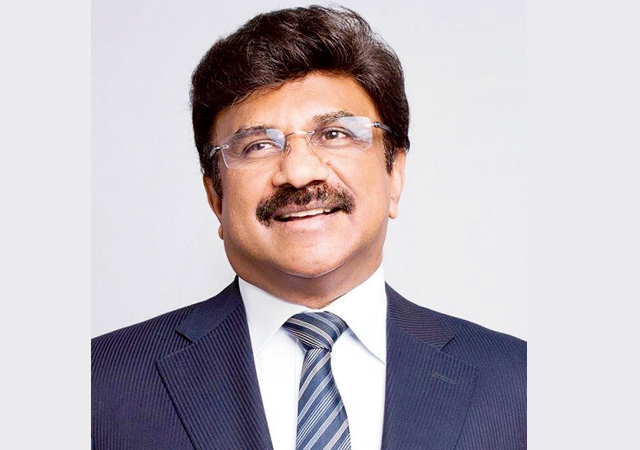
According to Ahmad Yousef Al-Hassan, CEO and Managing Director of DP World GCC, the milestone demonstrates the scale and flexibility of DP World’s logistics network beyond traditional port operations. The company’s inland transportation capabilities are providing cargo owners with greater routing certainty and the ability to adapt rapidly to changing market conditions.
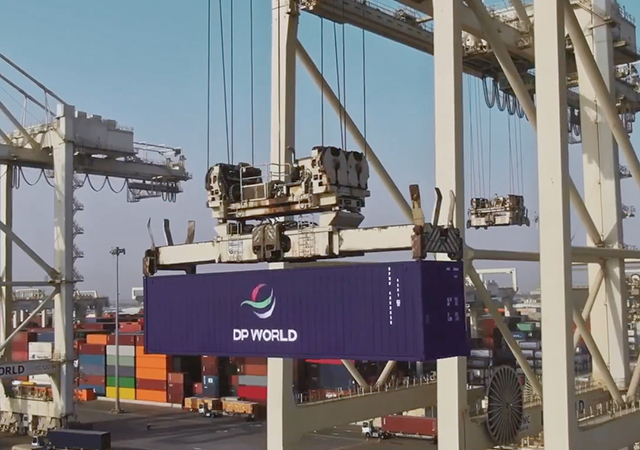
DP World has evolved from a traditional port operator into a fully integrated logistics and supply chain solutions provider.
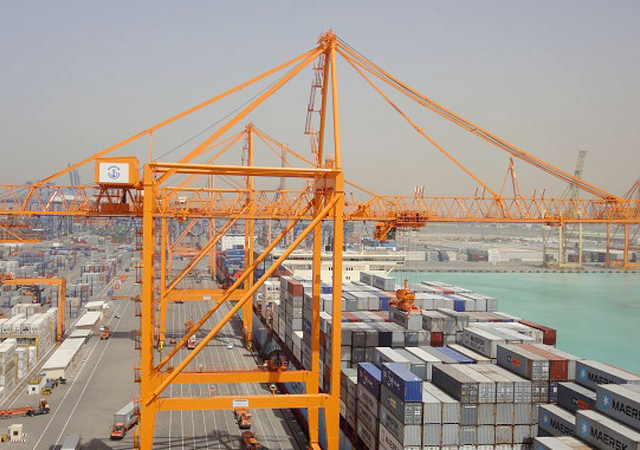
To further enhance connectivity, DP World has introduced a series of bonded logistics corridors linking east coast gateways directly to Jebel Ali, established a corridor connecting Sohar in Oman, and expanded routing options through Jeddah Islamic Port’s South Container Terminal. These initiatives create a more diversified regional logistics ecosystem capable of supporting trade flows.
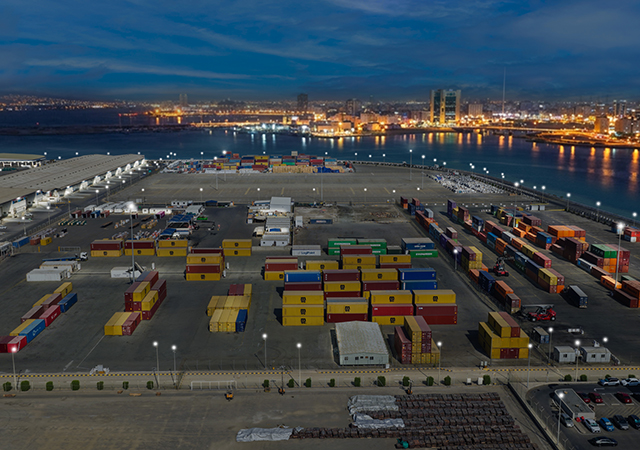
Another significant addition to the network is the opening of a 100,000-sq m inland empty container depot in Al Awir, Dubai. Strategically located with direct access to Emirates Road, the facility provides storage, inspection and inventory management services for 20-foot, 40-foot and 45-foot containers. It also creates future opportunities for rail-based container transportation through the UAE’s Etihad Rail network.
By relocating empty container handling, the facility is expected to reduce congestion at port terminals, improve equipment availability and streamline logistics operations across Dubai, Sharjah and the Northern Emirates.
Expanding Footprint
While strengthening its Middle East operations, DP World is simultaneously accelerating growth across Southeast Asia through targeted investments in contract logistics and warehousing.
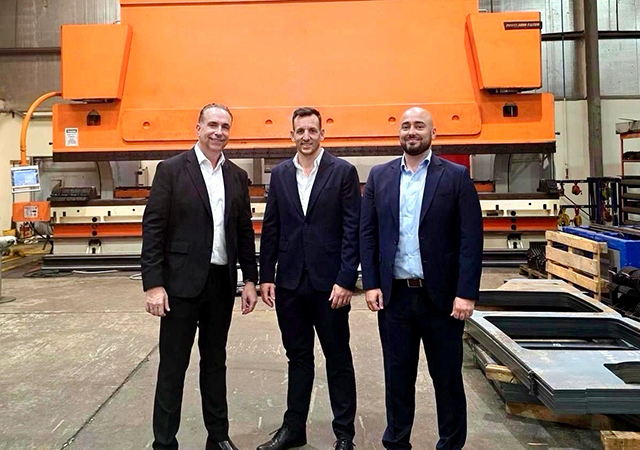
The company recently opened a new 11,514-sq m warehouse in Johor, Malaysia, marking another step in its strategy to build an integrated logistics network throughout the region. Located within the Johor-Singapore Special Economic Zone, the facility is designed to provide fast, secure and scalable warehousing solutions for customers operating increasingly complex supply chains.
The warehouse is the first of two planned facilities in Malaysia, with a second site scheduled to open in Kuala Lumpur later this year. Together, they will strengthen links between Malaysia, Singapore and major regional trade corridors while enhancing DP World’s ability to offer end-to-end logistics solutions.
The Malaysian expansion forms part of a broader regional strategy that includes new warehouses in the Philippines and Thailand, as well as recently launched facilities in Singapore, Hong Kong, Sydney and South Korea.
For customers, this approach offers greater operational flexibility, faster cargo movement and increased supply chain resilience. As manufacturers continue to diversify production and sourcing strategies across Southeast Asia, demand for integrated logistics platforms is expected to grow significantly.
Financial Performance
The effectiveness of DP World’s integrated business model is evident in its latest financial results. For the first half of 2026, the company reported revenue of $12.7 billion, representing a 13.1 per cent year-on-year increase, despite significant disruption to trade flows in the Middle East.
Growth was driven by strong performances across the Logistics, Marine Services, and international Ports and Terminals businesses. Excluding Jebel Ali, container volumes increased 6.5 per cent on a like-for-like basis, with gains recorded across Africa, Asia Pacific, Europe and the Americas.
Although regional challenges impacted activity levels at Jebel Ali, the port remained fully operational, and DP World mitigated disruptions through expanded inland connectivity and alternative cargo-routing solutions. These measures enabled the continued movement of critical cargo and reinforced customer confidence in the company’s network.
The group also reported a 9.7 per cent increase in adjusted EBITDA, highlighting the resilience of its diversified global portfolio. During the first half alone, DP World invested $1.5 billion in infrastructure and expansion projects and plans to invest approximately $3 billion throughout 2026.
Capital expenditure is being directed toward strategic growth markets including the UAE, Saudi Arabia, India, the UK and the Democratic Republic of Congo. In the UAE, DP World is further strengthening its gateway network through the development of two new terminals in Fujairah, extending the Jebel Ali ecosystem and offering customers greater flexibility and supply chain security.
Long-Term Growth
Taken together, these developments illustrate DP World’s evolution from a traditional port operator into a fully integrated logistics and supply chain solutions provider. By connecting ports, inland transport, warehousing and distribution within a single network, the company is creating new levels of efficiency and resilience for global trade.