



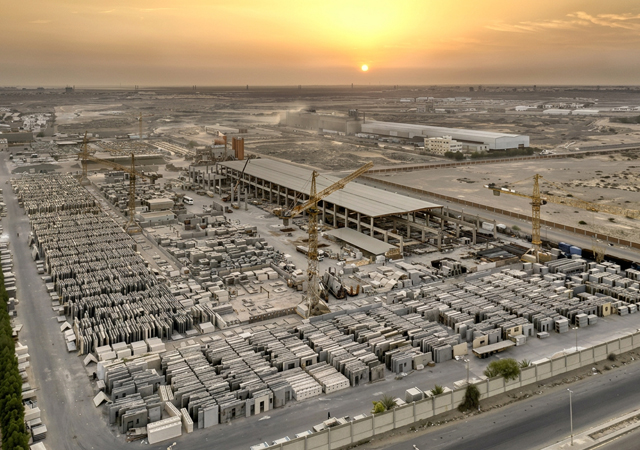
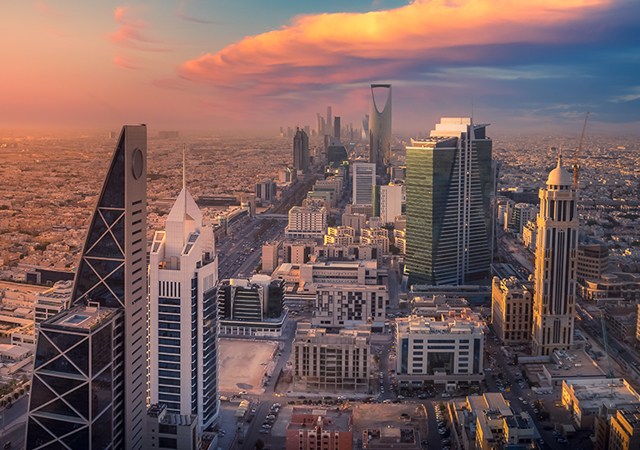
 The planned Jubail 2 will include 200 sq km for industry and a further 250 sq km in reserve
Jubail and Yanbu, already key contributors to the Saudi economy, are set to play an even greater role with major projects under implementation or due to be taken up soon.
The two Saudi cities of Jubail and Yanbu are going through a wave of new projects, mainly high-cost petrochemical ventures, which will push diversification of the Saudi economy further and contribute to greater export income.
According to the Saudi government, current combined investment there is SR196 billion ($52.2 billion). The private sector accounted for a major portion of the investment at SR141 billion. Jubail and Yanbu constitute a corner stone of Saudi industrial development, not only for the sophistication and high value of their projects but also because they make up 55 per cent of all industrial investment in the kingdom.
The Royal Commission for Jubail and Yanbu is in the process of expanding the infrastructure to meet the needs of new industries coming up or planned for the near future.
Royal Commission officials say investments in Jubail alone will reach SR135 billion before long. The industrial city of Jubail covers more than 1,000sq km with an existing residential area of 170sq km and an industrial area of 130sq km.
The planned Jubail 2 expansion will include 200sq km for industry and a further 250sq km as reserve.
Saudi Basic Industries Corporation (Sabic), a strong force in the two cities, announced plans recently to construct a new ethylene glycol (EG) plant at Jubail United Petrochemical Company (United). This, Sabic’s seventh EG plant, will have an annual capacity of 625,000 tonnes.
The plant is expected to go on stream by the end of 2005, and will be the second EG plant at United, adding to the existing 575,000 tonnes per year (tpy) EG plant currently under construction. It will use new technology from the US-based Scientific Design Company. Sabic and Sud-Chemie manage Scientific Design through a 50/50 joint venture. Ethylene and oxygen feedstock for the new plant will be provided by other Sabic companies - oxygen from its National Industrial Gases Company (Gas) affiliate, and ethylene from United and Petrokemya (the Arabian Petrochemical Company).
Work is underway in Jubail on the third butene 1 plant of Petrokemya, a wholly owned Sabic affiliate. South Korean company Samsung was awarded a lumpsum turnkey contact for constructing the plant, which is designed to produce 130,000tpy of butene 1. The two existing plants already produce 100,000tpy, which should take total production to 230,000tpy after the expansion. Commercial production at the new plant is expected to begin in the first quarter of 2005.
“This expansion reaffirms Sabic’s commitment to grow its core business, and moves us closer to achieving our vision of becoming one of the world’s leading global petrochemical companies. With this additional plant, we are moving closer to our production target of 48 million tpy by 2010,” commented Sabic managing director Mohammed Al Mady.
Technip Company of Italy is designing and building Sabic’s acetic acid plant based on Sabic’s new acetic technology developed by Sabic’s R&D centre. It is the first of its kind based on the oxidisation of ethane, which is supplied by Saudi Aramco. The plant is coming up in Sabic’s Arabian Industrial Fibers Company Complex (Ibn Rushd) in Yanbu. It is anticipated it will come on stream by the beginning of the second quarter of 2004, with an annual production capacity of 30,000 tonnes.
Sabic-affiliate Saudi Arabian Fertiliser Company (Safco) has awarded a lump-sum turnkey contract to the German engineering company, UHDE GmbH for the engineering, procurement and construction of one of the world’s largest ammonia and urea plant complexes - Safco 4.
The facility will be constructed in Jubail and is scheduled for completion by late 2005. Plant capacity will be 1 million tpy of ammonia and 1.1 million tpy of urea.
Sabic plans to invest more than $2 billion within the next five years to expand its petrochemical segment in Yanbu.
Al Mady said the company was putting together engineering plans for the complex, which would be ready in 2008.
He said the new complex would produce glycol and polymers, such as polyethylene and polypropylene.
Sabic, 70 per cent owned by the Saudi government, controls and operates 16 complexes with international firms, producing around 40 million tonnes of petrochemicals, fertilisers, steel and plastics. It markets around 70 per cent of its production outside Saudi Arabia.
Al Mady said Sabic was currently undertaking expansion projects at different locations to add 7.5 million tonnes to its total capacity in the next two years.
“Another big project is to increase capacity of the flat steel plant at Hadeed (Saudi Iron and Steel Company) to two million tonnes per year from one million now,” Al Mady revealed. It will need around three years for completion and will make Hadeed one of the biggest steel plants in the world,” he said, but gave no cost.
He said Sabic approved recently plans for raising Hadeed’s capacity of iron bars production by 500,000tpy in the next two years. That increase would take total capacity to three million tonnes. A rolling line would be added at an estimated value of less than $100 million.
With demand for flat steel increasing Hadeed would carry out the expansion to meet the requirements of the region, Al Mady said.
“We usually need to borrow from banks to finance up to 60 per cent of our projects. This percentage rises in bigger projects, but commercial banks are willing to finance Sabic’s projects because of its reputation,” he told Reuters news agency during a petrochemicals conference in Bahrain.
Jubail is the site for a large new petrochemical complex. International groups are submitting technical and commercial bids for the $1billion Jubail Chevron Philips (JCP) plant.
The project involves construction of a 230,000tpy ethane cracker, a 715,000tpy styrene plant and an 850,000tpy ethyl benzene unit to be located at the existing Saudi Chevron Philips (SCP) complex in the city.
The prospective bidders are US-based ABB Lummus Global with Japan’s Toyo Engineering Corporation, the US’ Stone and Webster with JGC Corporation of Japan, and Paris-based Technip-Coflexip.
The successful bidder will carry out the EPC works for all three units and provide the technology for the ethane cracker plant. JCP has chosen ABB Lummus to supply the technology for the styrene and ethyl benzene units.
Saudi Aramco will provide feedstock for the petrochemical complex.
JCP has the same ownership structure as SCP. Both are joint ventures between Chevron Phillips Chemical Company and the Saudi Industrial Investment Group, which consists of local investors.
Sipchem, a company promoted by Saudi and GCC investors, is setting up two plants - one for methanol production and the other for butanediol - in Jubail.
Factories under construction include The Saudi Polyolefins Company (SPC) plant, a joint venture of National Petrochemical Industrialisation Company (NPIC) (75 per cent) and Basell (25 per cent). NIC has a 51 per cent stake in NPIC.
The plant is designed to produce propylene and polypropylene with a capacity of 450,000 tonnes each per year. US contractor ABB Lummus and South Korea’s Samsung are involved in the project, which has a total investment of SR2 billion.
National Industrialisation Petrochemical Marketing Company, Riyadh, an affiliate of NPIC, will be marketing NPIC’s quota of the products produced by SPC.