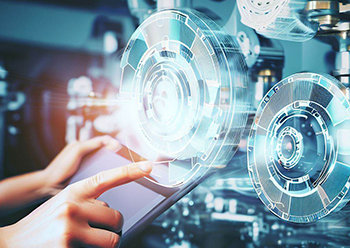
Augmented reality (AR) is a technology that overlays digital information on top of the real world, a combination of digital and audiovisual elements that connects the real and digital worlds.
AR is changing the way companies connect and interact in manufacturing and is becoming increasingly popular in the manufacturing sector, where it is being used to improve a variety of processes and a perfect tool for Industry 4.0.
Manufacturers are investing more in human-and-machine interaction. To stay competitive, leading manufacturers continue to bring in automation to handle simple, repetitive tasks and track data. However, manual processes are still extremely relevant. Manufacturers are giving more complex tasks to their workers and increasing their agility to variation. By moving beyond these silos and empowering factories with augmentation, data and complex problem solving increases efficiency and productivity overall, says LightGuide, a leading projected augmented reality (AR) work instruction software platform.
Augmented reality provides this connection. It guides and tracks manual processes, leading to new understanding of our operations. Research conducted on human and machine collaboration with the aid of AR at the University of Patras found that “AR interfaces can blend in the working environment and enrich it, making the interaction with [robots] natural and intuitive”, it says.
In the manufacturing sector, Augmented Reality technology cab be used in:
* Product design and development: AR can be used to create 3D models of products, which can then be used to visualise how the products will look and function in the real world. This can help designers to identify potential problems with the design and make necessary changes before the product goes into production.
* Assembly: AR can be used to guide workers through the assembly process, providing them with step-by-step instructions and visual feedback. This can help to improve the accuracy and efficiency of the assembly process, as well as reduce the risk of errors.
* Maintenance and repair: AR can be used to provide technicians with instructions and diagrams for repairing equipment. This can help to speed up the repair process and reduce the risk of making mistakes.
* Training: AR can be used to create interactive training materials that allow workers to learn new skills in a hands-on way. This can help to improve the efficiency of training programs and reduce the risk of accidents.
In addition to these specific applications, AR can also be used to improve a variety of other aspects of manufacturing, such as:
* Communication: AR can be used to improve communication between different departments and teams within a manufacturing plant. This can help to ensure that everyone is working on the same page and that information is shared quickly and easily.
* Safety: AR can be used to provide workers with real-time information about their surroundings, such as the location of hazards or the status of equipment. This can help to reduce the risk of accidents and injuries.
* Productivity: AR can be used to streamline manufacturing processes and make them more efficient. This can lead to increased productivity and reduced costs.
The use of AR in the manufacturing sector is still in its early stages, but it is growing rapidly. As the technology continues to develop, we can expect to see even more innovative and groundbreaking applications of AR in manufacturing in the years to come.
Latest trends and technological advances in AR
The latest trends and technological advances in AR for manufacturing include:
* The increasing use of lightweight, wearable AR devices: This is making it easier for workers to use AR in the manufacturing environment.
* The development of more sophisticated AR software: This is allowing manufacturers to create more realistic and interactive AR experiences.
* The integration of AR with other technologies, such as IoT and machine learning: This is creating new opportunities for manufacturers to use AR to improve their operations.
These trends and advances are making AR a more powerful and versatile tool for manufacturers. As a result, we can expect to see even more widespread adoption of AR in the manufacturing sector in the years to come.
Conclusion
Augmented reality is a powerful technology that has the potential to revolutionise the manufacturing sector. By improving communication, safety, productivity, and other aspects of manufacturing, AR can help manufacturers to reduce costs, improve quality, and stay ahead of the competition. As the technology continues to develop, we can expect to see even more innovative and groundbreaking applications of AR in manufacturing in the years to come.