 TCP pipes to have a 60 per cent lower carbon footprint than an equivalent carbon steel pipeline
DNV, Strohm, and the Non-Metallic Innovation Centre (NIC) have launched a report comparing the lifecycle carbon footprint of externally coated carbon steel pipe and thermoplastic composite pipes (TCP).
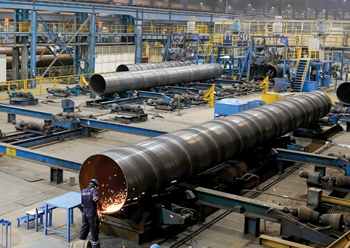
Findings point out that TCP has a significantly lower carbon footprint, in the range of 30 per cent to 60 per cent, than an equivalent carbon steel pipeline solution.
According to DNV, the three companies considered all steps of the lifecycle carbon footprint which is a measure of the direct and indirect greenhouse gas (GHG) emissions associated with all activities in the product's life cycle, from material extraction and production to the end-of-life stage of the pipelines.
 |
|
Rasiah: TCP has an advantage |
The report outlined the results from a joint industry project (JIP) between DNV, Strohm, and NIC, focusing on the lifecycle of a 22-km pipeline transporting produced water for injection in a field outside Angola in Western Africa, with an operating lifetime of 20 years.
Prajeev Rasiah, Executive Vice Pwresident for Energy Systems, Northern Europe at DNV said that the study showed the importance of choices made about technology, design, transport logistics, and installation of offshore pipeline solutions, when it comes to the lifecycle GHG impact.
“It focuses on the importance of efficient transport logistics and installation, including selection of vessels which have a high impact on the total carbon footprint for both steel and TCP. While admittedly limited to certain geographies and scenarios, the current case study has shown that TCP has an advantage within this area,” Rasiah said.
“Pipelines are a critical part of offshore infrastructures and should be considered when assessing the overall carbon footprint. Choosing a technology and design that provides the least GHG emission from a cradle to grave perspective is a step towards the goal of a low carbon future,” he added.
DNV is an independent assurance and risk management provider, operating in more than 100 countries. Through its broad experience and deep expertise DNV advances safety and sustainable performance, sets industry standards, and inspires and invents solutions.
ALTERNATIVE TO STEEL
Caroline Justet, business growth executive for energy in transition at Strohm, added: “We are excited about the results of the study as it’s a great step towards establishing TCP as a suitable alternative to steel in offshore applications.”
 |
|
Strohm and Evonik’s carbon fiber/PA12 pipes are now fit to use for hydrocarbons transport |
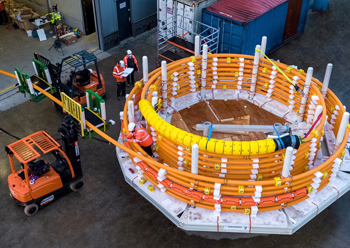
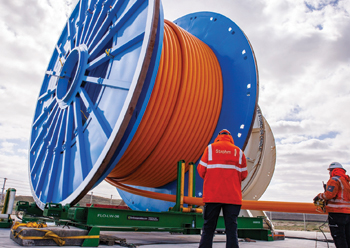
“The greatest GHG benefits from using TCP compared to steel will be in the cases when the pipe needs to be transported over long distances. TCP is spoolable and lightweight, allowing it to be delivered in long lengths and installed using small vessels or subsea pallets, significantly reducing CO2 emissions.”
Leading composite pipe technology company Strohm (formerly Airborne Oil & Gas) has the world’s largest track-record for Thermoplastic Composite Pipe (TCP) after being the first to bring the technology to the Oil & Gas industry in 2007. TCP reduces total installed and life cycle cost for subsea flowlines, jumpers and risers and has proven to reduce the CO2 footprint of pipeline infrastructures by more than 50 per cent.
The company says it is committed to driving sustainability with its range of TCP solutions which enable clients towards their net-zero carbon emissions targets and supports the renewables sector.
TCP is a strong, non-corrosive, spoolable, lightweight technology which is delivered in long lengths, resulting in a significant reduction of transportation and installation costs. TCP is installed using small vessels or subsea pallets, significantly reducing CO2 emissions. It is also 100 per cent recyclable.
Strohm’s shareholders are Aker Solutions, Chevron Technology Ventures, Evonik Venture Capital, Saudi Aramco Energy Ventures, Shell Ventures, Subsea 7, Sumitomo Corporation and the private equity investor, HPE Growth.
The firm’s manufacturing facility is located at its headquarters in IJmuiden in The Netherlands. Strohm also has offices in Houston (US), Rio de Janeiro (Brazil) and Kuala Lumpur (Malaysia).
NIC ROLE
NIC Director, Mihalis Kazilas, said: “The NIC is proud to have been a part of this study which proves and now underpins one of the major benefits of non-metallic technology deployment. The findings from this collaboration complement a previous NIC study assessing CO2 footprint for onshore flowlines, with both studies showing consistent results. In a world where all companies are seeking to improve their environmental credentials, deployment of TCP can offer oil and gas companies an easily deployable and greener alternative to their historically steel based infrastructure.”
 |
Justet: TCP is spoolable and lightweight |
“Though this study had a specific application it shows to the industry where the CO2 intensive steps are and allows designers to understand how to minimise the CO2 footprint for offshore applications. This will allow the wider industry to understand how the design and implementation of non-metallic assets can improve both sustainability and performance,” he concluded.
NIC opened in September 2019, based at TWI’s headquarters near Cambridge. The NIC was formed as a partnership between TWI, and the oil and gas industry with the aim of advancing the use of non-metallic materials for industrial applications.
The NIC initiates research programmes with partners from academic institutions, research centres, composite & polymer materials manufacturers and oil and gas companies. These research programmes will span Technology Readiness Levels (TRL) 1-6 to enable the wider deployment of non-metallic materials.
CARBON FIBRE PA12 FOR TCP
DNV has awarded Strohm and Evonik full certification for a TCP development.
This attests that the unidirectional carbon fibre PA12 tape VESTAPE PA12-CF (PA12) used for Strohm’s TCP is fit to use for dynamic sweet and sour hydrocarbons, water, and gas injection applications according to DNV-ST-F119.
The two companies, in partnership with the Netherlands Aerospace Centre (NLR), have been working to develop, qualify and supply PA12 for TCP applications following a five-year investment and testing programme.
The knowledge-based approach introduced in DNV-ST-F119 and fully utilised by Strohm and Evonik has been trailblazing in seeking a fundamental understanding of the material to demonstrate the lifetime performance of a product operating in a challenging chemical, thermal and mechanical environment. It has established a relationship between the functional requirements of a pipe and the performance characteristics of its materials.
NLR provided the main composite testing facilities which allowed parallel dynamic and long-term testing, thus speeding up the process significantly compared to traditional sequential testing.
PA12 is a fully non-metallic, corrosion-resistant solution, which due to the use of carbon fibres, is exceptionally resistant to fatigue-based failures, marking it an ideal choice for applications ranging from jumpers to flowlines and risers.
Alexandre Paternoster, material technology team lead at Strohm said: “Our fully non-metallic solution for load-bearing structures shows great potential to meet any challenges that corrosive environments can bring. Being applicable to both static and dynamic mode in hydrocarbon offers a great variety of addressable applications, including flowlines and risers.”
Carsten Schuett, industrial and energy technology leader at Evonik added: “Developing a material class for disruptive technologies is always challenging. PA12 for Strohm’s TCP applications was no exception. The full application of the DNV’s standard’s approach to qualify the material has only added to the complexity but, with the help of our partners, we finally succeeded in characterising the material in unprecedented detail and unlocked its full potential.”