
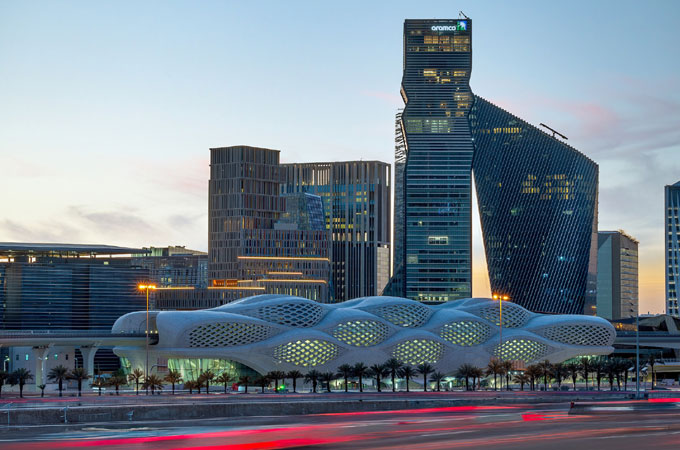
The Kingdom of Saudi Arabia remains one of the world's most active real estate development markets, supported by robust non-oil economic growth, ongoing regulatory reform and a substantial pipeline of infrastructure and real estate projects, according to CBRE, global leader in commercial real estate.
While global economic uncertainty and regional geopolitical tensions continue to weigh on certain sectors, the kingdom’s long-term development agenda remains firmly on track, stated CBRE in its Saudi Arabia Real Estate Market Review for the second quarter of 2026.
Non-oil economic activities expanded by 2.9% year-on-year in Q1 2026, helping drive overall GDP growth of 3%, while government capital expenditure continues to support the delivery of large-scale projects across the country.
The kingdom’s real estate sector is benefiting from this sustained investment environment, with multiple giga-projects, transport, tourism, and entertainment infrastructure projects, as well as other large-scale real estate developments all progressing through various stages of execution.
This was reflected in another active quarter for construction and development procurement, with major contracts awarded across multiple sectors. Riyadh remained a key focus of investment activity, while Makkah, Madinah, the Eastern Province and Aseer also recorded substantial project awards, said CBRE in its review.
Government-backed entities including the National Housing Company (NHC), Diriyah Company, Expo 2030 Riyadh Company and Rua Al Madinah Holding continued to drive activity, reinforcing confidence in the Kingdom’s long-term growth strategy, it stated.
On the residential sector, CBRE said it saw transaction volumes moderate, while price growth remained positive at a national level.
However, the residential deal volumes across apartments, villas and land plots declined 14% year-on-year reaching more than 41,000 transactions, while transaction values fell 27% to nearly SAR38 billion, stated CBRE Mena.
Despite this, the National Residential Price Index increased by 2.6% year-on-year, supported by continued end-user demand, and land scarcity in key urban markets. The quarter also marked a significant milestone with the implementation of regulations under the Law on Non-Saudi Ownership of Real Estate, opening new opportunities for international investment within designated areas across the Kingdom.
At the same time, major master-planned communities continue to expand housing supply, including the delivery of more than 5,500 homes at NHC's Murcia development in Riyadh by the end of 2026.
On the office market, CBRE said it remains one of the kingdom's top performing asset classes, particularly in Riyadh, where demand for Grade A office space continues to outpace available supply.
Demand continues to be driven by multinational corporations establishing operations under the Regional Headquarters (RHQ) program and by continued expansion across technology, healthcare, financial services and consulting sectors. Riyadh's office stock has surpassed 6 million sqm of gross leasable area (GLA), while occupancy rates across prime assets remain near capacity, it stated.
Despite additional supply entering the market, competition for high-quality office space across key business districts continues to support rental growth and strong occupancy levels, it added.
On the retail sector, CBRE said it continues to be supported by rising consumer spending and growing demand for lifestyle-led experiences.
As per Saudi Central Bank data, point-of-sale (POS) spending increased from SAR58.4 billion in April to SAR63.1 billion in May, generated by a record 1.1 billion transactions.
This trend is helping to drive the next wave of retail development, with approximately 400,000 sqm of new retail space scheduled for delivery by the end of 2026.
Despite this expanding pipeline, market fundamentals remain healthy, with retail vacancy rates holding at around 6% and prime rents in leading super-regional malls stable at approximately SAR 3,275 per sqm.
On the industrial and logistics market, CBRE remains one of the strongest beneficiaries of the kingdom’s economic diversification agenda.
Demand for modern warehousing and logistics space continues to increase, supported by manufacturing localization initiatives, growth in e-commerce activity and expanding transport infrastructure, it stated.
The sector has also benefited from ongoing investment into rail, ports and logistics corridors, strengthening the Kingdom’s position as a regional trade and distribution hub. Rental growth across key industrial submarkets in Riyadh and Jeddah remained robust during Q2 2026, reflecting tight availability of high-quality logistics space, it added.
Matthew Green, Head of Research at CBRE Mena, said: "What is increasingly evident across Saudi Arabia is the scale of execution taking place on the ground. From major infrastructure projects and commercial developments to new residential communities and tourism destinations, investment is increasingly translating into delivery."
"Supported by a growing non-oil economy and progressive regulatory reforms, including the introduction of the new non-Saudi property ownership framework," he stated.
Saudi Arabia is continuing to strengthen its position as one of the most compelling real estate investment destinations globally. The market is now transitioning into a new phase, where delivery, occupancy and investment performance are becoming just as important as the scale of the development pipeline, he added.-TradeArabia News Service