
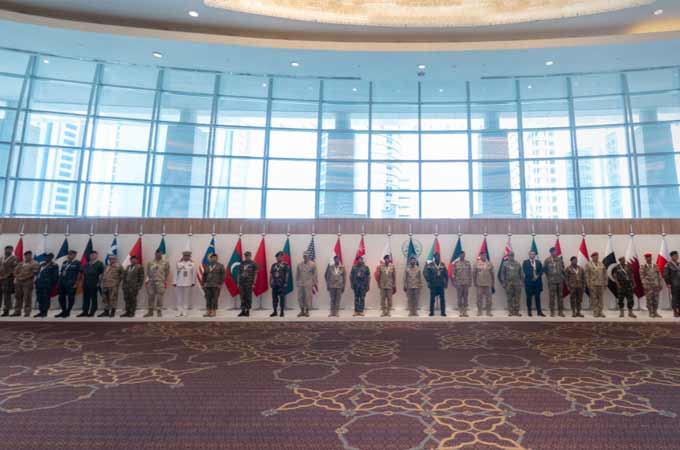
Saudi Arabia has launched a major international initiative to safeguard global shipping lanes, securing the backing of 14 countries for a proposed Maritime Defense Alliance as escalating conflict between the US and Iran raises fresh concerns over the security of two of the world's most important maritime trade corridors — the Strait of Hormuz and the Suez Canal.
The announcement came as a suspected drone strike on two gas vessels at Egypt's Mediterranean port of Damietta heightened fears that the conflict is spreading beyond the Gulf, potentially threatening traffic through the Suez Canal, a vital artery for global commerce and one of Saudi Arabia's remaining key export routes to Europe.
Saudi Arabia's Ministry of Defense said military chiefs and senior representatives from 43 countries, along with a European Union delegation, participated in a high-level meeting on the proposed alliance, either in person or via video conference.
The initiative has already received formal backing from Saudi Arabia, Kuwait, Bahrain, Qatar, Pakistan, Turkey, Egypt, Jordan, Yemen, Bangladesh, Nigeria, Sudan, Djibouti and Somalia.
According to the ministry, the proposed alliance is intended to protect international shipping routes, energy infrastructure and maritime trade against growing security threats.
"It was agreed that the Kingdom of Saudi Arabia would be the founding and leading country of the alliance, and host its main headquarters," the ministry said in a statement.
The alliance has been described as an "open international defensive initiative" that will remain open to additional countries sharing its objectives of protecting freedom of navigation, enhancing maritime security and ensuring the uninterrupted flow of global trade.
The 14 supporting nations issued a joint declaration endorsing the proposal, while several other participating countries indicated they supported the initiative and were completing their domestic approval procedures before joining.
Drone strike raises alarm over Suez Canal
Egypt said an unidentified drone struck two gas vessels at the Mediterranean port of Damietta on Wednesday, sparking fires aboard both ships.
No casualties were reported, and no group has claimed responsibility for the attack.
If confirmed as a deliberate strike, it would mark the first direct attack on Egyptian territory linked to the expanding regional conflict and could significantly raise risks for shipping using the nearby Suez Canal.
The canal remains one of the world's busiest maritime trade routes and has become increasingly important for Gulf energy exports as security conditions in the Strait of Hormuz continue to deteriorate.
Iran has denied any involvement in the Damietta incident.
Iranian Foreign Minister Abbas Araghchi described Egypt as an "important friend and partner in the region" and urged countries to remain alert against what he called "Israeli plots and false-flag operations designed to undermine regional peace."
Hormuz traffic remains sharply reduced
Meanwhile, commercial shipping through the Strait of Hormuz remains at a fraction of normal levels despite limited signs of activity.
MarineTraffic data showed only 15 commercial vessels transited the strategic waterway over the past 24 hours—far below the pre-war daily average of about 120 vessel crossings.
In a potentially significant development, a Qatari liquefied natural gas carrier successfully passed through the Strait of Hormuz for the first time in nearly three weeks, suggesting some operators are cautiously resuming voyages despite the continuing security risks.
Meanwhile, Iran's Revolutionary Guards reiterated that the Strait of Hormuz would remain closed and vowed that the "aggressor will be punished," following a wave of US strikes targeting Iranian facilities in retaliation for Tehran's attempted attack on American military positions earlier this week.
Elsewhere, Israel said it destroyed an extensive underground Hezbollah tunnel network in southern Lebanon using approximately 700 tonnes of explosives. Israeli Prime Minister Benjamin Netanyahu and Defense Minister Israel Katz said the tunnels formed part of what they described as Hezbollah's plans to infiltrate northern Israel, adding that the operation followed an alleged ceasefire violation by the Lebanese group.