
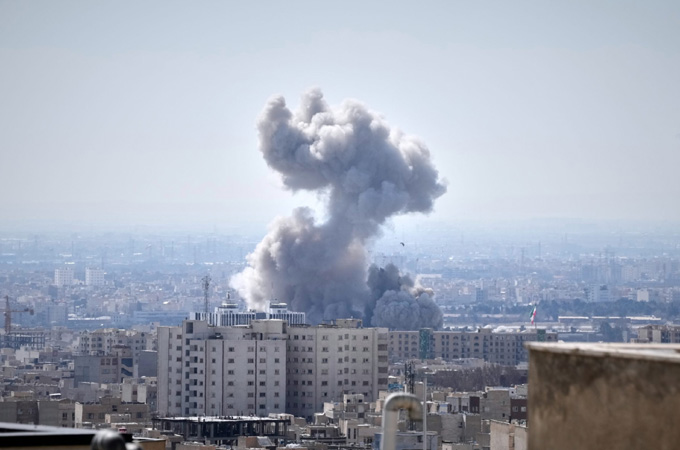
The Middle East conflict is causing an energy-led supply chain shock, with very different effects around the world even as market pricing suggests weeks of disruptions, not days or months, said experts at BlackRock Investment Institute.
That’s why long-term Treasury yields have edged up, defying their role as a haven. There’s a risk of a stagflationary shock but it’s not a given, as market pricing indicates. We stay underweight long-term Treasuries and favor US stocks.
The conflict is upending recent trends and well-established relationships in global markets. International equities had walloped US stocks until the bombing on Iran, driven largely by AI-related disruption fears in industries the US is exposed to.
Prices of liquified natural gas (LNG) showed similar trends, rocketing upward in regions that rely heavily on imports such as Europe and staying mostly put in the US Long-term Treasury yields jumped even as stocks pulled back, showing their supposed diversification properties can be a mirage. "The yield increase aligns with our view that we are at risk of an inflationary supply shock, rather than a demand-driven growth slowdown," said the experts.
How big will the shock be?
It comes down to supply chain disruptions, in particular for energy, said the experts. Months of disruptions could push up inflation and materially hurt growth. Oil futures pricing indicates disruptions could last for weeks, not months.
This is reasonable because economic and political pressures will likely provide strong incentives to contain the conflict. And disruptions could ease in the meantime if U.S. naval escorts and shipping insurance prove effective in preventing a prolonged closure of the world’s energy aorta – the Strait of Hormuz. The net result of all this: a short-term supply squeeze with disparate regional effects.
The conflict is a disruption at the heart of LNG infrastructure, very different from the Europe-centric, pipeline-driven energy crunch in 2022. Back then, LNG prices tightened through competitive bidding and stockpiling. Today, the strain on energy starts at export terminals and shipping posts.
We see Europe and parts of Asia as most vulnerable given their reliance on imported LNG for power and industrial production. These markets have underperformed the more shielded U.S. as a result, and we see no reason to push back on that. The performance divergence reflects an asymmetrical energy market structure: oil can be rerouted globally, but LNG infrastructure, shipping and pricing are very regional.
Sticky inflation remains key risk
The episode fits a pattern of geopolitical shocks creating supply constraints in a fragmenting world. Structurally sticky inflation remains the risk if the disruption endures. This makes growth-inflation trade-offs more acute than in the pre-fragmentation era – and reinforces our long-held view of a world shaped by supply.
Markets are reflecting this in rising bond yields and upward pressure on term premia, or the extra compensation investors demand to hold long-term bonds. Even absent a prolonged closure of the Strait of Hormuz, we could see the shock upend the “low inflation, lower interest rates” narrative that has powered markets until recently.
This reinforces our view that inflation could surprise to the upside, they stated.
The situation is fluid, and the risks are real. For now, we believe the shock is likely to be short-lived. We see disruptions measured in weeks, rather than in months or days. We stay underweight long-term US Treasuries and favour US and Japanese stocks. In Europe, we like the financial, pharma and infrastructure sectors.
The Middle East conflict had disparate market effects last week, with energy-importing markets hit hardest. European natural gas spiked nearly 70% in stark contrast to the 8% gain in U.S. gas prices. The S&P 500 fell 2%, holding up better than international peers: Europe’s Stoxx 600 shed 6%, alongside Japan’s Topix. South Korea’s Kospi fell 11%. Yields on the US 10-year Treasury climbed to 4.11% on inflation fears, defying its role as a haven in geopolitical conflicts.-TradeArabia News Service