
 Image courtesy: Marinetraffic.com
An oil tanker sailed through the Strait of Hormuz on Tuesday, heading to a United Arab Emirates port to load crude in a rare voyage since the Iran war severely disrupted shipping in the Middle East, according to industry sources and ship-tracking data quoted by Reuters.
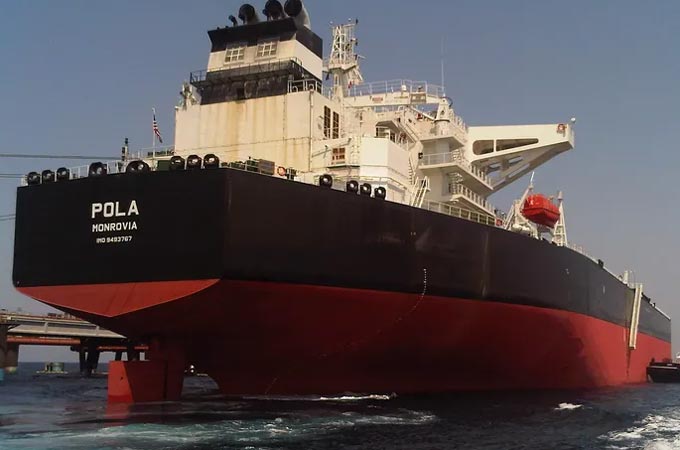
The Suezmax tanker Pola switched off its AIS tracker late on March 2 as it approached the Strait of Hormuz, reappearing on March 3 off Abu Dhabi, LSEG data showed, said Reuters.
The vessel is heading to the port of Jebel Dhanna Port to load Abu Dhabi’s Murban crude for Thailand, two trade sources said, speaking on condition of anonymity because of the sensitivity of the situation.
Iran’s threat to block Hormuz
The transit comes as Iran has repeatedly warned it could block or “set fire to” shipping in the Strait if attacks against it continue. Iranian officials and lawmakers have said closing the waterway remains “on the table,” describing it as a legitimate response to what Tehran calls US-Israeli aggression.
The Strait of Hormuz is one of the world’s most critical energy chokepoints. Roughly a fifth of global oil consumption — about 20 million barrels per day of crude and condensate — passes through the narrow channel between Iran and Oman. It is also vital for liquefied natural gas (LNG) exports, particularly from Qatar, making any disruption immediately felt in global energy markets.
Shipping collapse and vessels stranded
Crude tanker transits through the strait fell to just four vessels on March 1, the day after hostilities broke out, compared with an average of 24 per day since January, according to Vortexa vessel-tracking data.
Shipping industry sources estimate that dozens of vessels are now stranded or waiting on either side of the strait — some anchored off the UAE and Omani coasts inside the Gulf, and others lingering in the Gulf of Oman and Arabian Sea — as shipowners await security assurances and clarity on safe passage.
The US-Israeli war on Iran has already halted or curtailed energy exports from parts of the Middle East, with Tehran-linked attacks on ships and energy facilities, temporary navigation suspensions in Gulf waters, and production stoppages in countries ranging from Qatar to Iraq.