
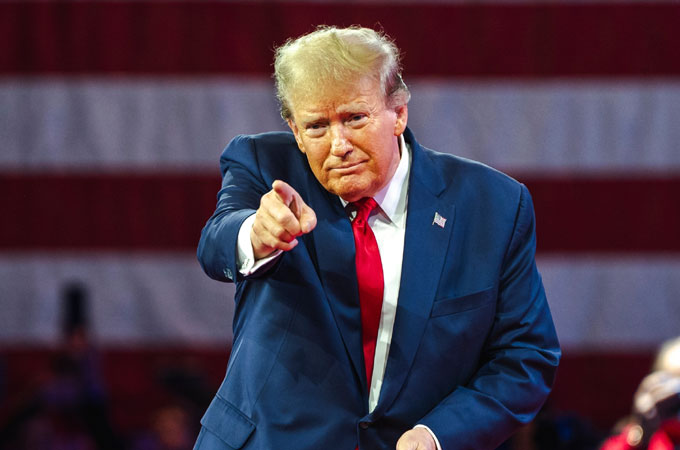
US President Donald Trump has signed an order imposing a new 10% tariff on imports from all countries, invoking Section 122 of the Trade Act shortly after the Supreme Court struck down his earlier sweeping emergency tariffs.
The new levy, which the White House said will take effect at 12:01 a.m. ET on February 24, is designed as a temporary measure. Under Section 122, the president can impose tariffs for up to 150 days without congressional approval; any extension would require action from Congress.
In a post on Truth Social, Trump said it was his “Great Honor” to sign the global tariff, describing it as effective “almost immediately.” Speaking from the White House, he indicated the administration would pursue alternative legal pathways to maintain its trade agenda after the court’s decision curtailed the earlier tariff framework.
Administration officials argue the tariff is aimed at protecting US manufacturing and addressing trade imbalances. However, trade analysts say the across-the-board nature of the 10% duty could have broad implications for global supply chains, importers and exporters alike.
Implications for Gulf states
The impact on Gulf economies will depend on how the tariff is implemented and whether exemptions are granted.
Bahrain and Oman have comprehensive Free Trade Agreements (FTAs) with the United States, under which most goods meeting rules-of-origin requirements enter the US market duty-free. It remains to be seen how the universal 10% tariff could impact exports from these countries.
For Bahrain, key exports to the US include aluminum and petrochemical products, while Oman exports refined petroleum products, chemicals and manufactured goods.
The United Arab Emirates and Saudi Arabia do not have full FTAs with Washington but maintain substantial trade ties, including in energy, aluminum, fertilizers and aviation-related products. Although crude oil has often been exempted from broad tariff measures in the past, non-energy exports could face higher entry costs under a blanket 10% duty.
Economists note that even temporary tariffs can influence procurement decisions, contract pricing and investment flows, particularly in sectors where margins are tight.
Congressional and legal outlook
Because Section 122 limits tariffs to 150 days without congressional approval, the new measure could set up a political debate in Washington if the administration seeks to extend it. Businesses and trading partners are also expected to examine whether the tariff can be challenged in court, potentially adding another layer of uncertainty.
For Gulf exporters and policymakers, the immediate focus will be on whether FTA partners are granted exemptions and how US customs authorities apply the new rules in practice.